Two winters ago, I stood in a terraced kitchen in Leeds watching a small red light blink on a smart meter.
Outside, sleet lashed against the single-glazed window. Inside, my breath plumed faintly in the hallway because we had made the quiet, desperate calculation that millions of British households made between 2022 and 2026: keep the heating off until 6:00 PM, wear two jumpers, and pray the standing charge doesn't swallow the grocery budget. That little red display wasn't just tracking kilowatts. It was ticking up a hidden tax on geography and politics. Expanding on this topic, you can find more in: Why the Jury Was Discharged in the Chloe Mitchell Murder Trial.
For years, energy policy in Britain has been treated like an abstract spreadsheet problem—a dry tangle of megawatts, interconnectors, and regulatory acronyms debated by men in grey suits in Westminster. Then a British minister quietly said the quiet part out loud. Britain is now willing to discuss paying into the European Union to rejoin its internal electricity market.
Read that sentence again. Experts at Associated Press have provided expertise on this trend.
After years of political bloodletting over sovereignty, red lines, and breaking free from Brussels, the UK government is openly entertaining the idea of writing a check to Europe just to plug back into the continental power grid. Why? Because physics doesn't care about political slogans. And right now, standing alone on an island with an isolated power market is costing British families and factories a fortune.
The Invisible Wall Under the English Channel
To understand why a British minister would risk the wrath of hardline Brexiteers by floating payments to Brussels, you have to picture what actually happens when you flick a kettle switch in Manchester or a bakery oven in Kent.
Electricity cannot be easily stored in giant warehouses like grain or oil. It has to be consumed the exact millisecond it is generated. When the wind howls across the North Sea, Scottish turbines spin furiously, producing more clean power than Britain can use. On calm, freezing February evenings, when everyone comes home and turns on the stove, Britain suddenly doesn't have enough.
Under the sea floor of the English Channel and the North Sea lie thick, armoured subsea cables—interconnectors—linking Britain to France, Belgium, the Netherlands, Norway, and Denmark. Power flows back and forth through these copper arteries constantly.
Yet since leaving the EU's single market in January 2021, those cables have been hamstrung by an invisible bureaucratic wall.
Before Brexit, Britain was part of the EU's Internal Energy Market. Algorithms automatically routed electricity across borders at lightning speed, matching supply with demand across the entire continent every hour. When Britain left, it was booted out of those automated trading platforms. Today, traders have to guess prices hours in advance, buying and selling capacity in clumsy, manual auctions.
Think of it like this. Imagine two neighboring towns connected by a four-lane highway, except a border guard stops every delivery truck at the county line, forces the driver to fill out triplicate paperwork by hand, and only lets cars cross once every two hours. Traffic backs up. Goods spoil. Prices soar.
That friction isn't theoretical. Energy analysts estimate that inefficient post-Brexit trading arrangements across those subsea cables have cost British consumers hundreds of millions of pounds in wasted efficiency. Worse still, the European Union is moving ahead with a massive, tightly integrated North Sea offshore grid. Without formal market coupling, Britain risks being left on the sidelines while continental neighbors share cheap wind power seamlessly among themselves—leaving the UK paying peak prices when the wind drops.
Meet Arthur, Who Bakes at Three in the Morning
Let's leave the trading floors of London and Brussels for a moment and step into a hypothetical—yet painfully real—small business in the West Midlands.
Meet Arthur. Arthur runs a mid-sized commercial bakery employing twenty-four people. Every morning at 3:00 AM, his industrial deck ovens roar to life. Flour dusts the stainless steel tables; yeast hangs thick and sweet in the warm air. Arthur doesn't follow European energy directives. He follows the price of butter, the reliability of his delivery vans, and his monthly commercial electricity bill.
In 2019, Arthur’s energy bill was a predictable line item, hovering around £3,200 a month. By 2024, even after wholesale gas prices retreated from their post-Ukraine invasion peaks, his bill refused to return to normal, settling stubbornly above £7,500.
Why did Arthur’s bill stay so high compared to a rival bakery just across the water in Lille, France?
Part of the answer lies in how Britain sets electricity prices—pegging the wholesale price to expensive natural gas nearly 90% of the time—and part lies in Britain's isolation from the broader European market. When France’s nuclear fleet hums smoothly or Germany’s solar farms flood the grid at noon, Arthur doesn't get the full benefit of that cheap surplus because the trading mechanism between the UK and the EU is clunky and slow. Conversely, when Britain has excess wind power, it often has to pay wind farms hundreds of millions of pounds to switch off—known as curtailment payments—because it cannot efficiently export that spare juice to Europe at short notice.
Arthur ends up paying twice. He pays when Britain has too much power and wastes it, and he pays when Britain has too little and scrambles to buy it at inflated rates.
Multiply Arthur’s bakery by tens of thousands of manufacturers, pubs, data centers, and family homes across England, Scotland, and Wales. Suddenly, a technical debate about "market coupling" stops looking like a dry diplomatic footnote. It looks like the difference between a thriving high street and a boarded-up storefront.
The Price of Re-Entry
So what exactly is on the table now?
When a UK minister signals openness to "paying into the EU" to rejoin the electricity market, they aren't talking about rejoining the European Union itself, or returning to freedom of movement, or resurrecting the political wars of 2016. They are talking about pragmatism—and cold, hard cash.
Countries outside the EU, like Norway and Switzerland, already participate in aspects of the European single market, and they pay for the privilege. Norway contributes hundreds of millions of euros annually to EU cohesion funds and regulatory agencies in exchange for frictionless access to European markets, including energy.
For Britain, rejoining the EU's electricity trading framework—specifically the automated coupling systems that manage day-ahead and intraday power flows—would require three things that once made Westminster politicians break out in a cold sweat:
- Financial contributions: Britain would likely need to pay an annual fee to help fund EU energy regulators, grid coordination bodies, and market infrastructure.
- Rule alignment: You cannot play in someone else's stadium without following the house rules. Britain would have to align with EU energy market regulations and state-aid standards so British generators don't undercut continental rivals unfairly.
- Dispute resolution: When a disagreement erupts over cross-border power flows, someone has to referee. That almost certainly means accepting some role for EU legal oversight or an independent arbitration panel bound by EU energy law.
I will be honest with you: navigating the politics of this is messy, and nobody in Whitehall can guarantee how Brussels will respond. European negotiators have long memories. They remember years of tortuous Brexit talks, and they have no appetite for giving Britain "cherry-picked" benefits without real obligations. Even if talks begin in earnest, technical integration takes time. Cables don't rewire themselves overnight, and treaties move at the speed of glaciers.
Yet the math is relentless.
Why Wind Turbines Are Being Paid to Stand Still
Consider what happens next if Britain does nothing.
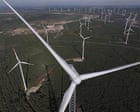
The UK has bet its economic and environmental future on offshore wind. Walk along the coast of Yorkshire or East Anglia today and you can see the staging ports stacked with turbine blades longer than football pitches. Britain is building one of the most ambitious renewable grids in the world.
By 2030, on windy days, Britain will routinely generate far more electricity than its 68 million citizens can possibly consume.
Without deep, automated integration into the European grid, what happens to all that clean, cheap electricity?
It gets thrown away.
Last year alone, British bill payers shelled out over £1 billion in "constraint payments"—money paid directly to wind farm operators to turn their turbines off because the local grid couldn't absorb the power and the interconnectors couldn't export it fast enough, while gas power stations closer to London were paid to fire up instead. It is an absurdity that would make an economist weep. Imagine paying a farmer to burn his wheat in Lincolnshire while buying imported flour at double the price in Dover because the road between them has a broken traffic light.
Rejoining the EU electricity market fixes that traffic light.
Automated coupling allows algorithms in London, Paris, Amsterdam, and Oslo to calculate in seconds where every megawatt is needed most. If storms sweep across the Dogger Bank in the North Sea, excess British wind automatically flows south to power factories in Belgium and Germany, lowering prices there and bringing revenue back to British generators. Six hours later, when the wind drops in Britain and the sun shines bright over Spain and France, cheap continental power flows north through the exact same cables to keep Arthur’s bakery ovens hot and that smart meter in Leeds from flashing red.
The Quiet Shift in British Realism
History rarely turns on loud speeches. More often, it turns when the people in charge quietly look at the numbers, swallow their pride, and choose survival over ideology.
In the 1970s, Britain entered the European Economic Community not out of romantic attachment to continental federalism, but because the British economy—the "sick man of Europe"—desperately needed access to a larger, more efficient market. Half a century later, after a decade defined by constitutional drama, the country is rediscovering an older, simpler truth: energy security is never built in isolation.
Even during the darkest days of the Cold War, European power grids cooperated across tense borders because engineers understood that an interconnected grid is exponentially stronger, cheaper, and more resilient than a solitary one. When one power plant trips offline in Kent, the inertia of a massive continental grid absorbs the shock before your living room lights even flicker. Alone, every shock hits harder. Every shortage bites deeper.
Of course, paying into Brussels will spark outrage in certain quarters. Headlines will scream about betrayal, tribute payments, and surrendered sovereignty. Critics will ask why Britain should hand over taxpayer pounds to European institutions after voting to leave them behind.
The answer sits on the kitchen counter of every home in Britain.
True sovereignty isn't measured by how many regulatory bodies you walk away from. It is measured by whether your country can afford to heat its homes, keep its factories competitive, and build a modern economy without bankrupting its citizens. If paying a modest subscription fee to Europe saves British households and businesses billions of pounds on their energy bills—and stops us from paying wind farms to sit idle in the middle of a gale—then refusing to sign the check isn't patriotism. It is self-harm.
Back to the Red Light in Leeds
I still keep that smart meter tucked beside the toaster, though the sleek plastic casing is scratched now.
Every winter, millions of people across Britain glance at similar little screens before boiling water for tea or deciding whether to nudge the thermostat up by a single degree. They don't care about the European Union Agency for the Cooperation of Energy Regulators. They don't care about day-ahead market coupling algorithms or North Sea offshore hybrid assets.
They care about warmth. They care about whether the local steelworks stays open, whether the corner bakery survives another year, and whether January feels like a season or a financial siege.
For years, politicians told the British public that an island could stand entirely alone, drawing power only from its own waters and its own rules. Out in the North Sea, the wind keeps blowing, indifferent to flags and treaties, waiting for someone to finally open the gate.