Silence.
That is what hits you first after two hundred tons of aluminum and steel stop moving at three hundred kilometers an hour, not the shriek of tearing metal or the distant wail of sirens, because for three endless seconds after a catastrophic impact, the human brain simply refuses to process the acoustics of ruin.
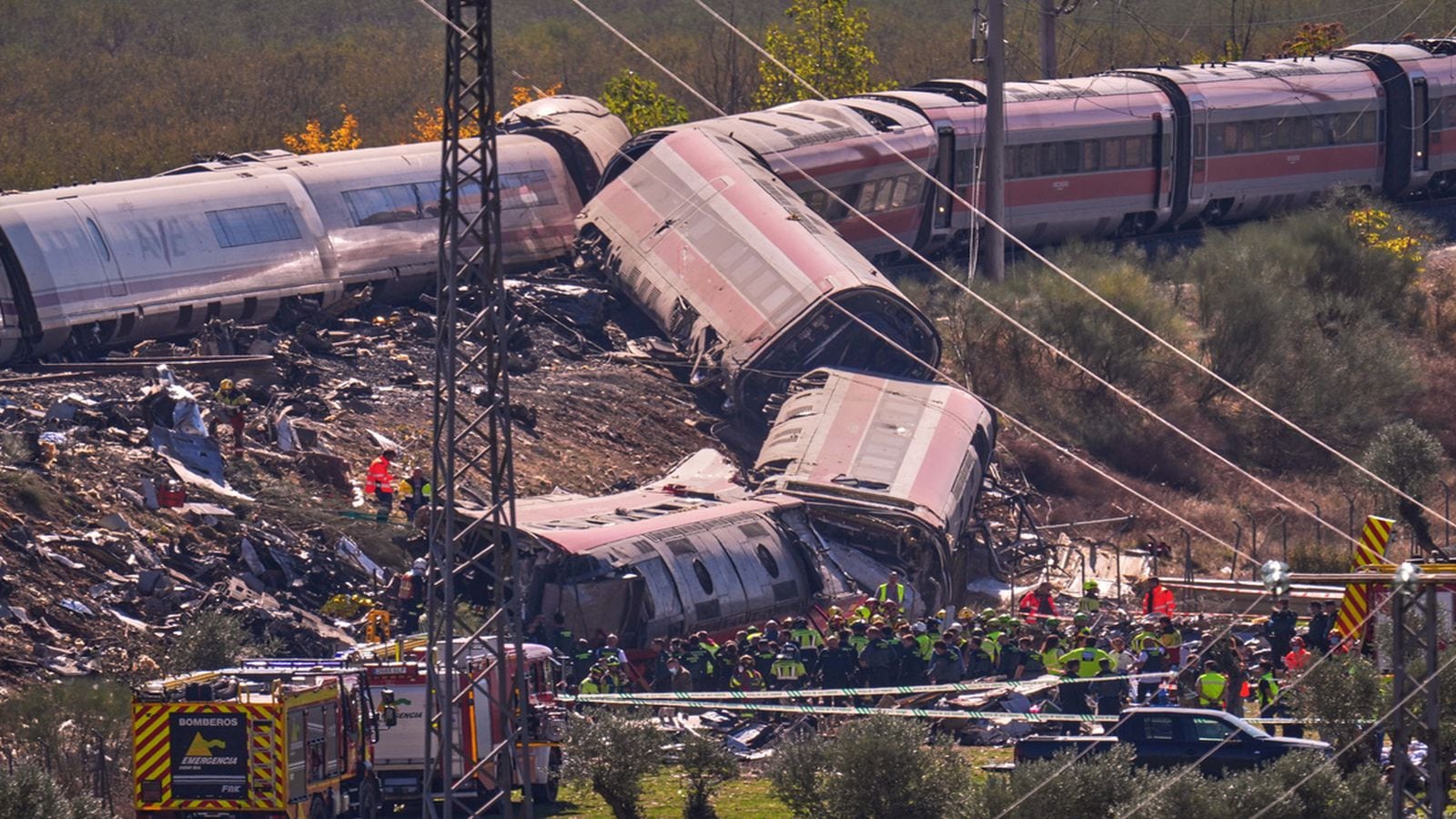
You have seen the photographs by now. Every major news outlet has run them on loop: twisted carriages resting at unnatural angles against dry Spanish scrubland, yellow emergency tape fluttering in a warm Iberian breeze, cranes hovering like mechanical vultures over sheared bogies. The headlines reduce the event to cold, digestible arithmetic. Sixty-four dead. Dozens injured. One of Spain’s worst high-speed rail disasters in recent memory.
Numbers are merciful. Numbers let us scroll past tragedies over morning coffee without tasting the dust.
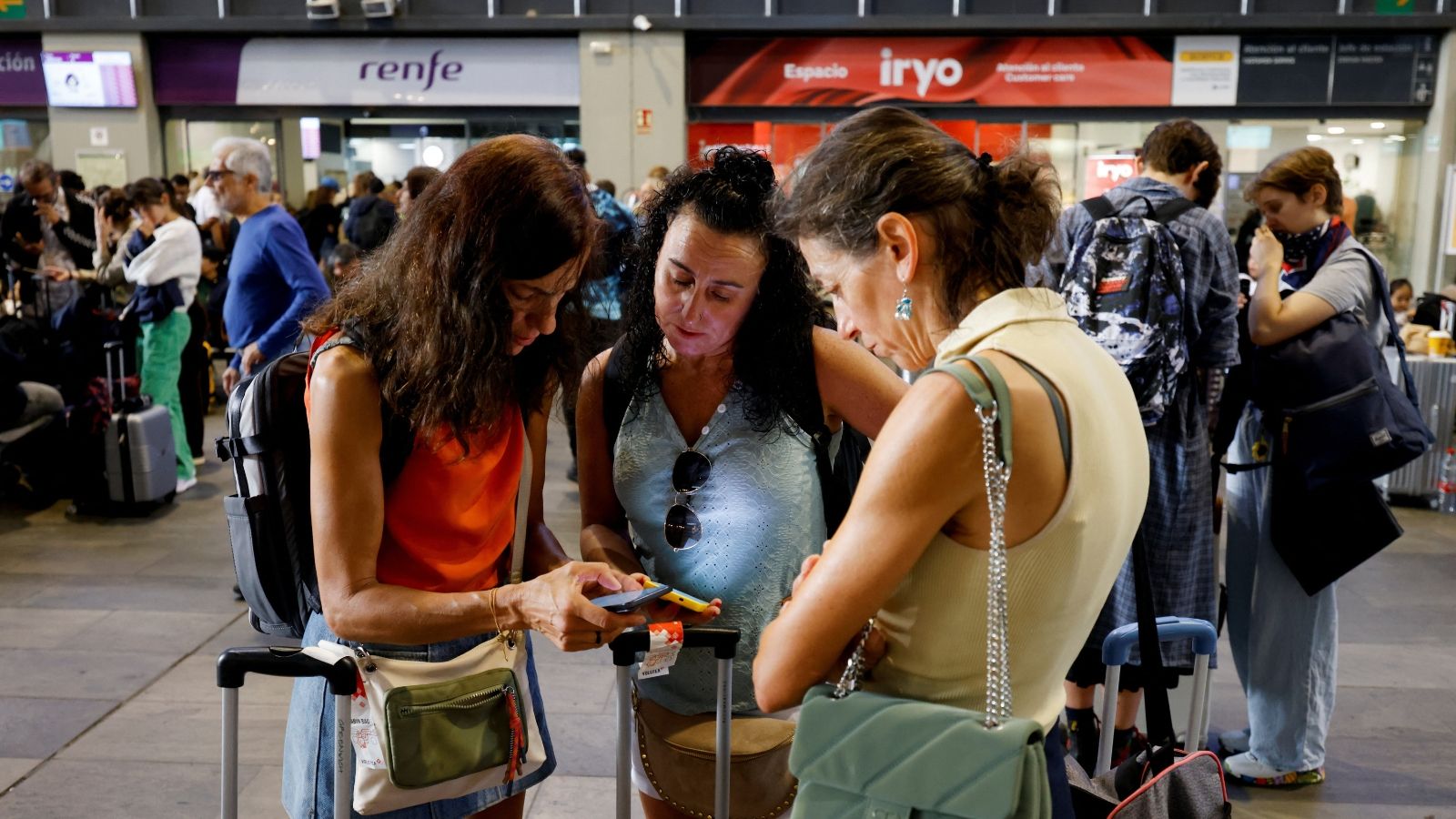
But if you have ever stood beside a buckled rail bed in the hours before dawn—if you have ever smelled the acrid tang of scorched wiring mixed with wild thyme and diesel—you know that sixty-four is not a statistic. It is sixty-four half-read paperback novels left open on tray tables. It is sixty-four text messages sent from station platforms saying Just boarding, see you for dinner, waiting on unlocked phone screens for replies that will never arrive.
The Illusion of Effortless Velocity
To understand how a modern miracle turns into twisted wreckage, you have to understand the quiet bargain we make every time we step onto a high-speed platform.
Consider a hypothetical passenger—let us call her Elena, a composite of the hundreds of commuters, students, and grandparents who board Spain’s Alta Velocidad network every single morning. Elena settles into Seat 14A. She plugs in her charger. Outside her window, olive groves blur into streaks of silver-green. At 300 kilometers per hour, physics stops feeling like a constraint and starts feeling like magic. There are no potholes, no traffic jams, no turbulence. Just the rhythmic, hypnotic clack-clack of welded steel rails beneath the floor.
We trust the rails because we cannot see the math holding us upright.
High-speed rail is fundamentally an exercise in kinetic energy management. Think of a moving train not as a vehicle, but as a colossal horizontal waterfall. As long as the channel—the track, the signaling blocks, the automated braking relays—remains intact, that immense energy flows smoothly from Madrid to Seville, or Barcelona to Valencia. The moment an obstruction, a switch failure, or a human miscalculation disrupts that channel, the water does not simply stop. It explodes outward.
In the aftermath of the crash, aerial photographs revealed carriages folded like dropped accordions. Why does modern rolling stock crumple that way? Engineers actually design the ends of train cars as sacrificial crumple zones, meant to absorb violent deceleration before the shockwave reaches the passenger cabin. Yet at extreme velocities, when two trains collide or a derailment occurs near a curve or embankment, the sheer mass of trailing carriages becomes a battering ram against the cars ahead.
Where the Steel Meets Human Error
Whenever a disaster of this scale strikes Spain—a country rightfully proud of possessing Europe’s longest high-speed rail network and the second-longest in the world behind China—the public immediately demands a single villain. Was it a drowsy driver? A faulty switch? A sudden mechanical failure?
History teaches us that major transportation disasters rarely stem from one dramatic mistake. They are almost always the result of tiny, invisible fractures lining up at the exact wrong second.
Look back at the tragic Santiago de Compostela derailment of July 2013, where an Alvia train entered a sharp curve at nearly double the posted speed limit, claiming seventy-nine lives. In the weeks following that catastrophe, investigators uncovered a sobering truth: the tragedy lived in the seam between two different signaling technologies. Where the ultra-modern European Rail Traffic Management System ended and older conventional track equipment began, the margin for human distraction shrank to zero. A single phone call in the cab, a momentary lapse in spatial awareness, and automated safety nets were no longer there to catch the fall.
Today, as investigators sift through the black boxes and twisted wreckage of this latest collision, they are hunting for those same invisible seams.
Modern Spanish rail corridors rely on sophisticated automatic train protection systems—like ERTMS and ASFA—designed to act as an incorruptible co-pilot. If a train exceeds safe speed thresholds or approaches an occupied block of track, computers are supposed to override human hands and trigger emergency braking automatically. Yet rail networks are living, sprawling organisms. Maintenance crews work overnight shifts under floodlights. Temporary speed restrictions are issued for track repairs. Legacy lines intersect with brand-new high-speed spurs.
Whenever humans have to manually bridge gaps between automated systems, vulnerability creeps back into the steel.
The Weight of the Unseen Hours
I remember speaking years ago with a veteran track inspector in Castilla-La Mancha who walked stretches of ballast at three in the morning with a flashlight and a calibrated gauge. He told me something I have never forgotten: People think trains run on electricity and steel, but they actually run on paperwork and sleep.
Think about what happens behind the curtain before a single ticket is scanned.
Every bolt on a switch plate has a torque specification. Every signal relay in a concrete trackside cabinet relies on clean electrical contacts tested months earlier. Every dispatcher staring at glowing schematic lines on a dark control-room wall is juggling dozens of moving vectors while fighting the quiet fatigue of a twelve-hour shift.
When we look at the wreckage photos circulating online, our eyes gravitate toward the dramatic chaos—the overturned locomotive, the shattered safety glass, the emergency workers picking their way through jagged metal. We rarely look at the quiet infrastructure surrounding the crash site: the concrete sleepers, the overhead catenary wires, the signal masts standing sentinel beside the tracks.
Yet the true story of the collision is written in those mundane details. Investigators will spend months measuring millimeter-wide abrasions on wheel flanges. They will analyze voice recordings from the cab to hear whether an alarm chimed three seconds before impact or never chimed at all. They will reconstruct the exact sequence of electronic handshakes between wayside beacons and onboard computers.
It is painstaking, unglamorous detective work, and it often frustrates a grieving public hungry for immediate accountability. We want answers before the funerals are even over. Engineering truth, however, refuses to be rushed.
What Survives the Wreckage
In the small towns near the crash site, the response followed a script written in muscle memory and sheer grace.
Long before specialized heavy-lifting cranes arrived from Madrid, local farmers drove tractors toward the tracks to haul floodlights and bottled water through the scrub. Neighbors showed up at community centers with blankets, phone chargers, and pots of hot broth. Off-duty nurses walked into overwhelmed regional clinics and quietly tied on aprons without waiting to be asked.
There is an uncomfortable paradox at the heart of every mass-transit tragedy. Even after seeing photographs of mangled steel, millions of people will wake up tomorrow morning, walk onto Spanish train platforms, and board high-speed carriages without hesitation.
Should they?
Statistically, high-speed rail remains overwhelmingly safer than climbing into a private car on any European highway. Over the past three decades, Spain’s AVE system has carried hundreds of millions of passengers across thousands of kilometers with a safety record that aviation regulators envy. If we measured safety purely by deaths per passenger-kilometer, abandoning trains for automobiles would be an act of mathematical self-harm.
Still, statistics offer cold comfort when you are standing on Platform 4 watching an express train scream past at two hundred miles an hour, feeling the sudden vacuum tug at your coat.
Fear is not irrational when it touches something so vast and unforgiving. Trusting a machine moving faster than a hurricane requires a quiet act of faith—faith that the engineer is alert, faith that the night-shift mechanic tightened the final bolt, faith that the software code written years ago accounted for every freak combination of weather, wear, and human frailty.
The Empty Seat
Late into the night after the crash, once the television satellite trucks had packed away their cables and the searchlights finally dimmed over the tracks, a railway worker walked along the perimeter fence collecting stray luggage that had been thrown clear of the carriages.
Among the scuffed suitcases and torn backpacks lay a child’s blue canvas satchel, untouched by fire or oil, its zipper still fastened tight.
He set it gently beside the fence post, waiting for someone from the victim-identification unit to tag it, while three hundred yards away a crane slowly lifted the final sheared carriage off the rails—exposing, beneath the crushed steel, two parallel lines of polished silver track gleaming coldly under the stars.