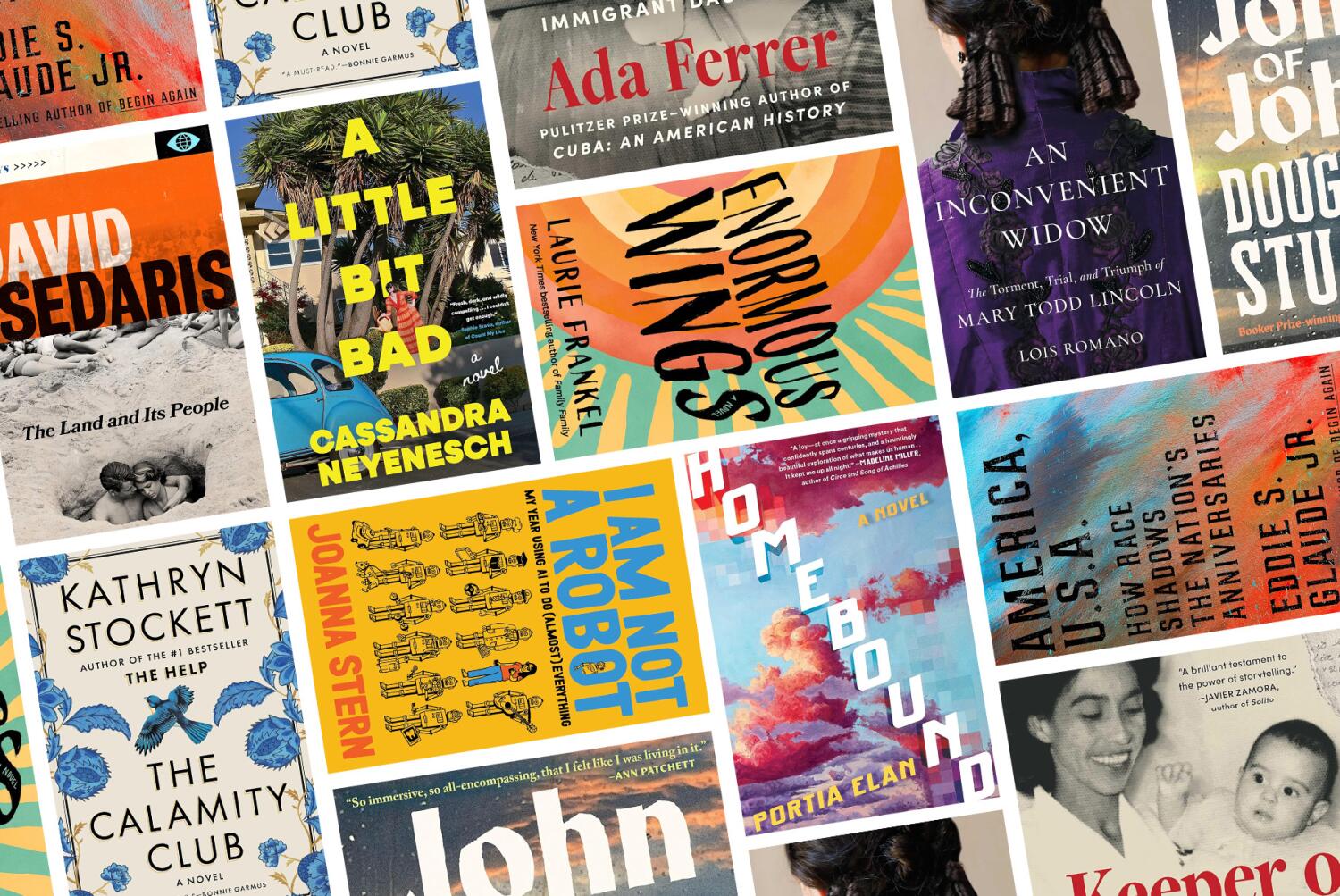
The literary calendar in May is never an accident. It is a calculated collision of high-stakes marketing and the desperate scramble for "Beach Read" supremacy before the summer solstice. While standard recommendation lists often function as mere extensions of publisher press releases, the true narrative of the month lies in the tension between legacy heavyweights like David Sedaris or Kathryn Stockett and the aggressive algorithmic shifts of the modern book market. Readers are not just looking for a good story this month; they are being funneled toward specific titles designed to dominate the conversation through the third quarter.
May is the traditional pivot point. Hardcover releases during this window are positioned to capture the graduation gift market, the early vacationer, and the prestigious longlists that start forming behind closed doors. To understand what is actually worth your time, you have to look past the jacket copy and see the industry machinery at work. If you found value in this post, you should check out: this related article.
The Sedaris Effect and the Comedy of Survival
David Sedaris remains one of the few authors who can command a room—and a balance sheet—without bowing to digital trends. His latest work arrives at a time when the personal essay is supposedly dead. Yet, Sedaris survives because he refuses to sanitize the human condition.
His longevity is a direct challenge to the "relatability" trap that ensnares younger writers. While social media demands a certain performance of vulnerability, Sedaris offers something far more jagged. He doesn't want your sympathy; he wants your observation. In an era of hyper-filtered memoirs, his ability to find the grotesque in the mundane serves as a necessary palate cleanser. For the industry, he is the "safe" bet that keeps independent bookstores afloat, providing a reliable margin that allows shops to take risks on debut poets or experimental fiction. For another angle on this development, check out the recent coverage from E! News.
The Return of the Blockbuster Novelist
Kathryn Stockett’s re-emergence is a fascinating case study in brand management and the enduring appetite for the sweeping American narrative. After years of relative silence following the massive cultural footprint of The Help, her new contributions face a vastly different social climate.
The mechanism at play here is "Institutional Memory." Publishers bank on the fact that a name like Stockett carries a built-in audience of millions who remember how a book made them feel a decade ago. It is a play for the "Big Fiction" space—those rare titles that break out of the literary bubble and into the general consciousness of people who might only buy two books a year.
However, the risk is high. The cultural barometer has shifted. Authors who previously defined the zeitgeist now find themselves scrutinized under new lenses of authenticity and representation. The success of these legacy titles depends entirely on whether they can adapt to a more critical readership without losing the storytelling engine that made them famous in the first place.
The Mechanics of the Modern Thriller
If you notice an influx of psychological thrillers with domestic settings this month, thank the "Grip-Lit" phenomenon. This sub-genre has become the bedrock of May publishing because it bridges the gap between the dark winter reads and the lighter fare of June.
These books are built on a specific architecture of tension. They rely on the unreliable narrator—a trope that has been beaten to death but continues to resurrect itself because it mirrors our own modern anxieties about truth and perception. When selecting a thriller this month, the savvy reader looks for the "Inverse Twist." This is where the shock isn't who committed the crime, but the realization that the crime itself was a diversion for a much deeper systemic failure.
- Look for tight pacing that doesn't rely on short, choppy sentences just for the sake of speed.
- Evaluate the stakes. Is the danger internal or external? The best of this month’s crop focuses on the psychological breakdown of the protagonist.
- Check the pedigree. Often, the best thrillers in May come from international translations, particularly from the Nordic or Japanese markets, which offer a grittier realism than their American counterparts.
Historical Fiction and the Burden of Accuracy
The surge in historical fiction this May suggests a collective desire to look backward to make sense of a fragmented present. But there is a divide in the genre. On one side, you have the "Costume Drama" novels—books that use history as a mere backdrop for romance. On the other, you have "Structural History," where the setting is an active character that limits or empowers the protagonists in historically accurate ways.
The industry is currently obsessed with the "Untold Story" hook. This involves taking a well-known historical event and centering a marginalized voice within it. While this is a vital correction to the historical record, it has also become a marketing formula. To find the gems, look for authors who have spent years in archives rather than those who have merely skimmed a Wikipedia page. True historical fiction should feel like a foreign country; it should be uncomfortable, strange, and entirely devoid of modern sensibilities projected onto the past.
The Science of the "May Slump" in Non-Fiction
Non-fiction in May often falls into two camps: the "Self-Optimization" guide and the "Grand Theory of Everything." As the weather warms, readers traditionally drift away from heavy socio-political treatises in favor of books that promise personal transformation.
This is the month of the "Quiet Productivity" book. We are seeing a move away from the "hustle culture" manuals of the last five years. Instead, the focus has shifted toward biological rhythms, the importance of boredom, and the psychology of rest. It is a reactionary trend. People are exhausted by the constant demand for digital engagement, and publishers are happy to sell them the antidote in the form of a 300-page hardcover.
The "Grand Theory" books, meanwhile, are getting shorter. The 800-page doorstop is being replaced by the "Long Essay" format—books that can be read in a single sitting but offer a sharp, provocative argument. These are the books that will dominate the podcast circuit this month.
Why the "Summer Preview" is a Marketing Myth
You will see many lists claiming these books are "The Best of Summer." This is a lie of convenience. The books released in May are the sacrificial lambs or the pioneers. They are sent out to test the waters. If a book catches fire in May, the publisher will double the marketing budget for July. If it stumbles, it is quietly moved to the backlist to make room for the "Beach Reads" of June.
As a reader, your power lies in discovering the "Mid-List" titles. These are the books that didn't get the six-figure marketing spend but have the strongest word-of-mouth potential. They are often found in the "Small Press" category or represent the second or third novel of an author who is still building their craft. These authors are hungry. They aren't resting on their laurels or their past bestsellers.
The Digital Displacement of the Physical Page
We must acknowledge the role of the "BookTok" economy in what gets printed in May. We have reached a point where the visual aesthetic of a book cover is sometimes as important as the prose inside. The "Spines that Pop" trend is real.
Publishers are designing covers specifically to look good in a 15-second vertical video. This has led to a homogenization of cover art—bold colors, minimalist shapes, and large serif fonts. While this helps with discoverability, it can lead to a "don't judge a book by its cover" crisis where the content fails to live up to the vibrant packaging. The investigative reader looks past the neon jacket and examines the actual pedigree of the editor and the house.
The Strategy of the Short Story Collection
May is also a surprisingly strong month for short story collections. Often ignored by the masses, these collections are where the real innovation happens. In a short story, an author can take a formal risk that would be unsustainable in a 400-page novel.
The collections hitting the shelves this month are particularly focused on the "Speculative Near-Future." These aren't spaceships-and-aliens sci-fi; they are stories set five minutes from now, exploring the consequences of our current technological and environmental trajectories. They offer a "sampling platter" of ideas that often serve as the blueprint for the next decade of cinema and television.
Navigating the Hype Cycle
To get the most out of your May reading, you have to actively resist the "New Arrival" shelf at the front of the store. That shelf is paid for. It is the real estate of the highest bidder.
Instead, look at the "Staff Picks." Look at the books that are tucked away in the back, the ones that have been hand-sold from bookseller to reader for weeks. The true literary value of May isn't found in the books everyone is talking about on launch day, but in the ones people are still talking about by Labor Day.
The industry wants you to buy the hype. Your job is to buy the craft.
Invest in the authors who are doing the difficult work of dismantling tropes rather than those who are simply polishing them. Look for the prose that makes you stop and reread a sentence because it was beautiful, not because it was confusing. The books of May are a reflection of where we are as a culture—distracted, seeking comfort, but occasionally brave enough to look at the truth.
Stop reading for the sake of finishing. Read for the sake of being changed.