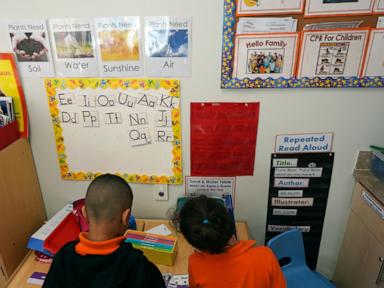
The federal rule book that defines early childhood education for more than half a million low-income children is about to shrink from over 100 pages down to roughly a dozen. If you think this is just standard bureaucratic trimming, you're missing the bigger picture.
The Trump administration is pushing a massive restructuring of Head Start. This plan scraps federal performance standards for preschools and hands the steering wheel directly to individual states and local operators. It represents a complete philosophy shift. Federal mandates are out. Local flexibility is in. But for families relying on these services, the shift creates a chaotic patchwork of unequal care across state lines.
Stripping Down the Federal Rule Book
For decades, Head Start operated under a strict, uniform set of guidelines. Established in the 1960s as a core weapon against poverty, the program relied on 122 pages of performance standards. These rules dictated everything from child-to-teacher ratios to mandatory health screenings and detailed family support services.
The new proposal tosses most of that framework. Strict federal caps on classroom sizes and specific staff-to-student safety ratios vanish under the draft plan. Instead of federal enforcement, operators will look to local and state laws.
Critics point out an obvious risk. Mississippi and Massachusetts do not regulate preschools the same way. Handing control to states means a child's access to safe, high-quality care could depend entirely on their zip code.
What Changes on the Ground
If you walk into a Head Start classroom under these new rules, the daily experience might look drastically different. Federal mandates protecting children with disabilities and discouraging harsh disciplinary exclusions are noticeably absent from the early drafts. Without federal guardrails against suspensions and expulsions, advocates worry vulnerable children will get pushed out of classrooms more easily.
At the same time, the proposal introduces targeted federal mandates of its own. Every single classroom instruction must happen strictly in English. Families facing homelessness or unemployment will face heavier documentation hurdles to prove eligibility.
There is also the ongoing financial battle over the workforce. Recent Biden-era rules attempted to lift teacher salaries closer to public school levels, carrying a multi-billion-dollar price tag slated for the next decade. The Trump administration argues those wage mandates stretch far beyond statutory limits and crush program flexibility. They want those requirements dismantled to keep programs solvent and operating.
The State-Level Gamble
Supporters of the overhaul argue that federal micromanagement has choked local innovation for years. They believe states understand their local communities better than bureaucrats sitting in Washington.
However, delegating authority doesn't automatically fund solutions. Many states already struggle with strained public education budgets and severe teacher shortages. Without federal performance baselines, underfunded states might lower the bar just to keep doors open.
When federal standards disappear, consistency goes with them. Parents will need to pay close attention to how their state legislatures choose to regulate early education providers in the coming months. Check your local state education agency website to see how your region plans to adapt to these sweeping federal changes.

.png?itok=1mb05mKJ)

