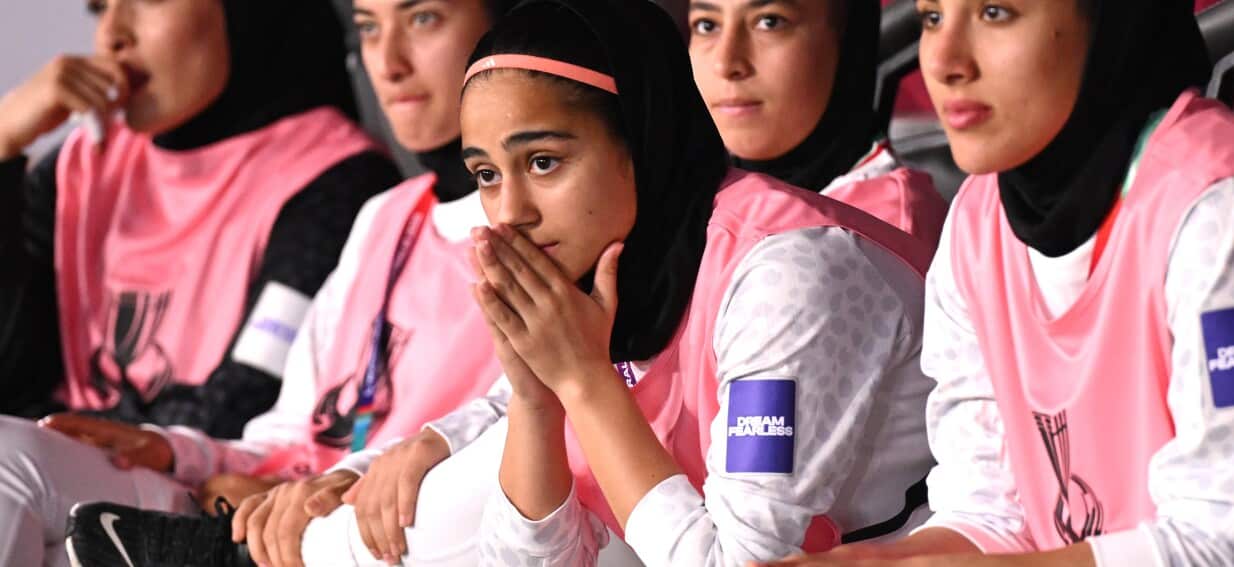
The televised branding of the Iranian national football team as "traitors" by state-controlled media is not a localized outburst of editorial frustration. It is a calculated deployment of psychological warfare designed to consolidate domestic control. When IRIB (Islamic Republic of Iran Broadcasting) airwaves carry rhetoric that strips elite athletes of their national identity, the objective is rarely about sports performance. Instead, it is a signal to the populace that even the country’s most beloved cultural icons are not immune to the consequences of perceived ideological infidelity.
This escalation marks a shift from private pressure to public excommunication. For decades, the relationship between the Iranian state and the "Team Melli" has been a fragile pact of convenience. The state utilized the team’s international success to project a veneer of normalcy and national unity, while the players navigated a minefield of restricted personal expression. That pact has disintegrated. The current atmosphere of "alarm" cited by observers is the result of the state finally removing the velvet glove, revealing a fist aimed directly at the players who dared to show even symbolic solidarity with domestic protest movements. In other developments, take a look at: Jasmine Paolini and the Myth of Momentum in Professional Tennis.
The Architecture of State Sponsored Hostility
To understand why a state would attack its own most popular assets, you have to look at the mechanics of the IRIB. In Iran, the broadcast media operates as a direct extension of the Supreme Leader’s office. There is no "rogue" producer or hot-headed pundit acting independently. When a presenter calls the national team traitors, it is a vetted script.
This tactic serves three distinct functions. First, it preemptively blames the players for any international failure, shifting the narrative from a lack of infrastructure or government mismanagement to a lack of "revolutionary zeal." Second, it creates a chilling effect. If a global superstar like Sardar Azmoun or Mehdi Taremi can be publicly vilified, a local club player or a student athlete knows exactly what kind of crushing weight will fall on them if they speak out. Sky Sports has analyzed this important subject in extensive detail.
Third, and perhaps most crucially, it attempts to fracture the bond between the team and the fans. By labeling the players as "westernized" or "disloyal," the state hopes to dilute the team's power as a rallying point for national identity that exists outside of the government's strict religious and political framework.
The World Cup Catalyst and the Point of No Return
The tension reached a fever pitch during the 2022 World Cup in Qatar, but the repercussions are only now manifesting in their most toxic forms. The decision by players to remain silent during the national anthem in their opening match was a moment of global visibility that the Iranian security apparatus could not ignore.
The state's response was not immediate. They waited.
They gathered intelligence on player families and monitored social media interactions. The current "traitor" narrative is the delayed legislative and social sentencing for those 90 seconds of silence on the pitch. We are seeing a slow-motion purge. It isn't just about the players currently on the roster; it is about the historical legacy of the team. Former legends like Ali Daei, whose passport was confiscated and whose businesses were shuttered, represent the blueprint for what happens to those who refuse to read the state-mandated script.
The Myth of the Apolitical Athlete
Critics often argue that sports should remain separate from politics. This is a luxury not afforded to anyone living under a theocracy. In Iran, the football pitch is one of the few places where large crowds can gather legally. Consequently, the government views every match as a potential security threat.
The "traitor" label is effective because it targets the one thing athletes value most: their connection to the people. By utilizing state media to suggest the players have "sold out" to foreign interests, the government weaponizes the concept of "Ghayrat"—a Persian term encompassing honor, zeal, and protective instinct. They are accusing the players of lacking the very quality that fans believe makes them great.
The Economic and Career Toll of State Disfavor
The pressure is not merely rhetorical. It has concrete financial and professional implications. The Iranian Football Federation (FFIRI) is effectively a government department. When state media turns on the team, the funding for training camps, international friendlies, and top-tier coaching often evaporates or is redirected to "loyalist" sporting projects.
- Contractual Sabotage: Players based within Iran find their contracts "reviewed" or terminated by club owners who are often linked to the Revolutionary Guard.
- Travel Restrictions: The threat of exit bans hangs over every domestic player, making it nearly impossible to pursue careers in European leagues.
- Sponsorship Erasure: Local brands are ordered to remove billboards and advertisements featuring players who have fallen out of favor, cutting off essential secondary income.
For those playing abroad, the danger is more subversive. The state targets their families remaining in Iran. This "transnational repression" ensures that even if a player is in London, Porto, or Leverkusen, they are never truly free from the IRIB’s shadow.
The Fragmentation of the Fan Base
One of the most tragic outcomes of this state-sponsored hostility is the division it has sown among the fans. For the first time in history, a segment of the Iranian population celebrated the team's losses during recent tournaments. These fans felt that the team had not done enough to distance itself from the regime, or they saw the team as a tool of government propaganda regardless of the players' personal feelings.
The "traitor" label from the state media ironically mirrors the "sell-out" label from some hardline activists. The players are caught in a pincer movement. They are too rebellious for the state and too cautious for the revolutionaries. This leaves them in a vacuum of identity, where the very act of playing a game of football becomes an exhausting exercise in political navigation.
The Role of International Governing Bodies
FIFA has historically maintained a policy of non-interference regarding the internal politics of member associations. However, the situation in Iran challenges the limits of this stance. When a member association’s state media actively endangers its own players, it ceases to be a matter of "politics" and becomes a matter of safety and human rights.
The silence from Zurich is deafening. While FIFA creates campaigns about "Human Rights" and "No Discrimination," they have yet to take a meaningful stand against the systematic intimidation of the Iranian national team by its own government. This inaction provides a green light for the IRIB to continue its campaign of vilification.
The Long Game of Cultural Reclamation
The Iranian government is not just trying to win a news cycle; they are trying to rewrite what it means to be an Iranian hero. They want a version of Team Melli that is indistinguishable from a military parade—disciplined, shouting slogans, and entirely subservient.
The players who have been labeled traitors are essentially being told that their talent belongs to the state, not to themselves or the fans. If they do not use that talent to validate the regime, the state would rather see the team destroyed than see it succeed as an independent symbol of Iranian excellence.
This is a war of attrition. The state has the microphones and the prisons. The players have their boots and the fleeting, often silent support of a terrified public. Every time a presenter on state TV uses the word "traitor," they are acknowledging the team's power. You do not bother to vilify something that doesn't matter.
Strategic Realities for the Future
If this trend continues, we will see a permanent brain drain of Iranian football talent. Younger players will seek any avenue to leave the country earlier in their development, not just for the money, but for the basic right to play without being used as a political pawn. The domestic league will likely decline in quality, becoming a closed loop of state-sponsored mediocrity.
The international community must look past the "alarm" and recognize the structural intent behind these broadcasts. This is not a misunderstanding. It is an eviction notice for the soul of Iranian sports.
The next time a player stands on that pitch, the sweat on their brow isn't just from the heat of the game. It is the physical manifestation of the knowledge that a single gesture, or the lack thereof, could result in a lifelong banishment from their home. They are playing for a country that is being told, daily, to hate them.
Identify the sponsors who remain silent while state media brands their ambassadors as enemies of the people.