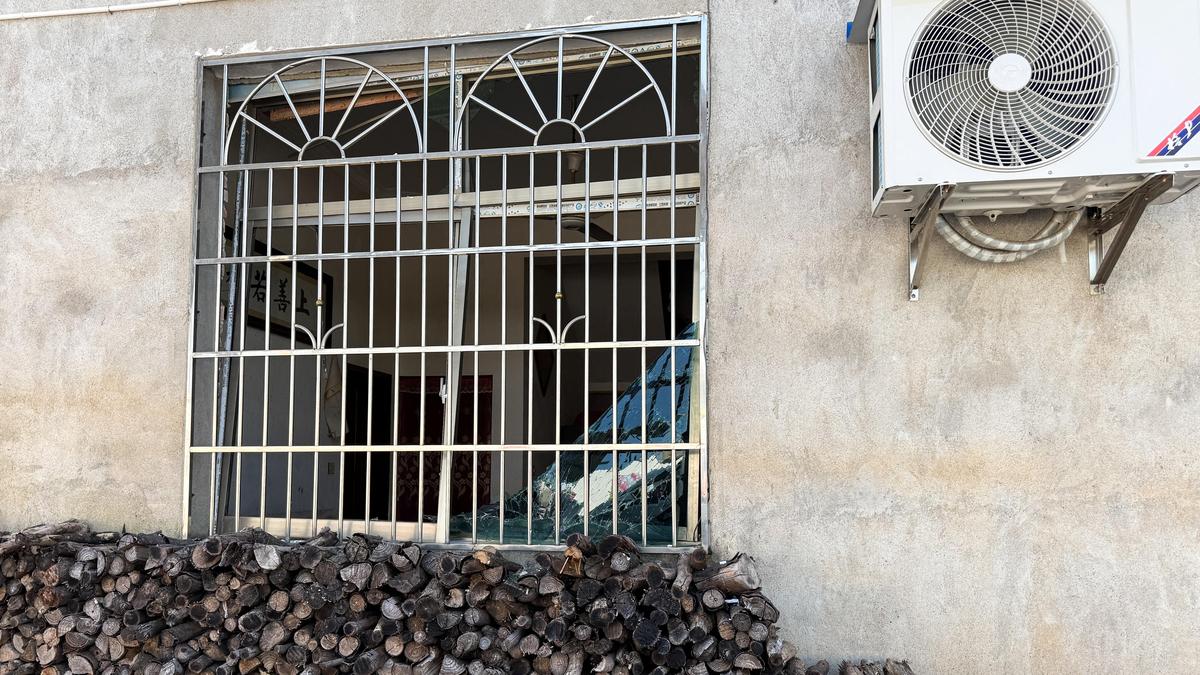
The air in the Jiangxi province usually smells of damp earth and woodsmoke. But on a Tuesday that began like any other, the atmosphere curdled. A sharp, metallic tang sliced through the morning mist, followed by a roar that shook the teeth in the heads of children miles away. This was not the celebratory crackle of a wedding or the rhythmic thumping of a New Year’s parade. It was the sound of a livelihood turning into a tomb.
Thirty-seven people.
That is the number currently etched into the official ledgers. It is a sterile figure. It sits on a page, devoid of the scent of sweat or the sound of a mother calling her son for dinner. To the world, it is a headline. To the valley where the factory once stood, it is a hole in the universe.
The Anatomy of a Spark
Fireworks are a paradox of chemistry. We treat them as toys, as decorations for our most joyous milestones, yet they are essentially contained explosions waiting for an excuse to happen. In the small, often unregulated workshops that dot the rural landscape of China, the line between a finished product and a lethal accident is thinner than the tissue paper used to wrap the powder.
Consider the physical reality of the work. Imagine a woman named Mei—a hypothetical composite of the dozens who sat at those benches. Her hands are stained a perpetual, dusty pink from the dye in the paper. She spends ten hours a day tamping magnesium and sulfur into cardboard tubes. She is an expert in the physics of joy. She knows exactly how much pressure is required to seal the casing without triggering the friction that would turn her workstation into a blowtorch.
The science is unforgiving. At a molecular level, the stability of these compounds relies on climate control, static electricity management, and the absence of contaminants. In many of these facilities, the "climate control" is an open window. The "static management" is a hope that today isn't too dry. When 37 lives vanish in a single afternoon, it is rarely because of one grand failure. It is the accumulation of microscopic risks that finally found their catalyst.
The Invisible Stakes of a Global Tradition
We demand these explosions. From the glittering skylines of Dubai to the backyard barbecues of Ohio, the world has an insatiable appetite for the spectacle of fire. This demand filters down through massive supply chains, putting immense pressure on production hubs in provinces like Jiangxi and Hunan. When the global order grows, the quotas tighten.
When quotas tighten, corners are rounded.
The tragedy of the 37 is not just a localized industrial accident; it is the friction point of a global industry that has outpaced its own safety evolution. The factory in question was reportedly operating under a cloud of expired permits and bypassed safety protocols. Why? Because a dormant factory makes no money, and a world waiting for its next celebration does not care about the fine print of a regional safety certificate.
The "invisible stakes" are the trade-offs we never see. We see the gold and silver chrysanthemums blooming in the night sky. We do not see the lack of reinforced blast walls. We do not see the absence of automated mixing systems that could keep human hands away from the most volatile stages of the process.
The Mechanics of the Blast
When the first spark caught, it likely happened in the drying room. This is the most dangerous stage of production. The slurry of chemicals must lose its moisture to become effective, leaving behind a highly sensitive, porous cake of explosives. If the temperature fluctuates by even a few degrees, or if a single tray is moved too quickly against a concrete floor, the kinetic energy is enough to initiate the reaction.
It happens in milliseconds.
The first explosion creates a pressure wave—a wall of compressed air that moves faster than the speed of sound. This wave doesn't just knock people over; it shatters glass into microscopic needles and collapses lungs. But in a fireworks factory, the first blast is merely the percussionist. The secondary explosions are the main event. As the fire spreads, thousands of finished shells ignite, turning the facility into a chaotic, multi-directional firing range.
Rescuers described a scene that looked less like a factory and more like a lunar landscape. The scorched earth was littered with the very things meant to bring smiles: colorful wrappers, bits of fuse, and the blackened husks of launch tubes.
A Culture of Calculated Risk
To understand how this keeps happening, you have to understand the geography of necessity. In many of these regions, the fireworks trade is the only ladder out of subsistence farming. It is a generational craft. Fathers teach sons how to mix the stars—the small pellets of chemicals that create the colors—and mothers teach daughters how to roll the perfect cylinder.
There is a grim familiarity with the danger. It is baked into the wage. You accept the risk because the risk pays for the school fees and the new roof. This creates a culture where safety warnings feel like bureaucratic interference rather than life-saving essentials. When you have handled gunpowder every day for twenty years without an incident, you begin to believe you have tamed it.
You haven't. Gunpowder has no memory. It doesn't care that you were careful yesterday.
The Echo in the Valley
The aftermath of a blast like this isn't just the silence of the site; it’s the noise of the aftermath. It is the sound of 37 families realizing that the breadwinner isn't coming home for the Mid-Autumn Festival. It is the sudden, jarring realization that the "boom" they heard at 10:00 AM was the sound of their lives changing forever.
The local government will promise crackdowns. They will shutter three hundred other small workshops by the end of the week. There will be televised inspections and stern speeches about the "paramount importance" of human life over profit. And for a few months, the valleys will be quiet.
But the demand doesn't go away. The colorful red paper is still being printed. The sulfur is still being mined.
Eventually, the pressure to produce will mount. A worker will go back into a shed, sit at a wooden bench, and pick up a handful of fuse. They will tell themselves that they are faster now, smarter now, and that the tragedy of the 37 was a freak occurrence, a ghost story for the cautious. They will begin to pack the powder again, their fingers turning pink, working in the shadow of a mountain that remembers the heat of the sun touching the earth.
The true cost of a firework is never found on the price tag in a retail store. It is found in the sudden, violent silence of a Jiangxi morning, where the only thing left of 37 people is the smell of burnt sugar and the drifting smoke of a celebration that arrived much too early.
The sun sets over the valley now, casting long shadows across the debris. Somewhere in the distance, a dog barks at the silence. The red paper scraps flutter in the breeze, catching the light like tiny, fallen petals. They are beautiful, in a way. But if you look closely, you can still see the gray dust of the powder coating the grass, a reminder that under every bright light, there is a dark and heavy heat.