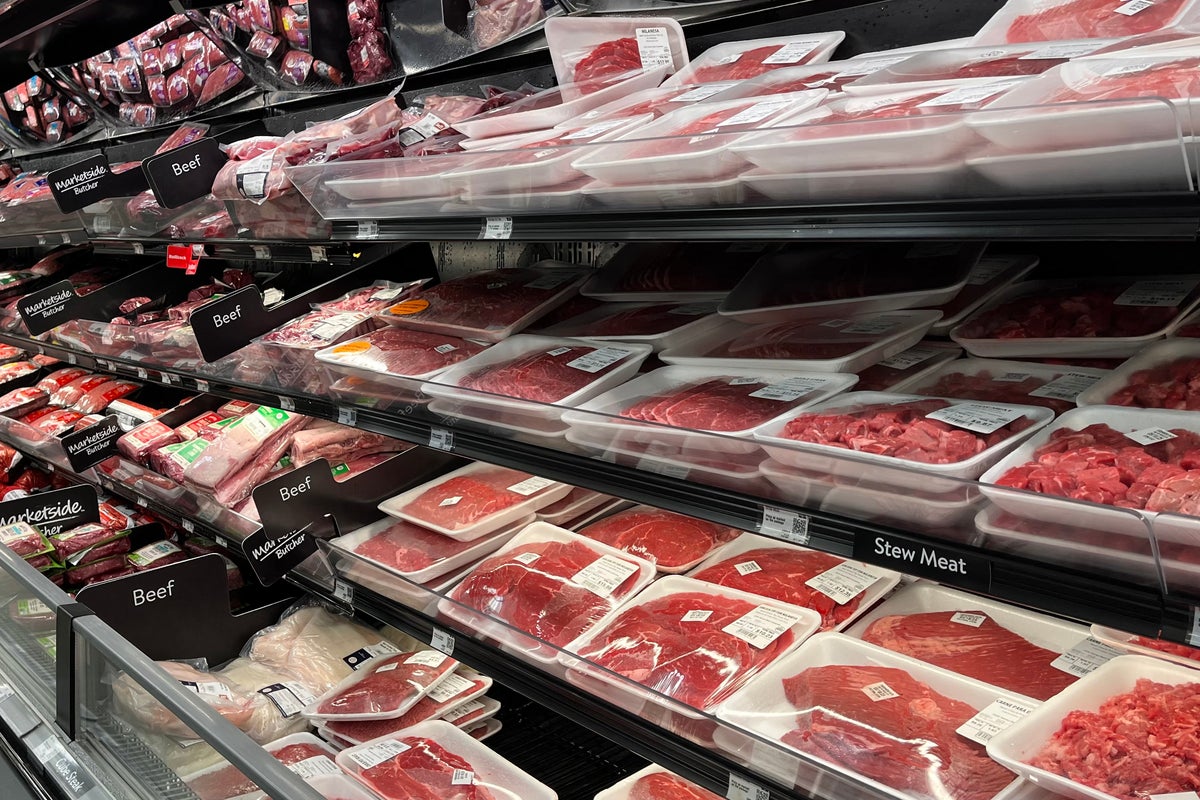
Political theater loves a simple villain. When grocery prices spike right before a major national holiday like the Fourth of July, politicians instinctively reach for the nearest microphone to blame corporate greed. The recent reports of the Trump administration pressuring top grocery executives over beef prices fit a tired, decades-old script. It makes for great headlines. It satisfies a frustrated public looking for someone to blame for their expensive barbecue.
It is also completely disconnected from how the agricultural supply chain actually works.
The lazy consensus driving this narrative is simple: supermarkets are supposedly hoarding massive profit margins, and a stern talking-to from Washington can magically lower the price of a ribeye. This assumption is worse than wrong; it completely misunderstands the brutal, low-margin reality of the grocery sector and the complex mechanics of livestock economics. Pressuring retailers to cut prices without addressing the underlying structural bottlenecks does not fix inflation. It just creates shortages.
The Illusion of the Greedy Grocer
Let’s dismantle the premise that supermarkets are sitting on bags of cash extracted from your steak dinner.
I have spent years analyzing corporate financial structures and supply chains. If you actually look at the balance sheets of major grocery chains—whether it is Kroger, Albertsons, or Walmart—you will find some of the thinnest net profit margins in the entire business world. Supermarkets typically operate on net margins hovering between 1% and 3%. They do not make their money by massively marking up individual items; they make their money on sheer volume and rapid inventory turnover.
When the price of beef goes up at the meat counter, it is almost never because the retailer decided to fatten its pocketbook. It is because their cost of goods sold has skyrocketed.
Imagine a scenario where a grocery store refuses to pay the rising wholesale price for beef because they are terrified of political blowback. What happens? The distributor sells that meat elsewhere—perhaps to the food service industry or international markets—and the grocery shelves go bare. Empty shelves do not help consumers.
The Real Bottleneck is Not the Supermarket Counter
To understand why beef is expensive, you have to look past the checkout aisle and stare directly at the meatpacking sector.
The American beef supply chain is dominated by a tight oligopoly. Four massive meatpacking companies—Tyson Foods, JBS, Cargill, and National Beef—control over 80% of the domestic cattle slaughter. This extreme concentration creates a structural bottleneck that squeezes players at both ends of the chain.
[Cattle Ranchers] ---> [The Big Four Meatpackers (80%+ Control)] ---> [Grocery Chains] ---> [Consumers]
When meatpackers face labor shortages, rising energy costs, or supply chain disruptions, they possess the market power to pass those costs forward to retailers while simultaneously keeping the prices they pay to independent cattle ranchers low.
Data from the U.S. Department of Agriculture (USDA) repeatedly shows a widening spread between wholesale beef prices and the prices paid for live cattle. Ranchers are often struggling to break even, while consumers face sticker shock. The grocery store is merely the messenger delivering the bad news. Trying to fix food inflation by bullying Kroger is like screaming at the mailman because you got a high electric bill.
Why Political Interventions Backfire Brutally
History gives us an exact roadmap of what happens when governments try to command prices into submission.
In the early 1970s, President Richard Nixon instituted sweeping price controls on various goods, including meat, to combat inflation. The result was an unmitigated disaster. Ranchers stopped sending cattle to market because they couldn't cover their costs. Meatpacking plants shut down. Consumers faced severe shortages, and black markets emerged.
When you artificially cap a price below the market equilibrium, you do not make the item cheaper for the masses; you make it disappear.
If the administration forces grocery chains to artificially suppress beef prices, those retailers have to make up the lost revenue somewhere else to protect their razor-thin margins. They will raise the price of milk, cereal, produce, or household staples. The consumer still pays the inflation tax; it just gets shifted to a different aisle.
Dismantling the Flawed Questions
The public discussion around this issue is built on fundamentally flawed questions. Let’s look at what people are actually asking, and provide the unvarnished truth.
Do grocery stores price-gouge during holidays?
No. Retailers use a strategy called "loss-leader pricing" during major holidays. They frequently sell high-demand items like hot dogs, hamburger buns, and even specific cuts of beef at a loss or at cost just to get you through the front door. They know that once you are inside, you will buy high-margin items like chips, charcoal, beer, and condiments. The idea that they are universally cranking up beef prices right before July 4th to exploit patriotism is an economic myth.
Can antitrust laws solve high food prices?
Only in the long run, and not the way politicians think. Passing new regulations or threatening executives in closed-door meetings does nothing to change the current supply and demand dynamics. True antitrust enforcement aimed at breaking up the meatpacking oligopoly could introduce more competition over a decade, but it will not lower the price of a hamburger by this Friday.
What is the alternative to political pressure?
The uncomfortable truth is that the market requires time to rebalance. High prices are the cure for high prices. When beef becomes too expensive, consumer demand naturally shifts toward cheaper proteins like chicken or pork. This demand destruction eventually forces wholesale prices down. Political jawboning only disrupts this natural signaling mechanism, prolonging the pain.
The Operational Reality No One Wants to Admit
Admitting that the government is powerless to instantly lower the price of meat is political suicide. That is why we see these performative displays of pressuring executives.
True industry insiders know that food pricing is governed by hard variables: feed costs, diesel prices for transportation, slaughterhouse capacity, and global export demand. Herd sizes in the United States have hit historic lows due to severe droughts in the Southwest over the past few years. Fewer cattle mean less beef. Less beef means higher prices. It is basic math.
No amount of political posturing can breed more cattle overnight or make it rain in Texas.
The next time you see a headline about politicians cracking down on grocery chains over the price of your holiday steak, ignore the rhetoric. Look at the herd sizes. Look at the diesel index. Look at the meatpacking margins. Stop expecting Washington to fix your grocery bill with a press release.