The smell of burning rubber does not belong on Pennsylvania Avenue.
If you stand outside the iron gates of the White House on any given Tuesday, the sensory profile is predictable. It is a mix of exhaust fumes from idling tourist buses, the faint, sweet scent of roasted nuts from a street cart vendor, and the damp, heavy breath of the Potomac River. It smells like bureaucracy. It smells like history, curated and carefully manicured.
This weekend, it will smell like high-octane fuel and scorched asphalt.
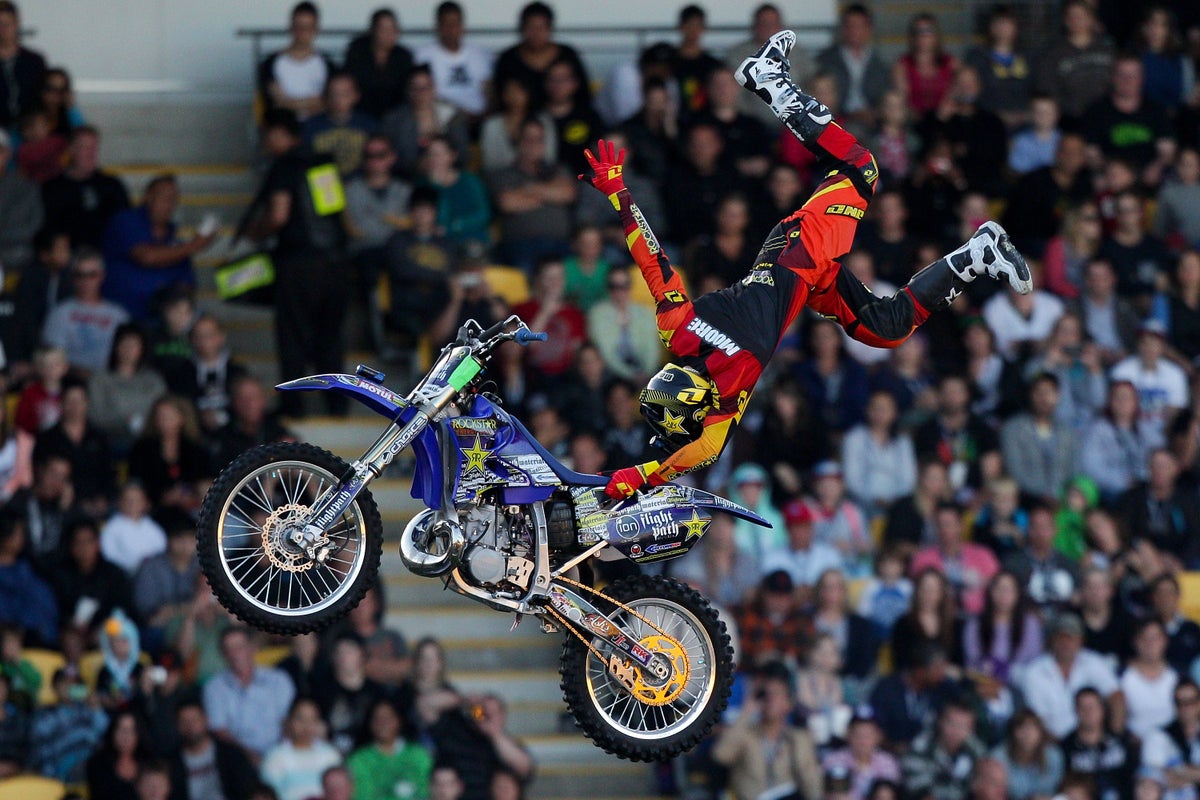
The political commentators are already sharpening their knives, focusing entirely on the optics. They are tallying the political capital spent, arguing about the dignity of the office, and debating the logistics of turning the South Lawn into an arena. A leaked report confirmed the rumors: the upcoming combat sports exhibition on the executive grounds isn’t the main event anymore. Now, BMX riders and stunt motorcyclists are moving in, scheduled to launch themselves into the airspace above the executive mansion.
The talking heads see a circus. They see a calculated play for a younger demographic, or perhaps a bizarre distraction from a heavy legislative week. But they are missing the real story.
To understand what is actually happening here, you have to look past the press releases. You have to look at the tarmac. You have to understand the terrifying physics of a backflip, the quiet desperation of a subculture that has spent forty years begging for legitimacy, and the strange, inevitable collision between American power and American counterculture.
The Gravity of the South Lawn
Think about the grass.
For over two centuries, the South Lawn has been treated with a reverence bordering on the religious. It is the backdrop for state arrivals. It is where presidents walk toward Marine One, waving one last time before disappearing into the sky. Its blades are kept at a precise, uniform height, a living carpet designed to project absolute stability to the rest of the world.
Now imagine a 250-pound dirt bike slamming down onto a temporary wooden landing ramp erected just yards from the Oval Office.
The sheer physics of a modern stunt show are violent. When a rider approaches a launch ramp, they are compressing suspension systems designed to withstand thousands of pounds of force. The engine screams—a high-pitched, two-stroke whine that will echo off the bulletproof glass of the West Wing. For three seconds, that rider is entirely at the mercy of momentum, suspended forty feet in the air, spinning a piece of machinery that could crush a human skull like a grape if the rotation stops a fraction of a second too early.
It is an exercise in controlled chaos. And that chaos is about to take place in the most controlled environment on earth.
Consider the contrast. The White House operates on a schedule calculated down to the second. Meetings are timed. Speeches are vetted. Every movement of the chief executive is choreographed by a small army of Secret Service agents whose entire existence is predicated on eliminating variables.
A stunt bike event is nothing but variables.
A sudden gust of wind ripping through the District. A loose bolt on a triple clamp. A tire slick with a light afternoon mist. Any of these micro-factors can turn a spectacular trick into a medical emergency in the blink of an eye. The Secret Service prepares for every imaginable threat, but it is safe to assume their training manuals rarely cover how to respond if a freestyle motocross rider loses his grip mid-air and sends a ghost-riding motorcycle hurtling toward the Rose Garden.
The Kids Who Weren't Allowed in the Park
This isn't just about entertainment. It is about a profound cultural shift that has been decades in the making.
To understand why this matters, you have to go back to the 1980s and 1990s. If you grew up riding a BMX bike or a skateboard, you were a criminal by default. Cities didn't build parks for you; they built architectural deterrents. They put metal pegs on concrete ledges to keep you from grinding. They posted signs with heavy fines. Police officers confiscated bikes. Property owners viewed these kids as a plague of locusts, destroying property and disturbing the peace.
It was an underground movement born out of concrete ditches and abandoned dirt lots. It was fueled by cheap VHS tapes traded through the mail and a collective middle finger to the traditional sports establishment.
If you told a kid riding a stripped-down Haro bike in a drainage ditch in 1988 that one day, guys doing tailwhips would be invited guests at the White House, they would have laughed in your face. They would have assumed you were talking about a dystopian movie.
Yet, here we are. The counterculture didn't just survive; it won. It was absorbed by the mainstream, commodified by television networks, and eventually welcomed into the Olympic Games. This weekend's event at the White House is the ultimate, absurd culmination of that journey. The ultimate institutional validation. The establishment isn't just letting the outcasts into the park anymore; they are letting them ride on the lawn.
But validation comes with a cost.
There is a distinct melancholy that comes when something dangerous and beautiful becomes respectable. The early pioneers of action sports rode because they didn't fit into little league baseball or suburban soccer clubs. They wore bruises like badges of honor because the pain belonged entirely to them. Now, their spiritual descendants will be performing under the watchful eyes of snipers positioned on the White House roof. The rebellion has been codified, permitted, and scheduled between a policy briefing and a diplomatic dinner.
The Secret Language of Friction
We tend to look at athletes in these extreme disciplines as adrenaline junkies, thrill-seekers with a loose screw or a death wish.
That is a lie.
The people who operate at this level are not reckless. They are hyper-focused technicians. They possess an intimate,Almost instinctual understanding of classical mechanics that would make an MIT professor jealous.
When a rider approaches a jump, they aren't thinking about the crowd or the historical significance of the venue. Their world narrows down to a few critical metrics. They are calculating the coefficient of friction between their knobby tires and the plywood ramp. They are measuring the exact RPMs needed to create enough gyroscopic stability to keep the bike upright in mid-air.
It is a silent, internal dialogue with gravity.
"You don't feel the height," a retired freestyle rider once told me, his wrists scarred from multiple surgeries. "You feel the time. You know exactly how many beats your heart will take before you have to put your hands back on the bars. If you miss a beat, you break."
🔗 Read more: Washington Punches a Hole in the Iraqi Oil Ministry
Imagine that internal calculation happening while looking at the Washington Monument in the distance. The psychological pressure is immense. If an athlete crashes at a typical event in Ohio or California, it is a bad day at the office. If an athlete crashes at the White House, it becomes a global news event, a meme, a permanent footnote in presidential history. The stakes are no longer just personal; they are historical.
The View from the Portico
So why do it? Why take this specific risk?
The answer lies in the changing nature of power and attention. We live in an era where the traditional symbols of authority are losing their grip on the public imagination. A speech behind a mahogany podium doesn't command the room the way it used to. The modern world demands spectacle. It demands moments that break through the endless, digital noise of our daily lives.
By bringing combat sports and stunt bikes to the executive mansion, the administration is attempting to borrow some of that raw, undeniable visceral energy. They want the White House to feel alive, dangerous, and modern. They want to capture the attention of a generation that views traditional politics with a mixture of boredom and cynicism.
But there is a risk of a different kind here.
When you invite the circus into the castle, you run the risk of looking like you no longer control the kingdom. There is a fine line between a bold, populist gesture and an admission that the old ways of inspiring people are broken.
Saturday will bring the answers.
The ramps are being bolted together. The sound systems are being tested. The Secret Service is adjusting its perimeter to account for men flying through the air on motorized projectiles.
When the first engine roars to life this weekend, a sound will tear through the quiet dignity of the nation's capital that has never been heard there before. For a few hours, the policy debates, the partisan bickering, and the heavy weight of global diplomacy will fade into the background. Everything will come down to a twenty-year-old kid, a tank of gasoline, and a two-hundred-foot arc through the sky.
And on Monday morning, the groundskeepers will go out onto the South Lawn. They will look at the deep, black tire tracks burned into the dirt, the unmistakable signature of a world that refused to stay outside the gates. They will take out their tools, and they will quietly begin the long, impossible task of trying to make the grass grow straight again.