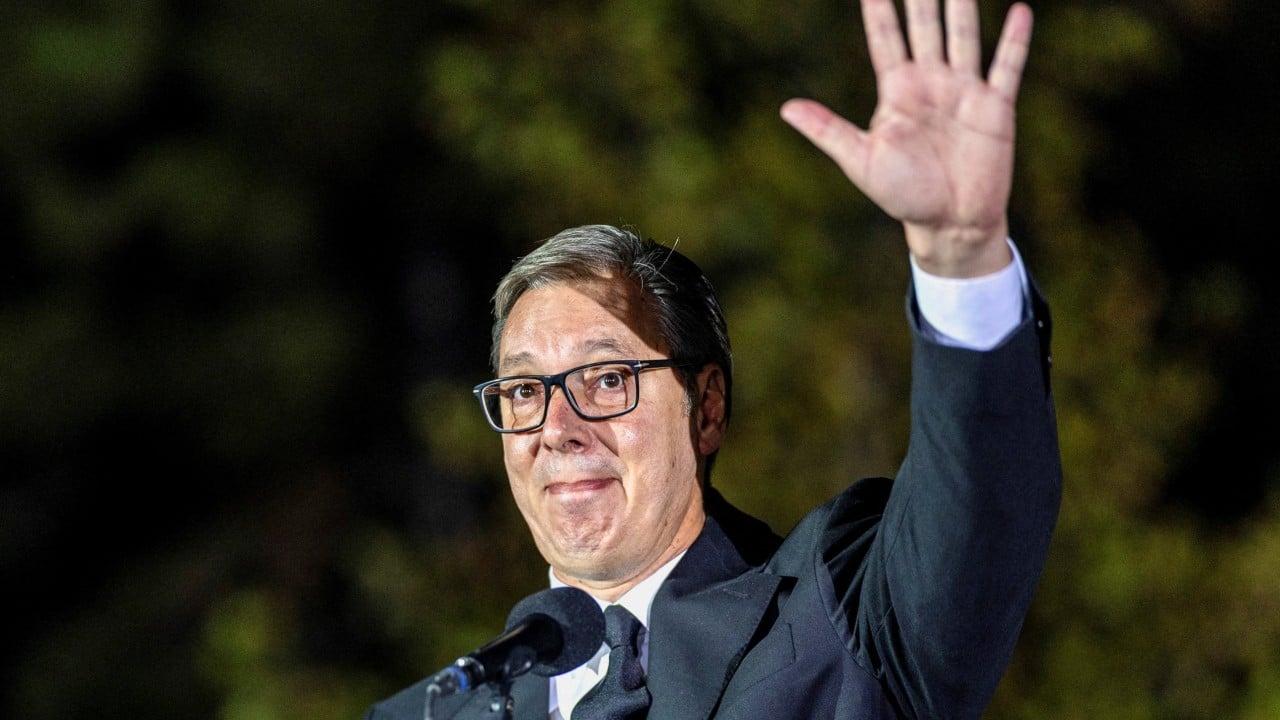
Political survival in the Western Balkans rarely follows standard constitutional logic. When a head of state abandons the presidency mid-term to orchestrate a transition into the prime minister office, seasoned observers recognize the maneuver immediately. It is not an exercise in humility. It is a calculated consolidation of executive machinery designed to bypass institutional checks and secure absolute control over state resources.
The resignation of Serbia's president sets off a familiar cycle of political theater. On paper, the move looks like a bureaucratic shuffle or a routine adjustment of political weights. In reality, it reflects the structural realities of a political system engineered around a single dominant personality. The presidency in Serbia carries significant moral authority and foreign policy influence, but executive administration, budgetary allocation, and direct control over administrative levers reside squarely in the office of the prime minister. By stepping down from the ceremonial and semi-executive heights of the presidency and descending into the administrative trenches of the premiership, the architect of this shift ensures that every ministry, contract, and municipal project answers directly to his political command.
Understanding why this happens requires looking past the daily noise of Belgrade's media landscape. Serbia sits in a permanent geopolitical vice. To the west, the European Union dangles the prospect of accession while maintaining constant pressure over rule of law, judicial independence, and alignment with foreign policy directives. To the east, historical ties, energy dependence, and cultural affinities with Moscow create an opposing gravitational pull. Western capitals have long watched Belgrade attempt a precarious balancing act, extracting economic benefits from Europe while hedging its diplomatic bets. Critics often label this foreign policy vector as opportunistic, but domestically, it functions as a primary mechanism of political mobilization. Aligning the rhetorical posture of the state with external symbols of strength plays well among a domestic electorate that remains deeply suspicious of Western intervention stemming from the events of the 1990s.
When political figures in Belgrade invoke external threats or frame domestic opposition as foreign proxies, they are utilizing a well-worn playbook. The strategy shifts public attention away from stubborn economic hurdles, persistent inflation, and systemic corruption. By engineering a high-stakes government reshuffle, the ruling party creates a perpetual state of emergency. Elections are never far away, crises are managed rather than resolved, and the opposition is kept off balance, forced to react to manufactured deadlines and abrupt institutional pivots.
The mechanics of this power transfer reveal much about the state of democratic institutions in the region. Formal separation of powers relies on independent bodies possessing the will and capacity to check executive overreach. When the leader of the ruling party can freely trade offices, dissolve parliaments, and dictate government formation without meaningful pushback from within their own ranks, the constitution functions more as a suggestion than a binding contract. Parliament becomes a rubber stamp, regulatory agencies lose their administrative teeth, and the public sphere is saturated with messaging that conflates the survival of a single political faction with the survival of the state itself.
Economic pressures compound these political dynamics. While official statistics often highlight infrastructure growth and foreign direct investment, ordinary citizens feel the pinch of rising living costs, high utility prices, and a healthcare sector struggling with chronic underfunding and brain drain. Thousands of skilled professionals, from doctors to software engineers, continue to leave the country annually, seeking stability within the European Union. This demographic hemorrhage weakens civil society and hollows out the very institutions needed to demand accountability.
Yet, opposition forces face an uphill battle. Fragmented, frequently divided over ideological lines, and lacking access to the dominant media channels, anti-government movements struggle to present a cohesive alternative. Street protests erupt periodically, driven by environmental grievances, electoral irregularities, or public outrage over specific tragedies, but they rarely translate into sustained political infrastructure capable of winning a national election on a level playing field. The ruling party's mastery of clientelistic networks, public sector employment loyalty, and media dominance ensures that even when public discontent surges, it dissipates before reaching a critical electoral threshold.
As the new government takes shape under this recycled leadership, the implications extend far beyond Serbia's borders. The European Union faces an ongoing dilemma regarding its enlargement policy. Brussels needs stability in the Western Balkans to prevent security vacuums that could be exploited by other global powers. Consequently, Western diplomats often prioritize short-term geopolitical cooperation over long-term democratic reform, turning a blind eye to democratic backsliding in exchange for regional predictability and cooperation on security or migration issues. This pragmatic calculus inadvertently strengthens the very authoritarian tendencies that European integration is ostensibly designed to cure.
The transition in Belgrade is complete, but the underlying vulnerabilities of the state remain unaddressed. Shuffling titles between the presidency and the prime minister office alters the administrative address of power, but it does nothing to solve the structural deficits undermining the economy, driving away talent, and alienating a weary citizenry. Power concentrated entirely in one political orbit leaves no room for error, and no mechanism for peaceful, institutional renewal when the inevitable crises arrive.