The American Postal Workers Union (APWU) has officially broken its silence, launching a national television ad campaign that frames mail-in voting not just as a convenience, but as a crumbling pillar of American infrastructure that requires urgent defense. This isn’t a standard public service announcement. It is a direct counter-offensive against an escalating executive campaign to fundamentally redefine the role of the U.S. Postal Service (USPS) from a neutral carrier into a gatekeeper of the franchise.
The timing is far from coincidental. Two weeks ago, President Donald Trump signed an executive order that effectively attempts to turn 600,000 postal employees into a de facto border patrol for the ballot box. The order seeks to bar postal workers from delivering absentee ballots to anyone not appearing on a new, federally mandated list of "verified eligible voters"—a move that critics and union leaders argue is both unconstitutional and operationally impossible.
The Front Lines in Ohio
The campaign began its run in Ohio, a state chosen for its historical resonance. During the Civil War, Union Army soldiers from Ohio cast the first mail-in ballots in 1864. By invoking this history, the APWU is attempting to strip the partisan varnish off the debate, repositioning mail-in voting as a veteran-tested, century-old American tradition rather than a modern political gambit.
The ads themselves are deceptively simple. They feature everyday Americans—a farmer in a dusty field, a flight attendant on a layover—briefly explaining why the mailbox is their only viable polling place. But the subtext is heavy. The closing tagline, "Vote by mail—keep it, protect it, expand it," is a sharp rebuke to the administration's recent efforts to curtail the practice through both executive fiat and legislative pressure.
The Administrative Squeeze
While the public sees the fight through the lens of TV spots and campaign rallies, the real battle is happening in the processing plants and sorting facilities. The March 31 executive order is the most aggressive attempt yet to federalize election rules that have historically belonged to the states.
By demanding that the Department of Homeland Security (DHS) build a master list of eligible voters and requiring the USPS to cross-reference mailings against it, the administration is asking an agency built for logistics to perform the work of an auditor. Jonathan Smith, president of the APWU, has been blunt about the operational nightmare this presents.
"It is not the job of the postal workers to verify voter eligibility," Smith stated. "It is our job to move mail from one destination to the next."
The friction here is palpable. Postal workers are trained to prioritize the "sanctity of the seal." Instructing them to withhold mail based on a secondary, potentially flawed database contradicts over two centuries of postal law. It also puts the individual carrier in an impossible position: obey the executive order and risk a lawsuit for disenfranchisement, or deliver the mail and face federal disciplinary action for violating a presidential directive.
Performance Under Pressure
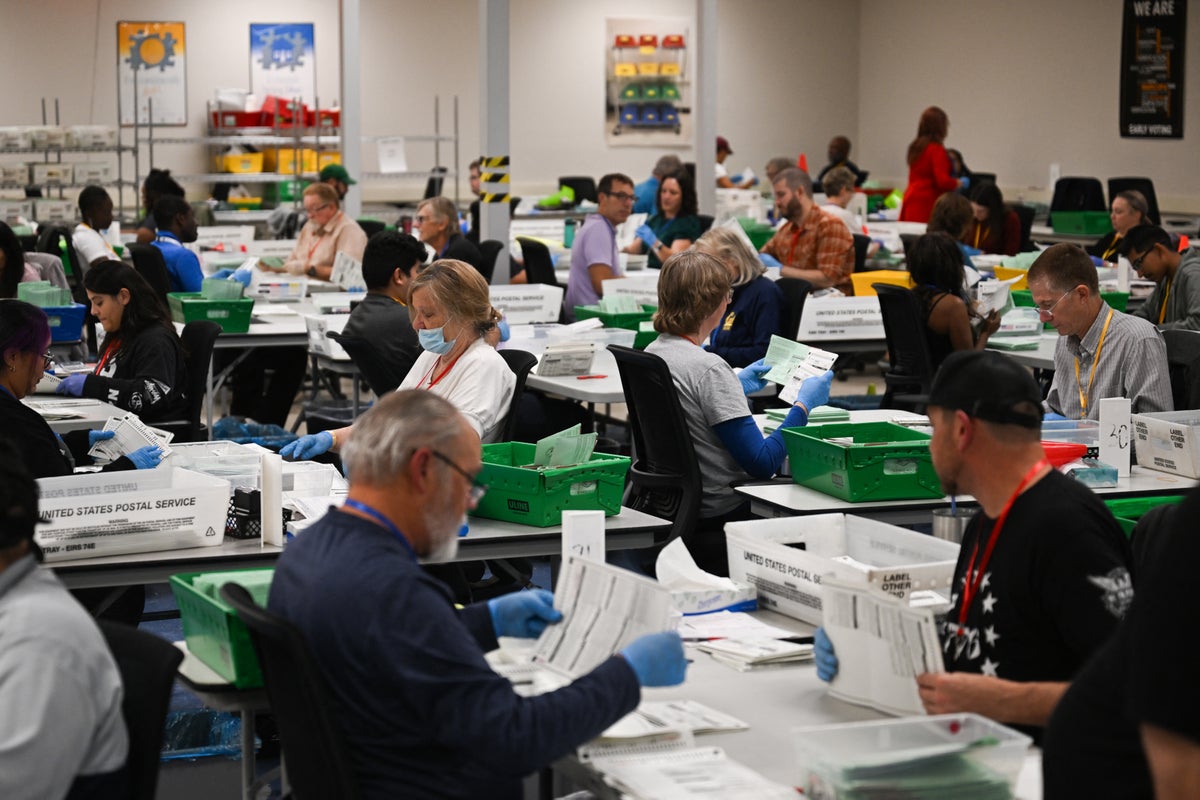
Lost in the political noise is the fact that the USPS has already proven it can handle the load. During the 2024 general election, the service delivered over 99 million ballots. According to internal post-election analysis, 99.88% of ballots sent from voters to election officials arrived within seven days. On average, a completed ballot moved from a voter’s hands to a local board of elections in just 24 hours.
These figures aren't just statistics; they are a baseline of competence that the union is using to argue against any "reforms" that would slow down the system. The administration’s counter-argument hinges on the potential for fraud—a claim that continues to struggle for oxygen in the face of hard data. A 2025 Brookings Institution report found that mail voting fraud occurred in roughly four cases out of every 10 million ballots cast. In the world of logistics, a 0.00004% error rate is considered near-perfection.
The Constitutional Deadlock
The legal war over this executive order has already moved to the U.S. District Court for the District of Massachusetts. A coalition of voting rights groups, including the ACLU and the League of Women Voters, argues that the President is making an end-run around Article I, Section 4 of the Constitution, which grants the power to regulate elections to state legislatures and Congress.
The administration’s strategy appears to be one of friction. Even if the executive order is eventually struck down by the Supreme Court, the mere existence of the directive creates a climate of uncertainty. If a voter isn't sure their ballot will be delivered, or if a postal worker is hesitant to process a tray of absentee envelopes, the goal of suppressing mail-in volume is achieved without ever winning a single court case.
Logistics as a Weapon
We are witnessing the weaponization of the "last mile." For decades, the USPS was the quietest arm of the federal government, a boring but essential utility. Now, its budget, its leadership, and even its daily delivery routes are being analyzed with the same intensity usually reserved for swing-state polling.
The APWU’s decision to spend member dues on a national ad campaign is a sign that the "neutral" era of the Postal Service is over. The union isn't just fighting for the right of citizens to vote; they are fighting for the survival of their own operational mandate. If the USPS becomes a political filter for what mail is "verified" and what is not, it ceases to be a universal service. It becomes a tool of the administration in power.
The ads will continue to roll out in battleground states as the election cycle intensifies. But no amount of 30-second spots can bridge the gap between a White House determined to shrink the mail-in electorate and a workforce legally bound to deliver every piece of mail it touches. This is a collision of constitutional authority and logistical reality, and the mailbox is the impact zone.



