Stop Treating Campaign Optics Like Sunday School
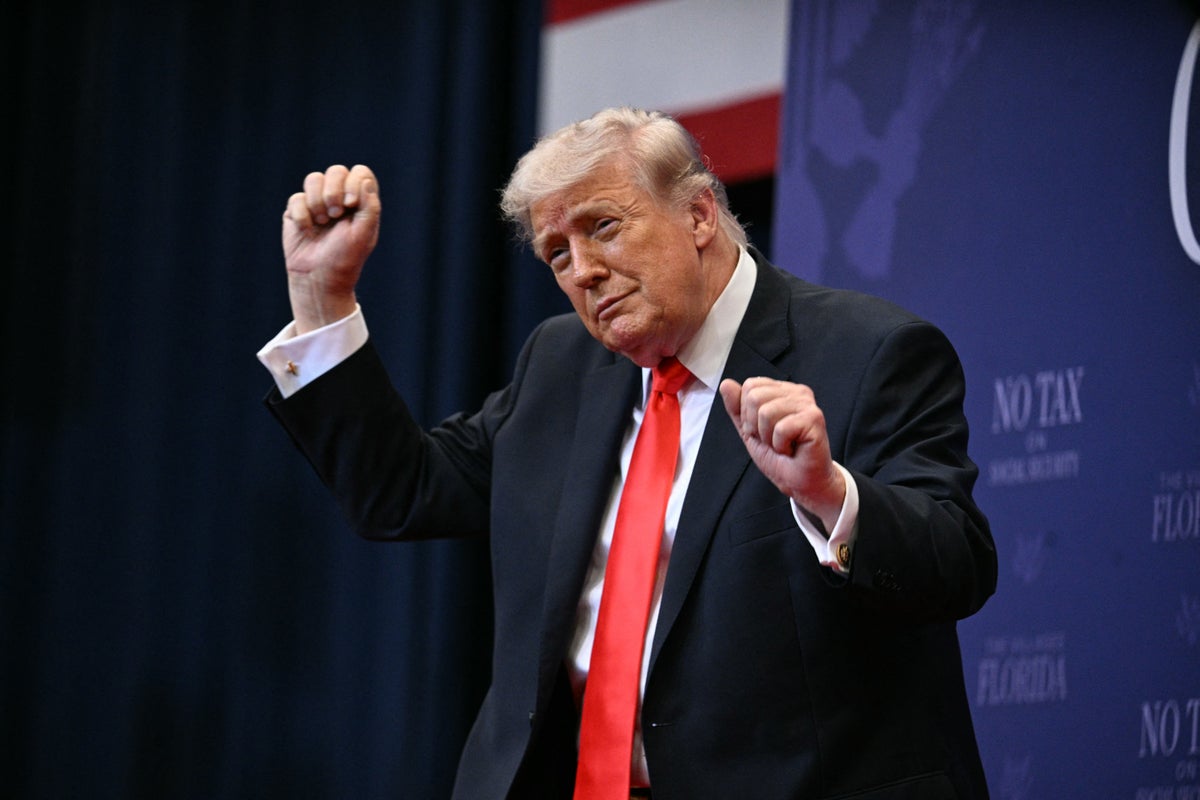
The media is clutching its collective pearls again. They found a clip of Donald Trump doing a stylized, perhaps "bizarre" impression of Ilhan Omar. They call it a distraction. They call it a gaffe. They call it proof of a declining mental state or a lack of decorum.
They are wrong.
If you think a political rally is a policy symposium, you’ve already lost the game. We are watching the most sophisticated attention-economy machine in modern history, and the pundits are still trying to grade it like a high school debate. The "lazy consensus" here is that Trump "went off the rails." The reality is that the rails don't exist, and the performance is the point.
The Neuroscience of the Caricature
Politics isn't about data; it’s about neuro-association. When Trump leans into an impression—no matter how strange or exaggerated—he isn't trying to provide an accurate theatrical portrayal. He is anchoring a specific emotion to a political opponent.
Most political consultants will tell you to stay "on message." They want clean, sanitized soundbites that wouldn't offend a focus group in the Midwest. That strategy is exactly why most politicians are forgettable. Trump understands that a visceral, mocking impression bypasses the logical centers of the brain and hits the reptilian core. It’s tribal, it’s aggressive, and it’s memorable.
When he says, "Goodnight brother, let’s go to bed," while mimicking Omar, he isn't just telling a joke. He is weaponizing a specific narrative about her personal life and background that his base already believes. He is reinforcing an "in-group" vs. "out-group" dynamic. By the time the fact-checkers at the major networks have finished their 1,000-word debunking pieces, the image of the mockery has already burned into the consciousness of millions.
The Comedy Club Doctrine
I’ve spent years analyzing audience engagement metrics for high-level branding. The most effective way to build a cult-like following isn't through competence; it’s through shared laughter at a common enemy.
Traditional news outlets cover these rallies as "news events." They aren't. They are variety shows. If you look at the structure of a Trump speech, it mirrors the flow of a stand-up comedy set more than a legislative address. There’s a setup, a punchline, a callback, and a crowd-work segment.
The media calls it "bizarre" because they are using the wrong rubric. If a comedian did an impression of a politician on SNL, it would be analyzed for its comedic timing. When a politician does it, the media acts as if a sacred boundary has been breached. Trump knows this reaction is coming. He counts on it. The outrage is the distribution network.
The Illusion of the Gaffe
We need to address the "People Also Ask" obsession with whether these moments hurt his standing. The premise of the question is flawed. It assumes that voters are looking for a statesman.
Voters in the current era are looking for a wrecking ball.
Every time a headline screams about a "bizarre impression," it confirms to his supporters that the "elites" in the media don't get it. It creates a feedback loop where the criticism actually strengthens the bond between the performer and the audience.
I’ve seen brands try to "sanitize" their founders to make them more palatable to the press. It almost always results in a drop in authentic engagement. People don't want polished; they want "real," even if "real" is a highly curated version of chaos.
Why Policy is the Ultimate Red Herring
The competitor article focuses on the oddity of the Omar impression while ignoring the underlying mechanics of the rally itself. It treats the speech as a series of disconnected statements.
This is a failure of analysis.
A rally is a vibe-check. The specific words matter less than the energy of the room. When Trump pivots from trade policy to a mocking story about a political rival, he is managing the "trough" of the speech. He knows that human attention spans are short. You cannot talk about the trade deficit for 90 minutes. You need peaks and valleys. The "bizarre" impressions are the spikes that keep the audience from checking their phones.
The Cost of Decorum
The contrarian truth that nobody admits is that "decorum" is a luxury for the winning side of the status quo. If you are trying to upend the system, you cannot use the system’s language.
The people who are offended by the Ilhan Omar impression were never going to vote for him. He isn't losing any "points." Meanwhile, he is providing his base with "ammunition"—memorable tropes they can use in their own digital circles.
The media’s obsession with the "weirdness" of the performance is a distraction from its efficiency. They are looking at the finger pointing at the moon and complaining about the fingernail.
Stop Asking the Wrong Questions
Stop asking if the impression was "presidential." That ship sailed in 2015.
Stop asking if it was "factually grounded." It’s an impression, not a deposition.
Ask instead: Did it dominate the news cycle for 48 hours? Yes.
Did it force his opponents to repeat his talking points while trying to "debunk" them? Yes.
Did it energize a crowd that stood in the Florida heat for six hours? Yes.
By those metrics—the only metrics that actually matter in a campaign—the performance was a masterclass.
The Brutal Reality of Modern Branding
In a world of infinite content, the greatest sin is being boring. A boring politician is a dead politician. You can be offensive, you can be strange, and you can be "bizarre," as long as you are the center of the conversation.
The competitor article is a relic of a time when the press acted as the gatekeepers of acceptable behavior. Those gates are gone. The crowd in Florida didn't see a "bizarre impression." They saw their champion mocking the people they despise. They saw someone who refuses to play by the rules of a game they feel is rigged against them.
The media can keep writing their "Goodnight brother" headlines. They are just providing the soundtrack for a performance they still don't understand how to review.
Quit looking for logic in the lyrics. Look at the size of the stadium.
The show isn't over. It’s just getting to the part where the audience forgets the script and starts screaming for the encore. Turn off the "decorum" filter and look at the math: Attention = Power. Everything else is just noise.