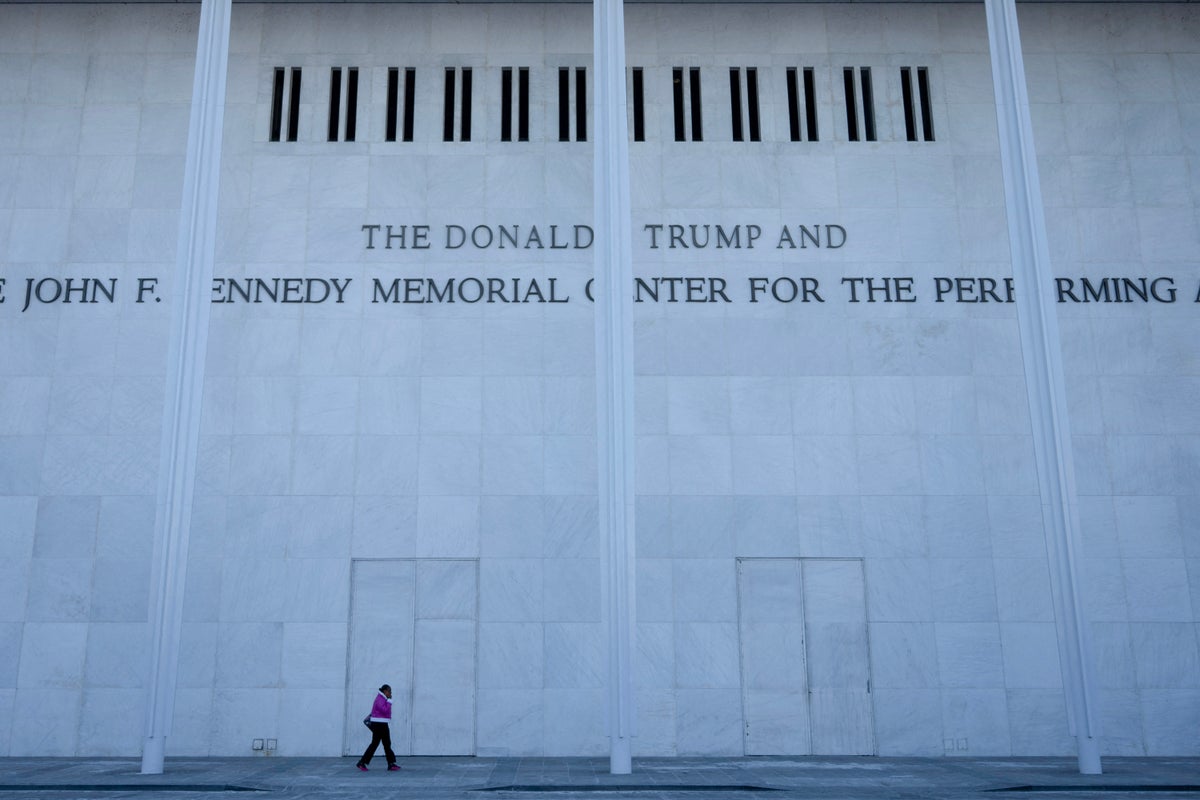
The institutional survival of the Kennedy Center Honors depends on a delicate equilibrium between federal dependency and bipartisan prestige. When a sitting administration exercises its right to attach its brand to a legacy institution, it shifts the center's value proposition from a neutral cultural meritocracy to a polarized political asset. This transition reveals the underlying mechanics of how state-sponsored arts programs navigate periods of high-intensity partisanship while maintaining operational continuity.
The Dual-Incentive Model of Federal Arts Funding
To understand why the Kennedy Center Honors persists through administrative friction, one must examine the specific financial and symbolic incentives that govern its existence. The Kennedy Center is a "public-private" hybrid; it receives federal appropriations for building maintenance and security while relying on private donations for its actual programming.
The Honors ceremony functions as the primary vehicle for this private capital. The event serves as a high-yield networking environment where corporate donors gain proximity to executive power. When the Trump administration’s name is appended to the event, the "product" being sold to donors changes. It is no longer just "The Arts"; it is access to a specific political architecture.
- The Sovereignty Factor: The executive branch maintains a direct connection to the Center via the board of trustees, many of whom are presidential appointees.
- The Brand Collision: The "Kennedy" name carries a specific liberal-intellectual weight, while the "Trump" name carries a populist-disruptive weight. The merger of these two names creates a branding paradox that stresses the Center’s PR infrastructure.
Mechanics of Artistic Boycotts and Talent Retention
The primary threat to the Honors' viability is "Talent Flight." Historically, the prestige of the award was sufficient to ensure near-universal acceptance. However, the introduction of a highly polarizing executive brand triggers a cost-benefit analysis for potential honorees.
The decision-making process for an artist involves three variables:
- Legacy Value: Does receiving the award now diminish the historical value of the award?
- Audience Backlash: Will the artist's primary demographic view attendance as a tacit endorsement of the administration?
- Institutional Loyalty: Is the artist’s commitment to the Kennedy Center as an entity stronger than their opposition to the current executive?
During the first Trump term, several artists opted out, forcing the administration to eventually skip the event to avoid the optics of a half-empty room or public snubs. The current restructuring suggests an attempt to institutionalize the administration's presence regardless of individual artist participation. This moves the ceremony toward a model used by state-run media in other nations, where the event’s success is measured by its occurrence rather than the consensus of its participants.
The Structural Revenue Gap
If the "Trump" brand causes a significant percentage of traditional liberal donors to retract their support, the Center faces a Liquidity Bottleneck. The Honors gala is not merely a party; it is a critical budgetary event.
Donor Substitution Theory
When legacy donors (often from the New York and Hollywood old-guard) exit, the Center must find replacement capital. This replacement usually comes from:
- Political Stakeholders: New donors who seek favor with the current administration and view the Honors as a transactional entry point.
- Industrial Entities: Sectors like defense, energy, or domestic manufacturing that may be more aligned with the administration's policy goals and less sensitive to artistic "purity" concerns.
This shift in the donor base alters the long-term programming of the Center. A donor base tied to a specific political movement will eventually demand a say in the "content" of the Honors, potentially shifting the criteria for who is considered an "icon" from artistic innovation to cultural alignment.
Tactical Neutrality as an Operational Failure
The Kennedy Center leadership often attempts "Tactical Neutrality"—the idea that the institution can remain a neutral vessel for whoever occupies the White House. This is a logical fallacy in a polarized market. In branding, neutrality is often interpreted as complicity by one side and weakness by the other.
The decision to proceed with the Honors while explicitly incorporating the Trump name is a strategic pivot toward "Executive Realism." The Center has calculated that the risk of losing federal funding or executive favor outweighs the risk of a temporary boycott by the artistic community. They are betting on the "Institutional Memory" of the public being short-lived.
Administrative Overreach vs. Mandated Duty
There is a legal distinction between the President’s role as an honorary chair and the President’s role as a branding lead. Under the National Cultural Center Act, the President has certain ceremonial roles, but the "naming" of the event has traditionally been left to the Center’s internal marketing teams.
The shift to "Trump’s Kennedy Center Honors" (or similar branding) signifies a move toward "Personalist Governance," where the office and the individual become indistinguishable in state functions. This creates a precedent where every future administration—regardless of party—may feel compelled to rebrand the event to match their own political identity, effectively ending the era of the Kennedy Center as a stable, cross-generational brand.
The Cost Function of Political Realignment
Every time an institution like the Kennedy Center undergoes a rebranding to satisfy an executive, it incurs "Friction Costs":
- Marketing Re-spend: Redesigning collateral, digital assets, and physical signage.
- Staff Attrition: Loss of experienced curators or administrators who refuse to work under the new brand alignment.
- Insurance Premiums: Increased security costs due to the higher profile of a polarized event.
These costs are rarely covered by the federal appropriation. They must be absorbed by the operating budget, which often leads to cuts in smaller, less visible programs like educational outreach or local theater grants.
Predicting the Artistic Response Loop
The immediate outcome of this rebranding will likely be a "Bifurcated Honor." We will see the emergence of two types of Kennedy Center honorees:
- The Pragmatists: Older or more conservative artists who view the award as a career capstone and are willing to overlook the branding.
- The Absentees: Younger or more politically active artists who will refuse the award, potentially creating a "Shadow Honors" hosted by a rival institution or streamed independently.
This bifurcation accelerates the fragmentation of American culture. When even the highest honors in the land cannot command a unified audience, the "National" in National Cultural Center becomes a misnomer.
Strategy for Institutional Resilience
The Kennedy Center must move to de-risk its brand from the executive cycle. This requires a three-step structural overhaul:
- Endowment Independence: Dramatically increasing the private endowment to a level where federal appropriations (currently around $40-$50 million annually) become a negligible percentage of the operating budget.
- Trustee Diversification: Moving away from presidential appointees toward a self-perpetuating board, similar to the Smithsonian or major private museums.
- Contractual Decoupling: Establishing a permanent brand charter that legally prevents the administration of the day from altering the name or presentation of the Honors ceremony.
Without these steps, the Kennedy Center Honors will cease to be a benchmark of excellence and will instead become a barometer of political loyalty—a shift that ultimately devalues the very "Honors" it seeks to bestow.
The most effective play for the Center's leadership right now is to lean into the branding change as a "Temporary Administrative Requirement" while privately reassuring the donor class of the institution’s long-term permanence. This allows them to collect the necessary federal support in the short term while preparing for a "Brand Restoration" phase in a subsequent administration. This "Dual-Track Communication" is the only way to prevent a total collapse of the subscriber and donor base.
Would you like me to analyze the specific donor migration patterns of other federally-funded arts organizations during previous administration shifts?