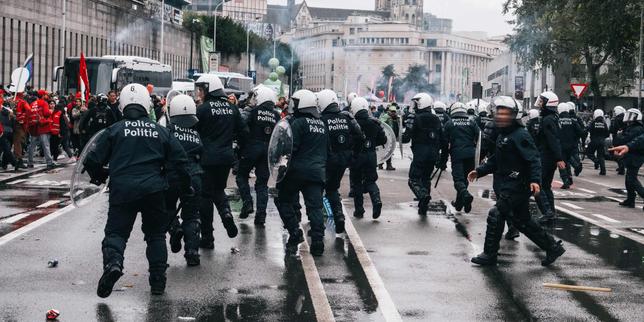
Belgium is currently obsessed with a ghost. Media outlets and activist circles are hyperventilating over the "impunity" of the Belgian police, citing high-profile cases like the tragic death of Ibrahima B. or the Chovanec affair as proof of a systemic rot. They claim the Comité P is toothless and that the judiciary protects its own. They are looking at the data upside down.
The real crisis isn't a lack of accountability; it’s the strangulation of the front-line officer by a layer of bureaucratic oversight so thick it has rendered the force reactive, paralyzed, and ultimately useless to the citizens it’s supposed to protect. While the headlines scream about "wild west" policing, the reality on the streets of Brussels, Antwerp, and Liège is an epidemic of hesitation.
The Myth of the Unchecked Cop
The "lazy consensus" argues that Belgian police operate in a vacuum of oversight. This is demonstrably false. A Belgian officer is currently the most scrutinized professional in the country. Between the Comité P (the Permanent Oversight Committee on the Police Services), the Inspection Générale (AIG), internal disciplinary boards, and the standard criminal justice system, an officer is more likely to face an inquiry for a split-second tactical decision than a surgeon is for a botched operation.
We are told that because few cases end in heavy prison sentences, the system is rigged. This logic is flawed. It assumes that every "incident" is a "crime." In reality, most use-of-force complaints are dismissed because, upon forensic review, the force was legal, proportional, and necessary. The activist demand isn't for justice; it's for a higher conviction rate, regardless of the facts. That’s not accountability. That’s a quota system for professional ruin.
The Cost of the "Accountability" Industrial Complex
I have seen the internal fallout of this climate. When every interaction with a suspect is treated as a potential career-ending lawsuit, the rational actor—the officer—stops acting. This is the "Ferguson Effect" imported to the heart of Europe.
When you spend your shift thinking about the three different oversight bodies that will deconstruct your three-second decision over the next three years, you don't engage. You don't stop the suspicious vehicle. You don't intervene in the escalating street dispute. You wait for backup that arrives too late, or you simply look the other way.
- Proactive Policing is Dead: Arrest rates for minor offenses are plummeting not because crime is down, but because the paperwork and risk-to-reward ratio for the officer are broken.
- The Brain Drain: The "heavy hitters"—the experienced detectives and street-hardened tactical leads—are retiring early or transferring to administrative roles. They are being replaced by recruits who are taught more about sociopolitical theory than how to safely restrain a violent offender.
- The Parity Problem: We demand police act like social workers but face the risks of soldiers. You cannot have both.
The Comité P is a Scapegoat
Critics love to bash the Comité P for being "under-resourced" or "biased." They’re missing the point. The Comité P isn't failing because it's weak; it’s failing because it’s being used as a political tool to satisfy public outrage rather than a technical body to improve police doctrine.
If a bridge collapses, we investigate the engineering. If a police intervention goes wrong, we investigate the "morality" of the officer. This shift from technical analysis to moral grandstanding is why we never actually learn anything from these tragedies. We are too busy looking for a villain to fire to bother fixing the training gaps or the legislative gray zones that put the officer in that position to begin with.
Imagine the Total Transparency Trap
Suppose we give the activists exactly what they want: a body camera on every button, a civilian-led tribunal for every complaint, and an automatic suspension for any use of force.
In this scenario, the "impunity" disappears. And so does the police force. No sane individual will volunteer to take a €2,200-a-month job where they are expected to run toward gunfire while being legally second-guessed by people who have never had their adrenaline spike above a morning espresso.
The result? Gated communities for the wealthy who can afford private security (who, by the way, have actual zero public oversight) and anarchy for the social housing projects that the activists claim to represent. The people who suffer most from "accountable," paralyzed policing are the ones living in the neighborhoods where the police are most needed.
The Nuance of Institutional Distrust
The distrust in Belgian police isn't actually about "impunity." It’s about a broader failure of the Belgian state to integrate its urban populations and manage its borders. The police are simply the only visible arm of the state left in these areas. When a teenager in Saint-Josse feels marginalized by the education system, the job market, and the political elite, he doesn't throw a rock at the Ministry of Finance. He throws it at the patrol car.
By focusing on "police impunity," we are letting the rest of the government off the hook. It’s a convenient distraction. If we can blame "racist cops" or "unregulated force," we don't have to talk about the failed urban policies of the last thirty years.
The Superior Path: Professionalization over Persecution
If we want a better force, we don't need more "oversight" from lawyers and activists. We need:
- Intensive Tactical Training: Belgian officers get a fraction of the range time and hand-to-hand training compared to their elite counterparts. Fear comes from incompetence. An officer who knows they can control a situation without a weapon is less likely to use one.
- Legal Indemnity for Good Faith: We must establish a clear legal shield for officers who follow their training. If the training is wrong, sue the ministry. Stop suing the individual.
- Internal Meritocracy: Stop promoting based on linguistic quotas or political alignment. Promote the "street cops" who actually understand the terrain.
The current "debate" on impunity is a circular firing squad. We are dismantling the only thing standing between a functioning society and the rule of the loudest mob. If you want to see what true impunity looks like, wait until the police are too afraid to show up at all.
Stop asking how to punish the police. Start asking why we've made their job impossible.