The environmental commentariat is losing its collective mind over a patch of grass.
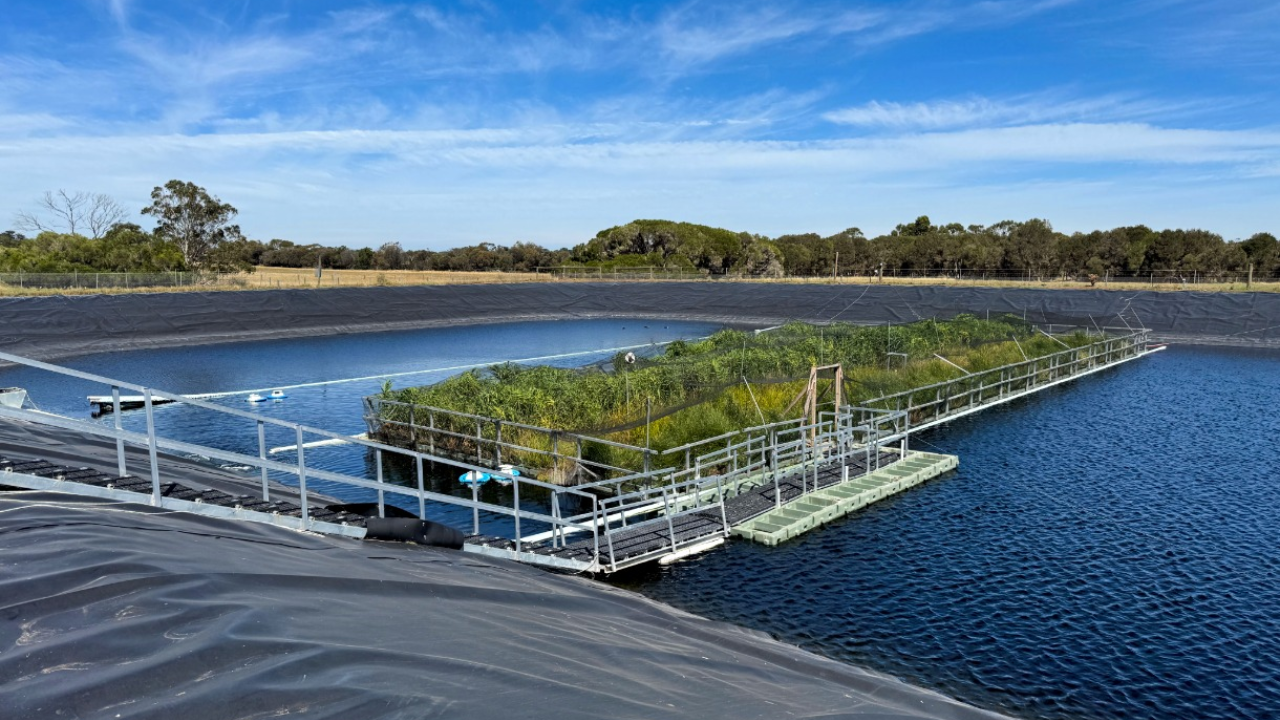
In late 2023, researchers and water authorities dropped a 330-square-metre floating wetland onto a municipal wastewater lagoon on Phillip Island in Victoria, Australia. Two years later, the fanfare arrived: methane emissions had supposedly plummeted by up to 66 percent, carbon dioxide by 36 percent, and nitrous oxide by 18 percent. Headlines across the globe hailed it as a low-tech, nature-based miracle.
Cue the applause. Cue the feel-good corporate press releases about native reeds like Phragmites australis saving the planet. Cue the dangerous illusion that we can solve industrial-scale chemical engineering challenges by tossing a few potted plants into a glorified sewage pond.
Let us stop pretending this is a revolution. It is an aesthetic band-aid on a structural failure, and treating it as a primary decarbonization blueprint exposes a deep-seated cowardice in modern municipal infrastructure planning.
The Lazy Consensus of Eco-Optimism
The narrative being sold is seductive. Wastewater treatment plants account for roughly 1.6 percent of human-caused greenhouse gas emissions. Traditional upgrades—mechanical aeration systems, covered anaerobic reactors, gas collection flaring—cost millions, demand continuous energy inputs, and require civil engineering expertise that municipal budgets fight tooth and nail to avoid.
Along come floating wetlands. Drop some plastic pontoons on the water, plug in native sedges, let the roots dangle, and watch the microbes eat the methane. No high-tech electronics. No massive capital expenditure. Just mother nature doing the heavy lifting.
Except, the data tells a quieter, far more inconvenient story that the cheerleaders conveniently gloss over. During the two-year trial, while greenhouse gas fluxes dropped, the overall nutrient levels in the water remained largely unchanged. Let that sink in. The chemical load of the water—the actual job the facility is supposed to perform—did not meaningfully improve because of the floating mat.
We are celebrating a localized atmospheric reduction while the core biological processing engine underneath remains inefficient, opaque, and wildly unoptimized.
The Engineering Reality Check
I have spent enough time around municipal asset managers to know how this script plays out. A successful small-scale pilot gets published in an academic journal, and suddenly risk-averse bureaucrats see it as an excuse to kick major infrastructural overhauls down the road.
Imagine a scenario where a regional water authority decides to deploy floating mats across every stagnant lagoon in its portfolio instead of redesigning its primary digestion chambers. They check the carbon offset box on a spreadsheet, report a win to the board, and ignore the underlying anaerobic decay continuing unchecked in the deeper, unshielded water columns below.
The mechanics behind these reductions are well-documented, but they are grossly misunderstood by casual observers. The root systems of plants like Baumea articulata provide a physical matrix for methanotrophic bacteria—microbes that consume methane before it breaks the surface tension. That is neat biology. But it is also entirely dependent on local hydraulic retention times, seasonal temperature shifts, water chemistry fluctuations, and constant maintenance to strip out invasive weeds and manage local bird populations.
When you scale that up to a regional utility network, maintenance costs explode. Reeds die, roots clog, pontoons degrade under UV radiation, and those localized microbial communities become erratic. Nature-based solutions are notoriously fickle. They do not offer the deterministic predictability required for critical public health and environmental infrastructure.
The Wrong Questions Define the Debate
People look at these trials and ask: Can we plant enough reeds to offset the water sector's net-zero targets by 2035?
That is the wrong question entirely.
The question we should be asking is why we are still designing municipal wastewater systems around open, stagnant lagoons that act as giant, unmitigated atmospheric vent pipes in the first place. Open lagoons are an artifact of 20th-century land availability and cheap land-use economics. Treating them as inevitable baseline conditions that merely require cosmetic floating blankets is an admission of zero ambition.
If a utility is serious about decarbonizing, floating wetlands should be treated as what they truly are: a temporary, auxiliary mitigation tool for legacy assets that cannot be demolished today. They are not a substitute for closed-reactor digestion, strict source separation, or energy-positive resource recovery facilities.
Unconventional Directives for Asset Managers
If you manage water infrastructure or environmental policy, stop looking for silver bullets in a garden center. Apply these hard rules instead:
- Audit the Entire Carbon Ledger: If a floating wetland reduces methane emissions by 66 percent in a test channel, measure what happens downstream and down-column. Do not accept a surface-gas metric as total system efficiency while nutrient export remains stagnant.
- Treat Biology as Complementary, Not Foundational: Use biological rafts to buy time for capital works programs, not to replace them. Relying on floating vegetation to hit strict net-zero mandates is like putting roller skates on a mule and calling it high-speed rail.
- Account for Lifecycle Failures: Factor in the eventual degradation of plastic pontoons, harvesting labor, biomass disposal, and biological reset periods. Nature always collects its maintenance fee eventually.
The Australian trial on Phillip Island proved that dangling roots can manipulate microbial gas consumption. It did not prove that we can garden our way out of industrial emissions. Stop romanticizing the swamp. Fix the system.