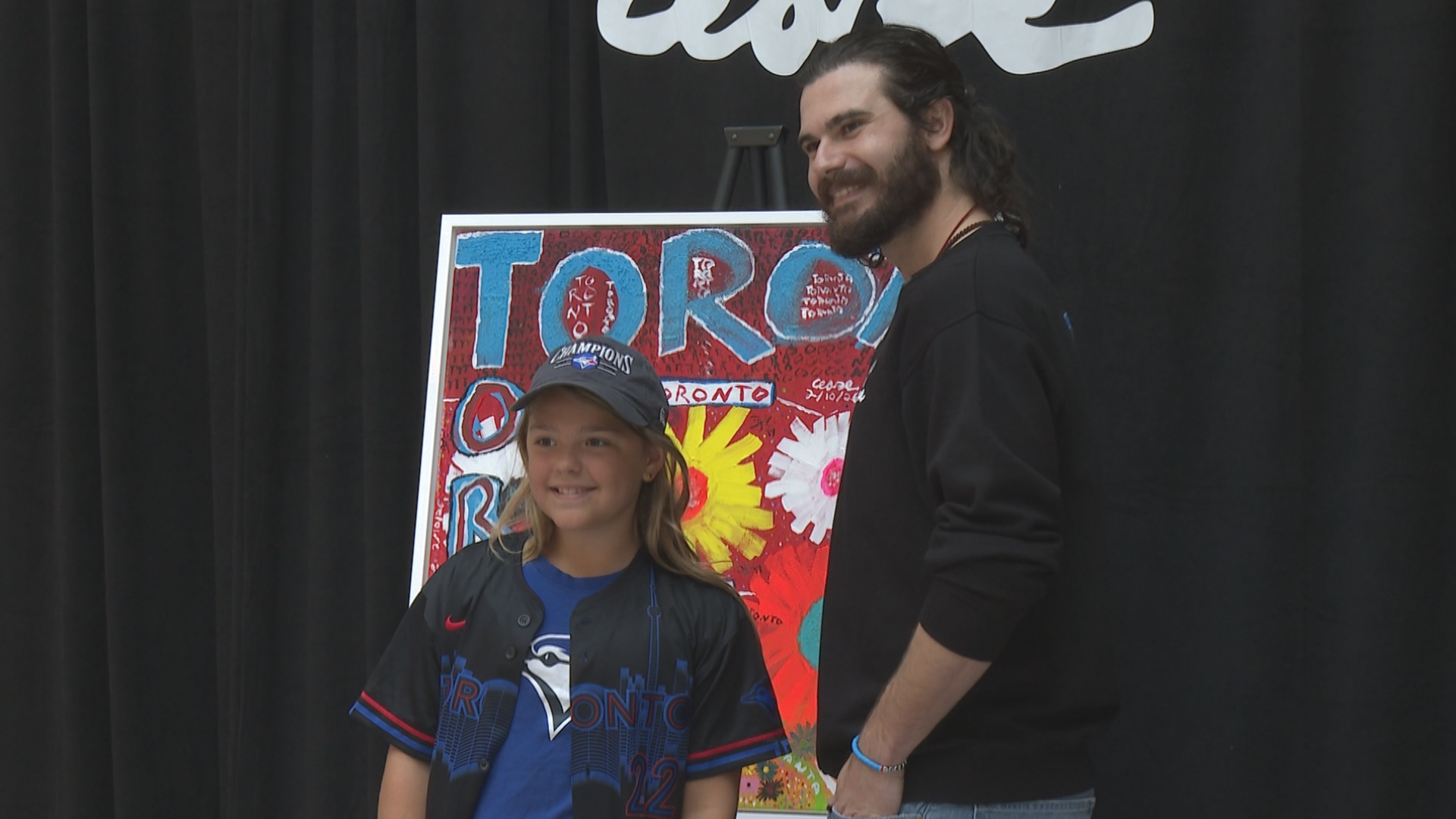
The light inside an art gallery after hours is entirely different from the light under a stadium roof.
At the ballpark, illumination is violent and absolute. Thousands of metal halide lamps flatten the green grass into an unnatural neon and cast hard, sharp shadows beneath the brims of caps. It is a space designed for clarity, split-second reactions, and the brutal physics of a ninety-five-mile-per-hour fastball.
Step inside the Art Gallery of Ontario, however, and the atmosphere shifts. The air smells faintly of old wood, paper, and quiet. The shadows are soft, pooling in the corners of grand halls where centuries of human expression hang silently on white walls.
Dylan Cease knows both worlds.
Most people see a professional athlete in a singular dimension. They watch him from the upper deck, a distant figure framed by chalk lines and roaring crowds, reduced to a stat line on a glowing scoreboard. They forget that beneath the uniform, beneath the routine of bullpens, chartered flights, and ice baths, there is a mind that processes the world through a different lens.
Cease has never fit neatly into the standard mold of the modern ballplayer. While others spend their downtime scrolling through phones or playing video games on the road, he looks outward. He looks at design, at texture, at the way physical objects can carry emotional weight.
And now, that curiosity has spilled over the dugout steps and onto a very different kind of stage.
The Anatomy of an Unlikely Collaboration
Let us be clear about what usually happens when athletes dabble in fashion.
Too often, it is a transactional exercise. A marketing team builds a mood board, slaps a famous name onto a generic hoodie, charges a markup, and ships it out to eager fans. It is merchandise. It is noise.
This capsule collection at the Art Gallery of Ontario is something else entirely.
To understand why, you have to look at the venue itself. The AGO is a cultural anchor of Toronto, a place where people go to confront things that defy easy explanation. When an active Major League Baseball player chooses that specific institution to debut a curated line of apparel, it signals an intentional crossing of boundaries. It says that the aesthetic of sport and the aesthetic of high art are not mutually exclusive.
Consider the texture of the garments. (And here, using a hypothetical scenario to ground the design philosophy: imagine holding a heavy-weight cotton piece engineered not just for a quick trend cycle, but to soften and age with the wearer over years). The cuts are deliberate. The color palettes pull away from the blinding primary colors of team branding, opting instead for muted, sophisticated tones that feel at home both in a downtown gallery and a neighborhood coffee shop.
This is design born from observation. Cease has spent years traveling through concrete-and-steel cities across North America, absorbing the visual language of urban spaces, vintage Americana, and modern minimalism.
The Weight of the Creative Impulse
Why do athletes create outside their sport?
The answer lies in the suffocating nature of high-stakes competition. Professional sports demand perfection, or an agonizingly close approximation of it. Every failure is magnified on national television. Every mechanical flaw is dissected by millions of strangers.
In that environment, the mind craves an outlet where the rules do not apply.
When you paint, or design a garment, or curate a space, nobody is checking your ERA. There is no umpire. There is only the dialogue between the creator and the material.
Cease approaches his visual projects with the same intensity he brings to the mound. On the field, pitching is an act of sequencing. You throw a fastball to set up the slider; you change eye levels to disrupt timing. It is a chess match played at terminal velocity.
Translation: design works the same way. You balance heavy typography with clean negative space. You introduce a jarring color to anchor a neutral piece. You create tension and release through fabric weight and silhouette.
When visitors walk through the AGO installation, they are not just looking at clothes on racks. They are stepping inside the internal monologue of a competitor who refuses to be boxed into a single definition.
The Convergence of Streetwear and Sanctuary
Toronto is a city that understands this duality.
It is a place where glass skyscrapers tower over Victorian brick townhouses, where global street culture collides with institutional heritage. On any given afternoon on Queen Street, you can see skate culture bleeding into high-end fashion.
Dropping a capsule collection at the AGO captures that exact local pulse.
It honors the institution while subverting its traditional quiet. It invites a younger crowd—people who might otherwise only know the gallery as a rainy-day destination for school field trips—to see the space as relevant to their immediate cultural moment.
And that is where the true impact lies.
For the teenager standing in that gallery, looking at a jacket designed by someone who spends his summers facing down the best hitters in the world, a subtle shift occurs. The barrier between "the people who make things" and "the people who consume things" dissolves.
You do not have to choose between throwing a slider and studying design. You do not have to pick a single lane in this life.
The Final Frame
The gallery lights hum softly overhead.
Outside, the Toronto traffic moves in red and white streaks along Dundas Street. The baseball season is a relentless machine, grinding forward through its six-month marathon of travel, fatigue, and triumph. Soon, Dylan Cease will pack his bags for the next city, the next series, the next batter.
But inside these walls, something permanent remains.
A collection of threads and ideas, born from a mind that looks past the outfield wall and sees a canvas waiting to be filled.
Quiet.
Deliberate.
Enduring.