Forty below zero is not a temperature. It is a physical weight that presses against your chest the moment you step off the porch, freezing the moisture inside your nostrils before you can take a second breath.
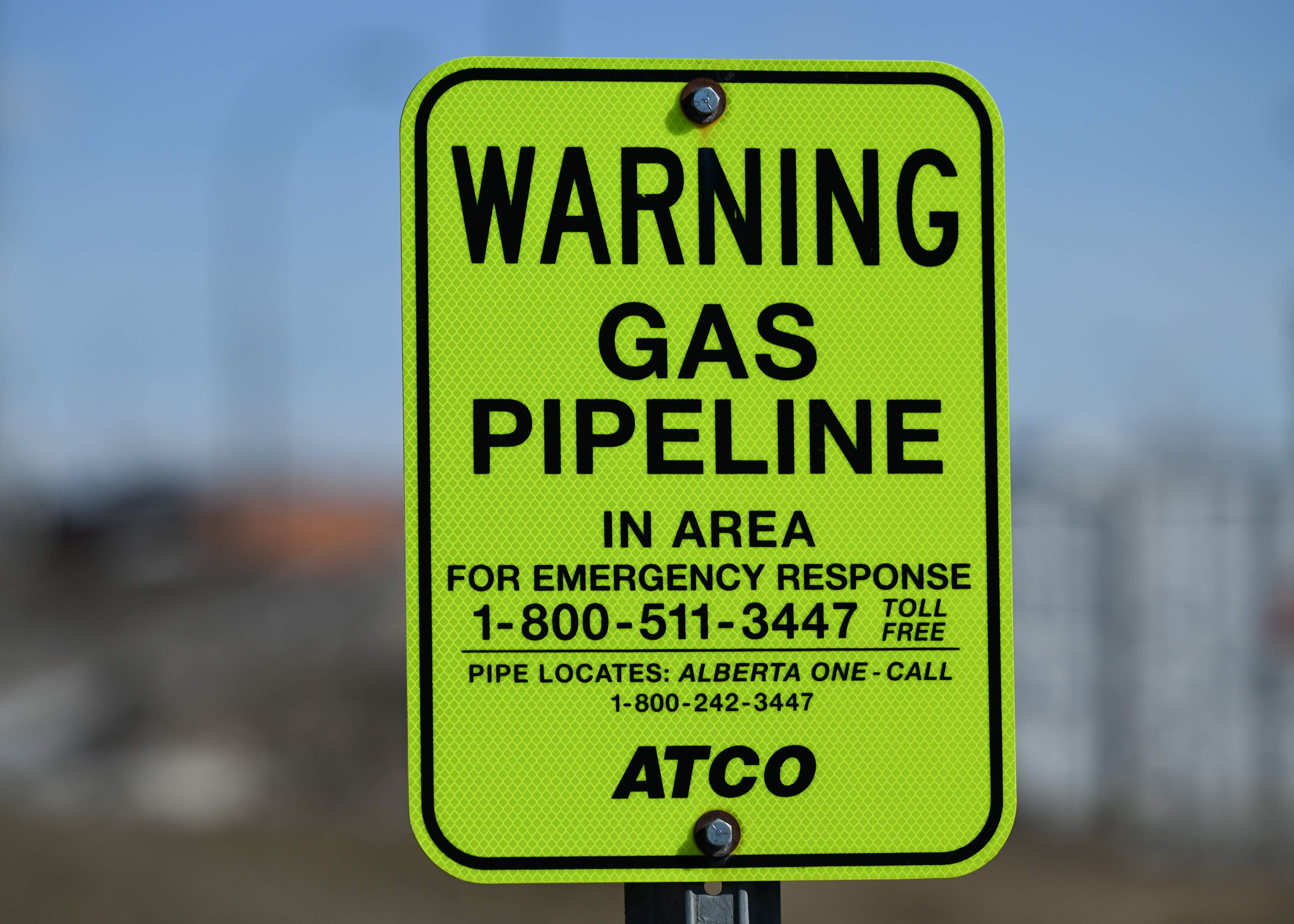
In northern Alberta, January does not negotiate. Out past Grande Prairie, where the spruce trees stand rigid like iron spikes against a pale, indifferent sky, warmth is not a lifestyle preference. It is survival. And for decades, that survival has flowed silently beneath the permafrost through a vast, invisible circulatory system of buried steel, carrying natural gas from the deep rock of the Western Canadian Sedimentary Basin to furnaces, hospitals, power plants, and export terminals across the continent.
You do not think about a pipeline when the thermostat clicks on at three in the morning. You only think about it when the house goes quiet.
For years, the quiet has been creeping into the boardrooms of Calgary and the municipal offices of small northern towns—not because the gas has run out, but because the money and the nerve to build new steel have started to evaporate. Private capital, spooked by years of regulatory bottlenecks, shifting federal emissions caps, ballooning construction costs, and endless court battles, has increasingly packed its bags for Texas, Louisiana, or anywhere else the rules do not change mid-construction.
So the Alberta government just made a move that would have sounded like heresy in the free-market heartland of Canada only a decade ago. With the passage of new legislation—the Natural Gas Infrastructure Act—the province has handed itself the legal authority to step in, take the wheel, and build or backstop natural gas pipelines if the private sector refuses to show up.
Stop. Read that again.
The most fiercely capitalist, anti-interventionist province in the country just wrote itself a blank check to become a pipeline builder of last resort. To understand why, you have to look past the dry legislative text and step into the boots of the people living at the end of the line.
The Anatomy of a Bottleneck
Consider a hypothetical scenario that plays out every winter in towns from Fort St. John to the outskirts of Edmonton. Let us call him Miller—a third-generation cattle rancher and part-time municipal councillor whose county sits atop some of the richest natural gas reserves in North America.
Miller does not care about ideological debates between free-market purists and state interventionists. He cares that the local grain dryer—the facility that keeps neighbouring farms from losing an entire harvest to early frost—cannot get a firm gas supply contract because the regional feeder line is maxed out. He cares that a proposed petrochemical plant twenty miles down the highway, which promised four hundred permanent trades jobs and enough municipal tax revenue to rebuild the town's crumbling arena, just put its plans on ice. Why? Because the midstream company that was supposed to lay forty kilometres of pipe pulled out after its financing costs doubled and its regulatory timeline stretched from two years to seven.
The gas is right there beneath Miller’s pasture. Yet the town is starving for energy.
To grasp how absurd this is, think of a pipeline network like the municipal water mains beneath a growing city. Imagine developers want to build new apartments, a bakery, and a clinic on the edge of town. The water reservoir is full. The builders have their permits. The residents are waiting to move in. Yet nobody will lay the main pipe connecting the reservoir to the new neighbourhood because private contractors decide the upfront risk is too high and the city council refuses to spend public money on underground plumbing.
Eventually, the city has to dig the trench itself, or no one gets a drop of water.
That is precisely what has happened to Alberta’s natural gas sector. While global attention has fixated on massive coastal export projects like LNG Canada in Kitimat, British Columbia, the internal arteries feeding those terminals—and feeding Alberta’s own rapidly growing population and industrial base—have quietly clogged. Between 2020 and 2025, Alberta added hundreds of thousands of new residents, driving residential heating demand and electricity consumption higher every single winter. At the same time, the province retired its last coal-fired power plants, replacing them almost entirely with natural gas-fired generation.
More people. More data centres. More industrial processing. More gas-fired electricity.
And fewer companies willing to bet billions of dollars on laying the pipe to connect them.
The Ghost of 1975
If you bring up government-owned energy infrastructure in a Calgary coffee shop, watch the faces around the table tighten. Older oilpatch veterans still speak the name "Petro-Canada" like a curse word.
In 1975, Pierre Trudeau’s federal government created Petro-Canada as a state-owned Crown corporation to secure Canadian energy independence. To Ottawa, it was visionary nation-building. To Albertans, it was an unwelcome intrusion—an expensive, politically driven behemoth that distorted markets, crowded out private entrepreneurs, and served as the battering ram for the hated National Energy Program of 1980, which drained tens of billions of dollars out of the province and triggered a wave of bankruptcies and foreclosures that scars family memories to this day.
I remember sitting at a kitchen table outside Red Deer years ago, listening to a retired rig hand describe how his father lost his trucking business in 1982. The bitterness in his voice had not faded by a single degree in forty years. "When the government gets into the oil and gas business," he told me, tapping a scarred finger against his coffee mug, "politicians make the decisions, and working folks pay the bill."
That historical trauma is why Alberta’s new Natural Gas Infrastructure Act is such an extraordinary—and genuinely unsettling—turning point. Even the officials drafting the legislation admit, in unguarded moments, that stepping into the breach carries real risk. Taxpayers are not venture capitalists. When governments build mega-projects, budgets have a notorious habit of exploding, timelines slip, and political priorities override cold economic math. Just look at the Trans Mountain pipeline expansion, where Ottawa stepped in to rescue a stalled private project in 2018 at a projected cost of $7.4 billion, only to watch the final price tag balloon past $34 billion before oil finally flowed in 2024.
Nobody in Edmonton wants a repeat of that fiscal nightmare.
Yet doing nothing carries a price tag of its own—one that never shows up as a single line item on a government balance sheet, because it arrives instead as quiet stagnation. It arrives as factories built in Ohio instead of Redwater. It arrives as artificial intelligence data centres choosing North Dakota over Calgary because they cannot get guaranteed off-grid gas power. It arrives as stranded gas trapped underground, selling at a steep discount because there is nowhere for it to go.
How the Backstop Actually Works
So what does the new law actually do? Strip away the parliamentary jargon, and the mechanics are surprisingly targeted—and deliberately reluctant.
First, the act does not nationalize existing pipelines, nor does it create a sprawling new Crown corporation to compete against private operators like TC Energy, Enbridge, or Pembina. Instead, it establishes a statutory backstop. If the province identifies a critical natural gas corridor—whether an intraregional feeder line, a connection to an industrial heartland, or an interprovincial link—and determines that private industry cannot or will not build it within a necessary timeframe, the Minister of Energy and Minerals gains the authority to step in.
Second, that intervention can take several forms. The province can provide direct loan guarantees to de-risk private financing, enter into joint-venture partnerships, acquire rights-of-way early to prevent speculators and delays from killing a project in the cradle, or, in the most extreme case, build and own the pipeline directly until it can be sold off to private operators once the commercial risk has passed.
Third, the legislation streamlines provincial permitting for designated priority corridors, forcing overlapping ministries to review environmental, land-use, and Indigenous consultation requirements on a coordinated clock rather than an endless bureaucratic relay race.
Think of it less like a government takeover and more like an emergency tow truck idling on the shoulder of a mountain pass during a blizzard. If your rig has the traction to climb the grade on its own, the tow truck stays out of your way. If your wheels start spinning on black ice and traffic backs up for ten miles behind you, the driver hooks up the chains and pulls you over the summit.
The Invisible Stakes on the Grid
There is a critical piece of this puzzle that almost every mainstream news summary misses, and it comes down to what happens at six o'clock on a Tuesday evening in January when the wind stops blowing.
Alberta operates a deregulated, energy-only electricity market—one of the few in North America. Over the past several years, the province has added gigawatts of wind and solar capacity, transforming its grid into a far cleaner system than it was a decade ago. On a breezy, sunny afternoon in May, renewables can supply a massive share of the province’s power, driving wholesale electricity prices down near zero.
Then comes the polar vortex.
In January 2024, temperatures across Alberta plunged below minus forty for days. Wind turbines iced up or shut down to protect their gearboxes. Solar panels sat buried under snow in the dark of a northern winter afternoon. Demand spiked to all-time records as every furnace fan, block heater, and space heater in the province roared simultaneously. Within hours, the province’s grid operator issued an emergency alert, warning residents that rotating blackouts were minutes away unless households immediately unplugged appliances and turned down their thermostats.
What kept the lights on—and kept pipes from bursting in half a million homes—was natural gas. Combined-cycle and cogeneration gas plants ran flat-out at one hundred percent capacity, carrying nearly the entire load of the province through the darkest hours of the freeze.
Now, project that exact scenario forward five years. Add another four hundred thousand residents. Add electric vehicle charging networks. Add massive hyperscale data centres and hydrogen production facilities, all demanding uninterrupted, twenty-four-hour baseload power.
You cannot run a gas turbine on hope. You run it on high-pressure methane delivered reliably, second by second, through steel pipe. If the pipeline capacity feeding those power plants falls even five percent short during a winter cold snap, no amount of battery storage or emergency conservation alerts will bridge the gap. The grid simply trips. And in a northern winter, a prolonged grid failure is not an inconvenience; it is a humanitarian crisis.
The Political Tightrope
Of course, declaring that the province will build pipelines if private industry balks is much easier than actually putting shovels in the dirt.
The moment Edmonton designates a state-backed pipeline route, it steps directly into a minefield of competing interests. Landowners who might tolerate a private company negotiating an easement across their quarter-section often react with fierce suspicion when the government wields expropriation powers. Indigenous communities—many of whom have become sophisticated equity partners in major pipeline projects over the last decade—will demand real ownership stakes and environmental stewardship, not top-down decrees from a provincial capital.
And then there is Ottawa. While Alberta can fast-track approvals within its own borders, any pipe that crosses a provincial boundary—to feed liquefied natural gas terminals on the British Columbia coast or connect to eastern markets—immediately triggers federal jurisdiction, federal impact assessments, and federal emissions politics. A provincial backstop can clear local roadblocks, yet it cannot single-handedly rewrite constitutional boundaries.
There is also the uncomfortable question of market distortion. Private pipeline executives are already whispering a blunt warning: if companies believe the Alberta government will step in and subsidize unprofitable or high-risk routes, why should private shareholders ever take the risk themselves? Moral hazard is not just a banking problem. Once a government signals it will catch falling knives, everyone stops wearing gloves.
To avoid turning into a permanent taxpayer-funded crutch, the province will have to prove it knows how to let go—building only where clear market failures exist, pricing access transparently, and selling assets back to private hands the moment they become commercially viable.
A Cold Morning on the Right-of-Way
Step back out into the snow near Grande Prairie for a moment.
Picture a survey crew standing along a cleared cutline in the grey dawn of late November. Their breath hangs in thick white plumes in the headlamp beams. One of them drives a wooden stake tagged with bright orange ribbon into the frozen moss, marking the centreline of a trench that will not be dug until spring thaw.
To an analyst in Toronto or New York, that orange ribbon is a footnote in a regulatory filing—a minor hedge against midstream capital flight, a statistical adjustment in North American gas basis differentials.
To the people living along that corridor, it is something far simpler and far heavier. It is the difference between a town that grows and a town that hollows out. It is the hum of a grain dryer saving a harvest before the snow flies, the steady blue flame beneath a boiler in a rural hospital, the quiet certainty that when the thermometer drops past forty below and the wind howls down from the Arctic, the heat will still come on.
Markets are magnificent engines for allocating capital when the horizon is clear and the rules are steady. When the horizon clouds over and the private engines stall, someone still has to keep the fire lit.