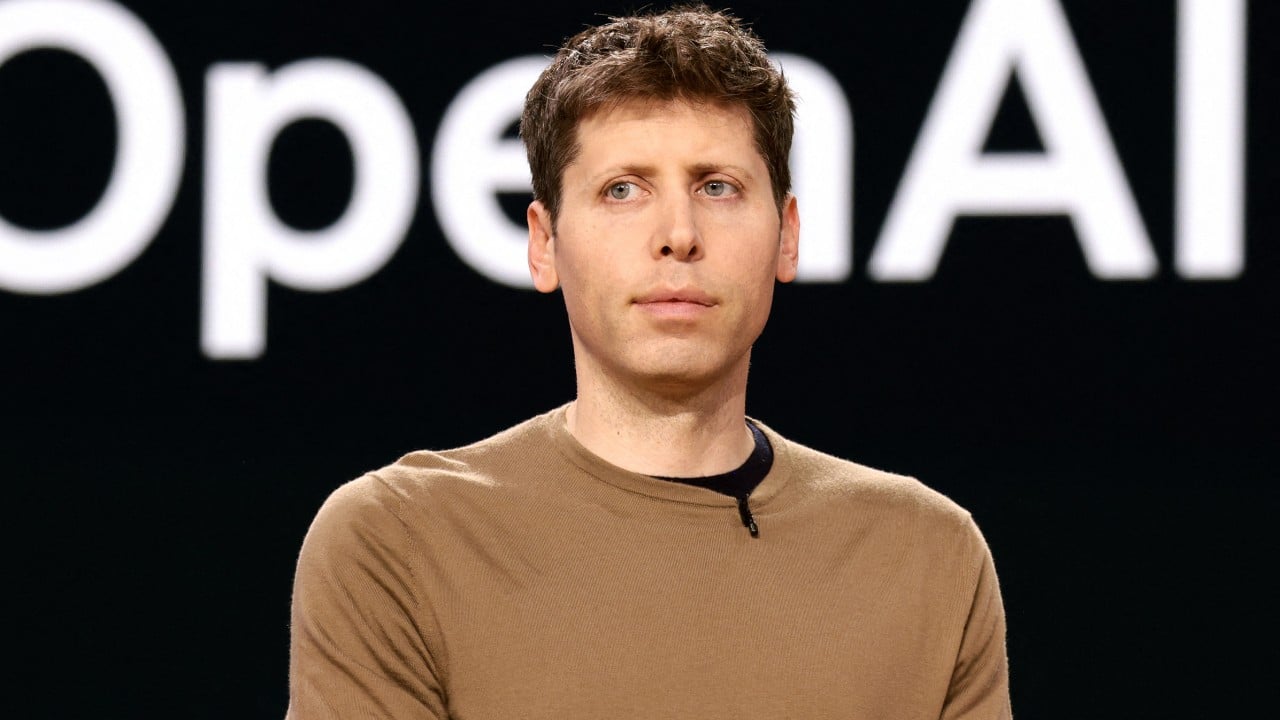
The assassination attempt involving an incendiary device at the residence of OpenAI CEO Sam Altman represents a critical failure in the predictive threat modeling for high-profile technology executives. While traditional corporate security focuses on wealth-motivated crime or industrial espionage, the emergence of "Frontier AI" has introduced a new vector: ideological kinetic violence. This incident confirms that the abstraction of "AI alignment" has shifted from a theoretical computer science problem into a tangible physical security crisis.
The Security Paradox of Public-Facing AI Leadership
The vulnerability of an executive in the current technological climate is defined by the intersection of three specific variables:
- Anthropomorphic Projection: As AI models become more conversational, the public begins to attribute human-like intent—and human-like blame—to the organizations and individuals behind the software.
- The Information Gap: There is a widening chasm between the internal technical reality of AGI (Artificial General Intelligence) development and the public’s perception of its risks, ranging from job displacement to existential extinction.
- The Single Point of Failure: OpenAI’s governance structure and Sam Altman’s role as the face of the movement create a centralized target for decentralized grievances.
This creates a high-stakes asymmetry. A single individual with a low-cost, low-tech weapon (a Molotov cocktail) can disrupt the trajectory of a multi-billion-dollar organization that is ostensibly building the most sophisticated technology in human history.
Strategic Threat Classification
To analyze this event, we must categorize the threat not as a random act of madness, but as a predictable outcome of radicalization cycles. Security professionals divide these threats into a spectrum of intent:
- Luddite-Reactive: Individuals who have suffered immediate economic loss (job replacement) and view the CEO as the direct architect of their obsolescence.
- Existential-Alarmist: Individuals influenced by "Doomer" rhetoric who believe that stopping the leader of OpenAI is a prerequisite for human survival.
- Attention-Seeking (The Copycat Effect): The high media visibility of the "OpenAI vs. Anthropic vs. Google" race incentivizes individuals to insert themselves into the narrative through extreme actions.
The Cost Function of Executive Protection in the AI Era
Most Fortune 500 companies allocate significant budgets to Executive Protection (EP), but these budgets are often optimized for travel and public events. The attack on Altman’s private residence indicates a failure in Perimeter Sovereignty.
The financial requirements for securing an AI pioneer now mirror those of a head of state rather than a corporate officer. The cost function of this security includes:
- SIGINT (Signals Intelligence) Monitoring: Actively scanning encrypted channels and fringe forums for mentions of specific residential coordinates or "soft target" vulnerabilities.
- Hardened Residential Infrastructure: Transitioning from "smart homes" to "defensible estates." This includes ballistic-rated glass, thermal imaging perimeters, and specialized suppression systems for incendiary devices.
- Personnel Redundancy: Moving from a single-bodyguard model to a 24/7 rotating tactical team capable of handling multiple-attacker scenarios.
The "security tax" on AI innovation is rising. For a company like OpenAI, which is transitioning from a non-profit-controlled entity to a massive commercial powerhouse, the overhead for keeping its leadership alive and functional is becoming a significant line item that investors must account for.
Quantifying the Impact of "Social Contagion"
The Molotov attack serves as a "Proof of Concept" for other motivated actors. In security theory, successful or even high-profile failed attacks lower the psychological barrier for the next actor. This is known as the contagion effect.
The mechanism works as follows:
- Step 1: An event occurs and receives global coverage.
- Step 2: The vulnerability (the CEO's home) is identified and publicized.
- Step 3: Fringe groups discuss the "bravery" or "necessity" of the act, shifting the Overton Window of acceptable protest toward kinetic violence.
This cycle suggests that the arrest of one individual does not resolve the threat; it likely heightens it. The data indicates that when a technological shift is perceived as "inevitable" and "coercive," a subset of the population will always default to sabotage.
The Friction Between Transparency and Safety
There is a fundamental conflict between the Silicon Valley ethos of the "Open" CEO and the operational requirements of high-level security.
- Visibility as a Liability: Altman’s strategy of frequent public appearances, world tours, and active social media presence is essential for building brand trust and influencing regulation.
- Visibility as a Target: Every public appearance and interviewed detail about his lifestyle provides data points for a potential assailant to map routines.
The "Security-Transparency Trade-off" dictates that as the threat level increases, the CEO must become more reclusive. However, reclusiveness in AI leadership breeds suspicion and fuels the very "Doomer" theories that drive the attacks. It is a feedback loop with no easy exit.
Systemic Vulnerabilities in Residential Zoning for VIPs
The geographical concentration of AI leadership in the San Francisco Bay Area and surrounding enclaves like Woodside or Atherton creates a localized "target-rich environment."
Current residential zoning laws often prevent the construction of high-security perimeters (walls over a certain height, specialized gates) that would be standard for high-risk individuals in other countries. This creates a regulatory bottleneck. CEOs are forced to choose between living in high-prestige areas with low defensibility or moving to remote, fortified compounds that isolate them from the talent and networking centers of their industry.
The attack on Altman's home exposes the reality that "private security" cannot fully compensate for "public vulnerability" in standard suburban or urban environments.
Predictive Analysis of Future Attack Vectors
We should anticipate an evolution in the tactics used against AI leadership. The Molotov cocktail is a primitive, 20th-century weapon. Future threats will likely integrate the very technology these leaders are developing.
- Drone-Based Attacks: The use of small, commercially available drones to bypass ground-level security and deliver payloads.
- AI-Enhanced Doxing: Using LLMs to scrape disparate data points across the internet to pinpoint exact travel routes and real-time locations with high precision.
- Deepfake Social Engineering: Impersonating staff or family members to gain physical access to "secure" facilities.
The irony is profound: the tools created by OpenAI and its competitors could be utilized to dismantle the security structures protecting their creators.
Structural Recommendations for the AI Industry
Organizations must move beyond reactive security measures and adopt a proactive stance that treats physical safety as a core component of "AI Safety" and "Alignment."
1. Decoupling the Brand from the Individual
Companies must aggressively diversify their public representation. By making the organization less synonymous with a single individual, the strategic value of an attack on any one person is diminished. This is not just a PR move; it is a risk-mitigation strategy.
2. Radical Transparency in Safety Protocols
To de-escalate the "Doomer" motivations, AI companies must provide more than just vague promises of safety. They need verifiable, third-party audited demonstrations of their "kill switches" and alignment boundaries. Reducing the perceived existential threat reduces the motivation for "preventative" violence.
3. Investment in Defensive Tech
Just as companies invest in cybersecurity, they must now invest in physical defense R&D. This includes automated drone detection, advanced surveillance AI that identifies anomalous behavior in crowds, and non-lethal automated perimeter defenses.
The arrest in the Altman case is a tactical win but a strategic warning. The era of the "celebrity tech founder" living a semi-normal life is over. For the architects of the intelligence age, the price of progress is a permanent state of siege. The failure to adapt to this reality will not just be a personal tragedy for the individuals involved, but a destabilizing event for the global economy.
OpenAI must now treat Sam Altman’s physical safety with the same level of engineering rigor they apply to GPT-5. The perimeter has moved from the firewall to the front door.
Every major AI firm must immediately conduct a "Red Team" audit of their physical security infrastructure, specifically targeting "low-tech/high-impact" scenarios like the one witnessed at Altman’s residence. Failure to harden these assets invites a catastrophic disruption of the AI development cycle by a single motivated actor. Security is no longer a peripheral concern; it is the foundation upon which the future of AGI will be built or broken.