Defense analysts love a tidy narrative. They see Manila ink a $375 million deal for Indian BrahMos supersonic cruise missiles, watch a few joint naval patrols in the South China Sea, and immediately declare the birth of a new Indo-Pacific security axis.
They are wrong. Completely wrong.
The prevailing consensus among armchair strategists is that the Philippines is turning to India because New Delhi has suddenly emerged as a premier defense exporter capable of balancing Chinese aggression. That reading misses the entire plot. Manila is not buying Indian hardware because India is the best option. Manila is buying Indian hardware because the United States is too slow, Russia is legally untouchable, and the Philippine military is running out of time to build a credible deterrent before the next maritime confrontation spirals out of control.
If you look past the diplomatic handshakes and press releases, the India-Philippines defense relationship is not a grand geopolitical marriage. It is a transactional marriage of convenience born out of procurement desperation, budget constraints, and the harsh realities of defense industrial bottlenecks.
The Myth of the Rising Defense Giant
Let’s dismantle the biggest misconception first. Every mainstream commentary on the BrahMos deal frames India as an ascending global arms supplier ready to rival Western contractors.
Look at the actual numbers. Despite loud slogans like "Make in India" and aggressive export targets set by New Delhi, India remains one of the world’s largest importers of major arms, according to data from the Stockholm International Peace Research Institute (SIPRI). For decades, India’s own state-run defense sector—led by organizations like the Defence Research and Development Organisation (DRDO) and Hindustan Aeronautics Limited (HAL)—struggled to deliver projects on time and on budget for the Indian military itself. The Arjun tank took over three decades to enter service. The Tejas light combat aircraft faced endless delays.
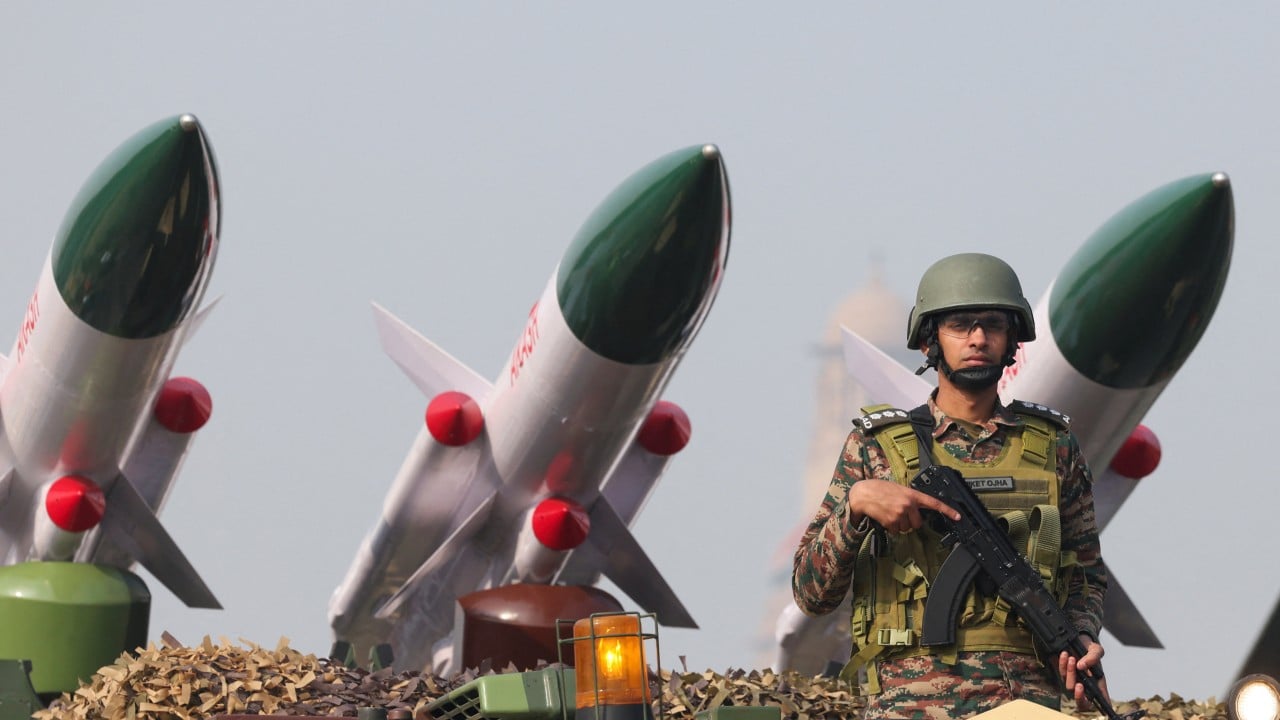
The BrahMos missile is the rare exception that proves the rule, and even it comes with an asterisk that Western commentators conveniently gloss over. BrahMos is a joint venture between India’s DRDO and Russia’s NPO Mashinostroyenia. Its core propulsion and ramjet technology trace their lineage directly back to Russian engineering.
When the Philippines signed on the dotted line for three batteries of the shore-based anti-ship variant in 2022, Manila wasn't buying a purely indigenous Indian marvel. It was buying Russian-derived lethality laundered through an Indian supply chain—a move that allowed the Philippines to sidestep the immediate diplomatic blowback of buying directly from Moscow while still getting a Mach 2.8 ship-killer.
Why Manila Really Walked Away From Western Vendors
To understand why the Armed Forces of the Philippines (AFP) looked toward New Delhi, you have to understand the absolute dysfunction of traditional Western defense procurement.
I have watched mid-sized militaries burn through entire five-year modernization budgets just trying to navigate the labyrinth of the U.S. Foreign Military Sales (FMS) program. Washington treats its allies like supplicants. If Manila wants advanced American coastal defense systems, it faces a brutal gauntlet:
- Congressional Notifications: Every major sale can be held hostage by lawmakers in Washington over human rights concerns or domestic political posturing.
- Production Backlogs: American defense primes like Lockheed Martin and Raytheon are currently buried under multi-year backlogs. Between supplying Ukraine, replenishing U.S. stockpiles, and fulfilling massive orders for Taiwan and European NATO allies, a $375 million order from Manila sits near the bottom of the priority list.
- Sticker Shock: Western systems come wrapped in exorbitant lifecycle maintenance contracts, proprietary software locks, and strict end-user monitoring agreements that dictate where and how a sovereign nation can deploy its own weapons.
The Philippines does not have ten years to wait for a factory slot in Texas or Arizona. Chinese Coast Guard vessels are using military-grade lasers, water cannons, and aggressive ramming tactics against Philippine resupply missions at Second Thomas Shoal right now.
Manila needed an off-the-shelf, battle-tested, supersonic anti-ship missile that could be delivered within twenty-four to thirty-six months, financed through accessible credit lines, and operated without Washington holding the master kill-switch. India offered exactly that. New Delhi was hungry for its first major defense export win, willing to offer sovereign loans, and eager to prove it could deliver hardware on a tight schedule.
The Asymmetric Trap of Coastal Denial
Even if we accept that the BrahMos gives the Philippine Marine Corps a shiny new tooth, we need to ask a much harder question: Does it actually solve Manila’s military problem?
The lazy consensus says yes. Analysts point to the missile’s 290-kilometer range—deliberately capped to comply with the Missile Technology Control Regime (MTCR)—and argue that Manila can now hold People’s Liberation Army Navy (PLAN) vessels at risk across the West Philippine Sea.
On paper, that sounds terrifying. In an actual shooting war, a handful of fixed or semi-mobile coastal batteries without a fully integrated kill chain is little more than expensive target practice.
Modern naval warfare is not about who has the fastest missile. It is about intelligence, surveillance, and reconnaissance (ISR). A Mach 2.8 missile is completely useless if you cannot find, track, and target a moving warship over the horizon while your communications are being jammed into oblivion.
Consider the reality of the Philippine military’s sensor network:
- Radar Coverage: The AFP has only recently begun installing Japanese-supplied air surveillance radars. Maritime domain awareness remains heavily reliant on patrol aircraft and intelligence shared by the United States.
- Electronic Warfare: The PLAN operates some of the most sophisticated electronic warfare and counter-ISR suites on the planet. In a high-intensity conflict, Philippine coastal batteries would face immediate saturation strikes from ballistic missiles, cruise missiles, and carrier-based aviation before their radars could even lock onto a target.
- Magazine Depth: Three batteries of BrahMos missiles represent a tiny fraction of the firepower required to deter a fleet the size of China’s Southern Theater Command. Once those initial salvos are fired, resupply across contested waters becomes nearly impossible.
Imagine a scenario where a tense standoff at Scarborough Shoal escalates into a localized skirmish. Manila deploys its BrahMos units to Luzon’s western coast. Without hardened, redundant datalinks and indigenous over-the-horizon targeting drones, those units are entirely blind unless an American P-8A Poseidon aircraft is feeding them coordinates in real time. And if an American plane is feeding targeting data to a Philippine missile battery firing at a Chinese warship, the United States is already directly in the war.
This exposes the dirty secret of Manila’s defense modernization: Indian hardware does not give the Philippines strategic autonomy. It simply creates a more lethal tripwire that still requires American eyes and ears to function.
What Everyone Gets Wrong About the China Factor
Whenever two countries in Asia sign a defense pact, pundits immediately slap the "anti-China coalition" label on it. They view the India-Philippines relationship through the lens of the Quad, assuming New Delhi is arming Manila as part of a coordinated grand strategy to contain Beijing.
That completely misreads Indian foreign policy.
New Delhi’s doctrine of strategic autonomy—or multi-alignment—means India refuses to be anyone’s junior partner or regional enforcer. Yes, India has its own bloody border dispute with China in the Himalayas, and yes, New Delhi enjoys making Beijing sweat on its maritime flank. Selling missiles to a Southeast Asian neighbor is a low-cost, high-visibility way for India to signal that if China keeps encroaching into the Indian Ocean, India will happily arm China’s neighbors in the South China Sea.
However, New Delhi has zero intention of fighting a war for the Philippines.
If a conflict breaks out over the Spratly Islands tomorrow, the United States is legally bound by the 1951 Mutual Defense Treaty to respond. India is bound by nothing. New Delhi will issue a carefully worded statement calling for peace, restraint, and respect for international law—specifically the 2016 Arbitral Tribunal ruling—while continuing to trade billions of dollars in goods with Beijing.
Manila knows this. President Ferdinand Marcos Jr. and Defense Secretary Gilberto Teodoro are not naive. They understand that India is an arms vendor and a diplomatic counterweight, not a security guarantor. Treating New Delhi as a substitute for Washington is a hallucination entertained only by commentators who don't read treaties.
The Maintenance Nightmare Nobody Mentions
There is an operational reality that defense reporters almost never write about because it isn't sexy: logistics.
Every time a developing military buys major weapons systems from a new supplier, it inherits a logistical nightmare. Look at the Armed Forces of the Philippines right now. Its inventory is a chaotic patchwork of legacy American equipment, South Korean frigates and fighter jets, Israeli radars and fast attack craft, Japanese patrol vessels, Turkish helicopters, and now Indian-Russian supersonic missiles.
Ask any logistics officer in Camp Aguinaldo what this looks like behind closed doors. It means incompatible datalinks, separate spare-parts supply chains, wildly different maintenance standards, and technicians who have to be trained from scratch in half a dozen different countries.
Adding India to that mix introduces severe long-term risks:
- Supply Chain Vulnerability: Because the BrahMos relies heavily on Russian sub-components, any tightening of secondary sanctions against Moscow—or any disruption in Russia’s own defense manufacturing due to the war in Ukraine—directly threatens the long-term sustainment and spare-parts pipeline for Manila’s missiles.
- After-Sales Support: Indian defense firms are notoriously bureaucratic when it comes to post-delivery maintenance and upgrades. Unlike South Korea’s Hanwha or HD Hyundai, which have built ruthless, hyper-efficient global customer support networks, India’s state-backed defense apparatus is still learning how to service foreign clients at scale.
- Training Bottlenecks: Operating and maintaining liquid-fueled or solid-propellant ramjet systems in a humid, corrosive tropical environment requires specialized infrastructure that the Philippines is still building from the ground up.
Buying the weapon is the easy part. Keeping it operational five years from now when the initial warranty expires and the saltwater starts eating through the electronics is where modernization programs go to die.
The Uncomfortable Truth About Manila’s Strategy
So, if India isn't a replacement for the U.S., if the BrahMos doesn't solve the ISR problem, and if the logistics are a headache, did Manila make a mistake?
No. And this is the nuance the critics miss.
Manila’s turn to India makes complete sense once you stop evaluating it as a military solution and start evaluating it as a political and psychological tool.
For decades, the Philippines had virtually zero credible external defense capability. Its navy was composed of World War II-era hand-me-downs; its air force had no supersonic interceptors. Beijing treated Manila with open contempt because the cost of bullying the Philippines was zero.
By acquiring the BrahMos—and signaling interest in Indian Akash surface-to-air missiles, helicopters, and naval vessels—Manila is doing two things simultaneously:
First, it is diversifying its political risk. Relying 100% on the United States leaves the Philippines vulnerable to the wild swings of American domestic politics. If a future U.S. administration decides to cut a grand bargain with Beijing or pulls back from Asian security commitments, Manila cannot afford to be left completely defenseless. Building defense ties with middle powers like India, Japan, South Korea, and Australia creates a web of overlapping interests that complicates Beijing’s diplomatic coercion.
Second, it is raising the psychological cost of aggression. Deterrence is not just about winning a war; it is about injecting doubt into the mind of an adversary. A Chinese task force operating off Luzon now has to account for the possibility—however small—that a concealed mobile launcher on the coast could put a 300-kilogram warhead traveling at nearly three times the speed of sound through the hull of a multi-billion-dollar destroyer. That uncertainty forces the PLAN to alter its patrol patterns, dedicate more assets to intelligence gathering, and think twice before escalating a grey-zone incident into a kinetic clash.
What Needs to Happen Next (And Why It Probably Won't)
The danger is that Manila mistakes the purchase of hardware for the creation of capability. Buying a sports car does not make you a Formula 1 driver, and buying a supersonic missile does not give you an anti-access/area denial (A2/AD) network.
If the Philippines wants its Indian hardware to be anything more than an expensive parade piece, three unglamorous shifts have to happen immediately:
- Stop Buying Platforms, Start Buying Sensors: Manila needs to freeze big-ticket prestige purchases and pour money into unmanned aerial vehicles, coastal radar networks, and encrypted tactical datalinks. A cheap drone that can survive electronic jamming and pass coordinates is worth ten missiles firing blind.
- Demand Localized Sustainment: Any future defense contract with New Delhi—whether for missiles, patrol vessels, or aircraft—must include mandatory technology transfer and local maintenance hubs in the Philippines. Relying on shipments from Hyderabad every time a circuit board fries is strategic suicide.
- Integrate Into the Allied Kill Web: The AFP must ruthlessly standardize its command-and-control architecture so that Indian-made weapons can seamlessly receive targeting data from American, Japanese, and Australian surveillance assets. If the systems cannot talk to each other in real time, they are useless in a crisis.
The narrative that India is swooping in to save the Philippines from China is comforting fiction for people who want simple answers to messy geopolitical problems. In reality, Manila is buying time with whatever currency it can afford, from whichever vendor is willing to sell without a ten-year waiting list.
India isn't the cavalry. It's just the only arms dealer in the neighborhood with inventory on the shelf and a willingness to take the check.