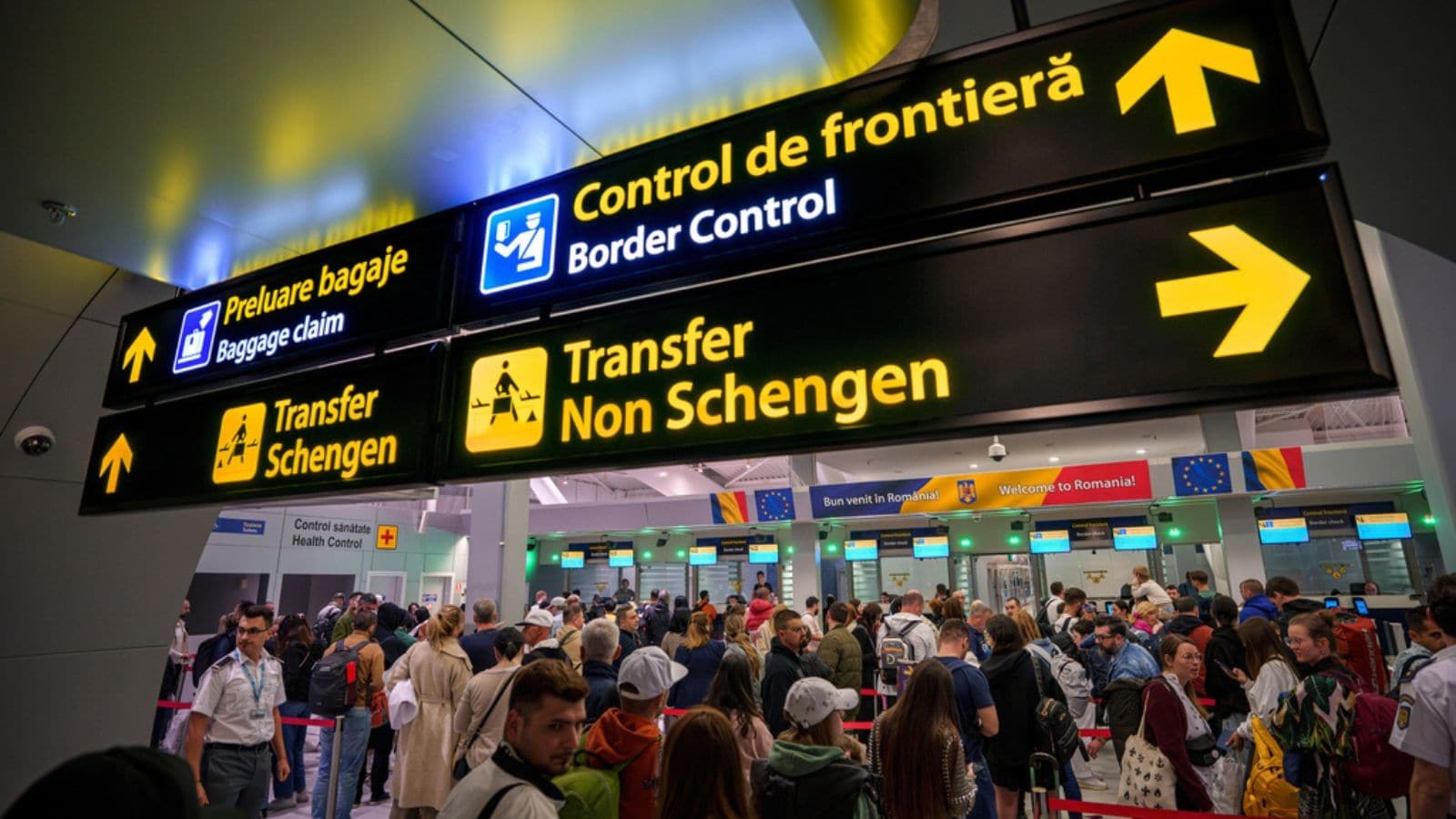
Silence.
That is the first thing you notice when a routine morning in a European newsroom or an airport terminal fractures. Not an explosion, not the wail of sirens, not the frantic shouting of Hollywood disaster movies, just a sudden, suffocating vacuum where normal noise used to be. The hum of espresso machines stops. The rhythmic clatter of keyboards freezes mid-sentence. Hundreds of pairs of eyes dart toward a single manager standing by a glass partition, holding a smartphone with knuckles turned white.
Consider a hypothetical scenario that plays out with alarming regularity across the continent right now. Imagine a Tuesday morning in Brussels or Geneva. A regional television producer—let’s call her Clara—is sipping lukewarm coffee, reviewing the script for the midday broadcast. At 10:14 AM, an email lands in the general tip line. It has no attachments, no sophisticated malware, no ransom demand for millions in cryptocurrency. It is just four sentences of broken, urgent syntax claiming an explosive device has been hidden inside the studio’s ventilation shaft, set to detonate before noon.
Within six minutes, the live feed cuts to a static graphic. Three hundred journalists, camera operators, and administrative staff file down concrete stairwells into a drizzling rain. Across town, at the international airport, a nearly identical email hits the operations desk of a major carrier. Two Boeing 737s already taxiing toward the runway slam on their brakes. Passengers press their foreheads against the oval windows, watching flashing blue lights surround their wings while bomb-sniffing dogs are unloaded from vans onto the wet tarmac.
Neither building contains a single gram of explosive material. Neither plane is in physical danger. Yet by lunchtime, a phantom has paralyzed a major city, cost hundreds of thousands of euros, and left thousands of people staring at their phones in cold, quiet dread.
This is the reality of the recurring waves of coordinated bomb threats targeting European flights and broadcasters. On paper, news reports treat these incidents like dry logistical hiccups. A flight diverted here. A studio evacuated there. Zero injuries reported. Police investigating. When you read those brief wire stories over breakfast, the whole affair sounds almost mundane, like a severe thunderstorm or a transit strike.
That clinical framing misses the entire point.
The Architecture of Cheap Chaos
To understand why these hoaxes are surging across Europe—from France and Switzerland to Belgium, Germany, and the Baltic states—you have to stop thinking about terrorism in the twentieth-century sense. Historically, disrupting a nation’s airspace or knocking a major television network off the air required immense resources. It demanded physical infiltration, smuggled contraband, forged documents, and an attacker willing to risk immediate capture or death.
Today, the barrier to entry is a free email account, a virtual private network, and thirty seconds of typing.
Think of modern critical infrastructure like a massive, finely tuned immune system. Aviation authorities and public broadcasters are built on an absolute, non-negotiable mandate to protect human life. If there is a 0.01 percent chance that an incendiary device is sitting in the cargo hold of a flight from Paris to Zurich, the system cannot gamble. It must shut down. It must empty the terminal, ground the fleet, scramble fighter jets if a plane is already airborne, and clear the broadcast floor.
The attackers know this. They are weaponizing our own safety protocols against us.
In psychological warfare, this is known as asymmetric friction. The perpetrator expends virtually zero energy—maybe the electricity required to run a laptop for five minutes—while forcing the target to burn through massive reserves of money, manpower, and emotional bandwidth. Every single threat triggers a rigid, expensive cascade. Bomb squads deploy. Air traffic controllers reroute dozens of surrounding aircraft, burning tons of extra jet fuel and cascading delays across an entire continent’s flight grid. Broadcasters lose millions in ad revenue and suffer a direct hit to their primary purpose, which is keeping the public informed during a crisis.
I remember standing outside an evacuated terminal in Central Europe during a security alert a few years back, watching a mother try to calm her toddler on a concrete curb while armed tactical officers swept the baggage claim behind glass doors. Nobody was hurt. Technically, the system worked. Yet watching the exhaustion wash over the crowd as hours ticked by, you could feel the exact sensation the perpetrator wanted to manufacture. It wasn't sheer panic. It was something much slower and more corrosive. It was the feeling that the ground beneath ordinary life had suddenly become unreliable.
Why Flights and Broadcasters Share the Crosshairs
At first glance, an airline and a television station seem to have very little in common. One moves physical bodies across borders; the other moves information into living rooms. Why do these coordinated waves of hoax threats repeatedly target both sectors at the exact same time?
Because together, they represent the nervous system of modern society.
Aviation is the ultimate symbol of physical connection and economic freedom in Europe. The Schengen Area and the dense web of low-cost and flag-carrier routes turned a fractured continent into a single neighborhood where you can have breakfast in Milan and lunch in Amsterdam. When you force a plane to make an emergency landing in a regional airport, you aren't just delaying two hundred travelers. You are visually demonstrating that borders and transit are fragile.
Broadcasters, meanwhile, are the public square. When a national radio or television network goes dead in the middle of the day because staff had to sprint out the fire exits, the disruption is immediately visible to millions of viewers. You don't need a press release to tell people an attack occurred; the sudden appearance of a backup loop on their television screen does the advertising for you.
Security analysts and European intelligence agencies have noticed distinct patterns in how these waves roll across the map. They rarely happen as isolated pranks by bored teenagers—though copycats certainly jump in once headlines break. Instead, they often arrive in synchronized clusters. Dozens of emails hit schools, airports, train stations, and media houses within a single forty-eight-hour window.
The language is frequently templated, sometimes translated awkwardly from other tongues, routed through encrypted servers in jurisdictions that refuse to cooperate with European law enforcement. Investigators often trace the digital footprints back to hybrid warfare networks, state-sponsored disinformation cells, or decentralized online extremist groups that treat real-world disruption like a competitive video game.
What makes these campaigns so maddening to counter is the sheer fog surrounding them. When a cyberattack locks up a hospital’s database, forensic teams can examine the code, identify the strain of ransomware, and patch the vulnerability. When a bomb threat arrives via a burner email address, there is no malicious code to dissect. The weapon is purely linguistic. It is just text claiming violence, delivered through the same open channels that broadcasters rely on to receive tips from whistleblowers and airlines use to handle customer inquiries.
The Invisible Toll on the Ground
We talk endlessly about the financial cost of these disruptions, because euros and cents are easy to count. Aviation economists estimate that a single unscheduled diversion of a commercial airliner costs anywhere from fifteen thousand to over one hundred thousand euros, depending on the size of the aircraft, crew overtime, passenger compensation, and missed connections. Multiply that by a dozen flights across France or Germany in a single week, and the bill climbs into the millions.
But the ledger books don't capture what happens inside the heads of the people running the machinery.
Talk to an air traffic controller or a newsroom security director after their third evacuation in a month, and you will see a specific kind of fatigue behind their eyes. Security protocols rely heavily on human vigilance. They require personnel to treat every alarm as if it is the real thing, to check every bag with the same intensity, to follow every evacuation checklist without cutting corners.
That is an exhausting psychological state to maintain indefinitely.
When false alarms become routine, institutions face a terrifying trap known as normalization of deviance. Human beings are wired to adapt to repeated stimuli. If the fire alarm goes off every Tuesday at noon and there is never any smoke, people eventually stop grabbing their coats and start rolling their eyes. Security directors across Europe lie awake at night worrying about this exact phenomenon. They know that the perpetrators are trying to numb the system—to provoke a moment of complacency where a tired supervisor sighs, assumes a threat is just another fake email from a troll farm, and decides not to clear the building.
And if that happens on the one day the threat is real, the consequences are unthinkable.
So the professionals refuse to blink. They evacuate the building again. They ground the plane again. They absorb the stress, the overtime, and the public frustration, paying the psychological tax required to keep zero fatalities on the scoreboard.
Fighting Ghosts Without Losing Our Nerve
If you cannot simply unplug the internet or ban anonymous emails, how does Europe defend itself against an enemy that doesn't even need to leave its bedroom to shut down an airport?
The answer isn't a single silver bullet. It is a quiet, relentless evolution in how threats are assessed and how societies absorb shocks.
First, law enforcement and intelligence agencies across the European Union have been forced to tear down old bureaucratic walls. In the past, a bomb threat sent to a regional broadcaster in Belgium and a similar email sent to an airport in Lithuania might have been handled as two separate local police matters. Today, specialized cyber-crime units and counter-terrorism fusion centers cross-reference metadata, linguistic quirks, routing patterns, and timing across borders in real time. Even when perpetrators use heavy encryption and proxy servers, human habits leave fingerprints. People reuse phrases, make identical punctuation errors, or slip up on operational security when sending hundreds of messages under pressure. Over the past two years, coordinated European task forces have quietly tracked down and arrested several individuals behind mass hoax networks, proving that digital anonymity is rarely as absolute as attackers believe.
Second, institutions are redesigning their resilience from the inside out. Look at how major broadcasters now handle evacuations. Five years ago, clearing a headquarters meant total dead air. Today, many European networks operate decentralized, cloud-based broadcast workflows. If the main building in the capital is emptied by police, a skeleton crew with laptops can spin up a live studio from a secondary location—or even their living rooms—within minutes. The physical building empties, the staff stays safe, and the signal never drops.
Airports and airlines are adopting similar layered defenses. Rather than relying solely on blunt, terminal-wide shutdowns, security teams are using advanced behavioral screening, continuous baggage monitoring, and rapid-response canine units that can clear an aircraft in a fraction of the time it took a decade ago. Threat assessment protocols have become far more surgical, allowing experts to evaluate the credibility of a message within minutes rather than hours, minimizing the ripple effect across European airspace.
Yet the most important defense isn't technical at all. It is cultural.
A hoax bomb threat is, at its core, an act of theater. The person typing the message behind a glowing screen thousands of miles away is desperate for an audience. They want to see chaotic footage on the evening news. They want to read panicked social media threads. They want to feel the intoxicating rush of pulling invisible strings and watching a powerful institution dance.
When the media reports these incidents with breathless, sensationalist urgency, they inadvertently hand the attacker their trophy. When newsrooms and aviation authorities handle the evacuation calmly, restore operations quickly, and treat the perpetrator not as a terrifying mastermind, but as a pathetic nuisance committing a felony, the theater loses its power.
The Weight of an Empty Runway
Walk past the perimeter fence of any major European airport at dusk, and you can feel the sheer scale of the trust that holds modern life together. Every ninety seconds, a hundred tons of aluminum, jet fuel, and human ambition roars down the asphalt and lifts into the dark, guided by invisible radio beams and the quiet voices of controllers sitting in darkened rooms.
That entire miracle runs on a fragile currency called confidence.
The people sending these waves of phantom threats understand that currency intimately. They know they cannot match Europe’s physical security, so they aim straight for its nerves, betting that enough false alarms will eventually fray the fabric of everyday trust. They are counting on travelers to stay home, on journalists to hesitate, and on ordinary citizens to look at a departing flight or a live broadcast with a flicker of doubt.
They misunderstand the nature of the thing they are trying to break.
Picture that hypothetical Tuesday morning in Brussels or Geneva again, three hours after the alarms first sounded. The bomb-sniffing dogs are back in their vans. The yellow tape has been rolled up and tossed into the trunk of a police cruiser. Inside the television studio, Clara sits back down at her desk, plugs in her headset, and waits for the floor director to count her in. Across town, the two Boeing 737s push back from the gate a second time, their engines spooling up to a deep, steady roar as they turn onto the runway.
The tarmac is still wet from the morning rain, reflecting the amber glow of the runway lights as the wheels lift cleanly off the ground.