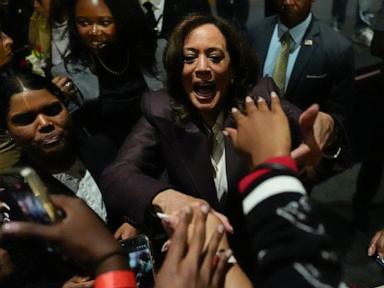
Political catchphrases usually die within forty-eight hours of hitting the news cycle. Yet when Kamala Harris stepped up to the podium recently and demanded a "too big to rig" turnout for the midterm elections while taking sharp jabs at Donald Trump, something shifted in how Democrats are framing the upcoming ballot.
If you've been watching the coverage, you've probably seen the surface-level takes. Pundits love a good soundbite, especially when it borrows phrasing historically tied to Trump’s own campaign rhetoric. Flipping an opponent’s slogan against them is classic political judo. Still, reducing Harris’s speech to a clever rhetorical trick completely misses the structural reality of midterm voting and the exact vulnerabilities Democrats are trying to patch before ballots drop. Recently making waves recently: The Cold Stone of Charlotte Square (And the Heat Rising Outside).
Let's be honest about how midterms work. They aren't decided by who wins the best cable news clip in the spring or summer. They're decided by raw math, precinct-level organization, and whether a party can convince exhausted voters to show up when the presidency isn't on the ballot.
Why Flipping 'Too Big to Rig' Actually Matters
For years, the phrase "too big to rig" lived almost exclusively inside conservative rally speeches. Trump and his allies used it to tell supporters that massive turnout was the only way to overcome what they claimed were systemic disadvantages or unfair election administration. More details into this topic are explored by Reuters.
By adopting those exact four words, Harris isn't just trolling. She's attempting to neutralize a specific psychological barrier among Democratic-leaning voters.
When people feel like the system is stacked against them—whether through strict voter ID laws, purged voter rolls, or aggressive redistricting—the natural human reaction isn't always righteous anger. Often, it's apathy. People stay home because they figure their single ballot won't survive the institutional friction.
Harris’s message directly targets that defeatism. Her argument is simple. Overwhelming volume breaks through administrative bottlenecks. You can't litigate away a ten-point margin in a swing district, and you can't easily challenge a landslide in court after the fact.
I've spent enough time analyzing precinct returns to know that narrow margins invite chaos. Look back at any razor-thin House race over the last decade. A difference of four hundred votes triggers automatic recounts, weeks of legal challenges, provisional ballot fights, and endless suspicion from whichever side loses. A margin of twelve thousand votes ends the conversation by midnight on Election Day. That's the practical math behind her slogan.
The Direct Attack on Trump’s Record and Rhetoric
Of course, turnout speeches don't work without a clear foil. You can't just tell people to vote because civic duty feels nice. You have to give them a target, and Harris went straight after Trump.
Her critique focused heavily on the gap between populist campaign promises and the actual economic and institutional fallout of Trump’s leadership. She pointed directly to cost-of-living pressures, tariff policies that act as hidden taxes on everyday consumers, and ongoing attempts to reshape federal agencies and voting rules.
Notice the shift in tone here. Instead of treating Trump as an abstract threat to democratic norms—a messaging strategy that consistently underperformed with working-class voters who care more about grocery bills than constitutional theory—she tied his governance directly to tangible household strain and personal liberty.
It's a sharper, more aggressive posture than what we often saw during previous cycles. Why? Because midterm voters respond to friction. The party out of power in the White House almost always enjoys an enthusiasm advantage simply because frustrated voters show up while satisfied ones stay on the couch. By keeping Trump front and center as the architect of current policy frustrations, Harris is trying to harness that exact anti-incumbent energy.
Where the Messaging Hits Reality
Does aggressive rhetoric automatically translate into ballots? Hardly.
Anyone who has worked on a field campaign knows there's a massive gap between a roaring crowd at a rally and a rainy Tuesday in November. Enthusiasm in a speech doesn't put gas in a volunteer's car or force a twenty-two-year-old renter to update their registration after moving apartments.
Democrats face a very real structural hurdle in midterm cycles. Historically, the Democratic coalition relies heavily on younger voters, low-propensity voters, and urban renters—groups that drop off sharply when there isn't a presidential race at the top of the ticket. Meanwhile, older, wealthier, and more consistent voters tend to show up regardless of the calendar year.
That's why Harris’s "too big to rig" line carries an unspoken warning to her own party's infrastructure. If Democrats rely solely on anti-Trump outrage without investing in year-round voter registration and ballot-curing operations, the slogan becomes empty noise.
The Structural Battle Over Voting Access
When Harris talks about overcoming attempts to "rig" the outcome, she's pointing toward a very specific set of legal and legislative battles playing out across battleground states.
Over the past several years, state legislatures have passed dozens of laws altering how Americans cast their ballots. Some of these measures tighten rules around mail-in voting, shorten early voting windows, restrict the use of drop boxes, or require stricter documentation to register. Supporters of these bills argue they're necessary to prevent fraud and build public confidence. Critics, including Harris and civil rights groups like the Brennan Center for Justice, argue these rules disproportionately trip up minority, student, and working-class voters.
Here's the practical reality on the ground. Even if a new rule doesn't outright ban someone from voting, adding friction lowers turnout.
Think about how most people operate. If requesting an absentee ballot suddenly requires printing a form, finding a physical stamp, and matching a signature from ten years ago, a certain percentage of busy people simply won't get around to it. Multiply that minor inconvenience across fifty thousand voters in a competitive suburban district, and you've altered the outcome without a single person being turned away at a polling booth.
Harris’s push for overwhelming turnout is an admission that the legal battles over these rules won't be settled in time for the midterms. Courts move slowly. State legislatures aren't reversing course. The only immediate workaround available to campaigns is brute-force participation—getting so many people to the polls early that technical disqualifications can't tip the scales.
What History Tells Us About Midterm Turnout Surges
If you look at recent American political history, massive midterm surges do happen, though they're rare.
Take 2018. Driven largely by backlash against the Trump administration and fierce fights over healthcare, national midterm turnout hit roughly 50 percent of eligible voters—the highest rate for a non-presidential election since 1914, according to data from the United States Elections Project. Democrats flipped forty-one House seats that year because their base treated the election like a presidential race.
Now compare that to 2022. Despite widespread predictions of a massive "red wave" fueled by high inflation and an unpopular Democratic president, turnout remained historically strong—around 46 percent—and Democrats unexpectedly held the Senate while losing the House by only a razor-thin margin. Why did the wave stall? Because issues like reproductive rights and concerns over election-denying candidates drove high-propensity Democratic voters to the polls in states like Michigan, Pennsylvania, and Arizona.
Harris is clearly trying to recreate the 2018 dynamic. She wants Democratic voters to treat this midterm not as a routine check-in, but as an emergency referendum on Trump’s influence over Congress and the courts.
The Risk of Overplaying the Hand
There's a catch, though, and smart political strategists know it well.
When you frame every single election as an existential battle against a rigged system, you risk burning out your audience. Voters aren't stupid. They can tell when a politician is manufacturing crisis-level urgency just to hit fundraising quotas before the end of the quarter.
If Harris and her allies hammer the "too big to rig" theme without pairing it with clear, concrete answers on housing costs, healthcare expenses, and wages, swing voters will tune them out. You can't eat a democracy speech. Independent voters in places like Wisconsin, Nevada, and North Carolina routinely tell pollsters that economic stability ranks far above partisan grievances when they step into the voting booth.
Trump understands this instinctually, which is why his speeches almost always circle back to prices, jobs, and border security even when he spends twenty minutes venting about his political enemies. If Harris wants her midterm pitch to land outside of deep-blue cities, her critiques of Trump have to stay anchored to kitchen-table economics rather than drifting into insider political theater.
How Voters Can Actually Cut Through the Noise
Watching national politicians trade shots on cable news is entertaining, sure, but it doesn't do anything to actually secure an election outcome. If you care about how these midterm battles play out in your own district, passive news consumption is useless.
Start by checking your registration status directly through your state’s official Secretary of State website—not through a third-party text link or a partisan fundraising page. Voter roll maintenance happens regularly, and people routinely get flagged as inactive simply because they skipped a local municipal election or moved across town without updating their driver's license.
Pay close attention to your state’s specific deadlines for mail-in ballot requests and early in-person voting. Most rejected ballots aren't thrown out because of fraud; they're tossed because a voter missed a postmark deadline, forgot to sign the outer envelope, or used a signature that didn't match their old DMV file. Voting early in person eliminates almost all of those technical risks on the spot.
Finally, look past the national headlines and pay attention to down-ballot races. State attorneys general, secretaries of state, and state supreme court judges hold massive sway over how election rules are written and enforced in your area. The national speeches grab all the oxygen, yet those local offices decide how the votes actually get counted.