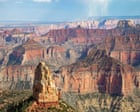
Three people died in a small plane crash inside Arizona’s Grand Canyon National Park, and the reaction from the public followed a painfully predictable script. Headlines flash the tragedy. Social media erupts with panic about sightseeing tours. Then, within forty-eight hours, everyone moves on without understanding why these crashes actually happen or what makes flying over the canyon uniquely demanding.
I've spent years analyzing general aviation incidents and mountain flying dynamics, and here's the truth that rarely makes the evening news. The Grand Canyon isn't just a pretty hole in the ground. From an aerodynamic standpoint, it's a massive weather machine capable of generating violent, invisible hazards that will humble even seasoned pilots.
When a single-engine aircraft goes down in the canyon, the real story isn't usually a freak mechanical failure. It's almost always a collision between human decision-making, unforgiving terrain, and brutal physics.
The Reality Behind Grand Canyon Plane Crash Headlines
Let's look at what actually happens when an aircraft goes down inside the park boundaries. Unlike commercial airliners cruising at thirty-five thousand feet, general aviation planes and air tour operators fly relatively close to the rim. When something goes wrong at those altitudes, your margin for error vanishes in seconds.
Search and rescue operations inside the Grand Canyon are among the most difficult in the United States. The National Park Service, working alongside the Coconino County Sheriff's Office and the Federal Aviation Administration, often faces sheer vertical cliffs, unpredictable crosswinds, and zero road access. Reaching a crash site frequently requires technical rope teams or specialized helicopter crews just to recover victims and secure the wreckage for the National Transportation Safety Board.
And that brings us to the biggest misconception people have when they read about three people killed in a Grand Canyon plane crash.
Most readers assume the victims were onboard a commercial sightseeing flight. While air tour accidents have occurred over the decades—most notably the catastrophic 1956 mid-air collision between a TWA Super Constellation and a United Airlines DC-7 that killed 128 people and led directly to the creation of the modern FAA—many modern crashes involve private pilots.
There's a massive difference between a commercial Part 135 air tour operator and a private pilot flying under Part 91 rules. Commercial operators fly standardized routes, undergo rigorous recurrent training, and adhere to strict weather minimums. Private pilots, on the other hand, might be flying a rented Cessna from Phoenix or Las Vegas with a couple of friends in the back, eager to see the South Rim from the air without fully grasping what the canyon's microclimate is doing that afternoon.
Why Flying Over the Grand Canyon Is an Aerodynamic Trap
You don't see air. That's the fundamental problem. If you could see the wind currents churning inside the Grand Canyon on a hot Arizona afternoon, you probably wouldn't take off.
Here's what's happening in the sky above the Colorado River.
Density Altitude Kills Performance
Elevation matters. The South Rim of the Grand Canyon sits around seven thousand feet above sea level, and the North Rim climbs past eight thousand feet. When summer temperatures spike into the nineties or triple digits, the air becomes thin. Pilots call this high density altitude.
Thin air ruins airplane performance in three ways at once:
- Your engine produces significantly less horsepower because there are fewer oxygen molecules to burn.
- Your propeller bites into less air, reducing thrust.
- Your wings generate less lift, forcing you to fly faster just to stay airborne.
A fully loaded four-seat plane with three or four adults onboard, full fuel tanks, and luggage might climb sluggishly out of Grand Canyon National Park Airport on a hot afternoon. If a pilot turns toward rising terrain or hits a downdraft, the plane simply doesn't have the excess power to climb out of trouble. You can pull back on the yoke all you want. Physics doesn't care.
Downdrafts and Mountain Wave Turbulence
Wind flowing across the flat plateaus of northern Arizona suddenly hits a mile-deep chasm. What goes up must come down, and air spilling over the canyon rim plunges downward like an invisible waterfall.
These downdrafts can easily exceed one thousand feet per minute. Think about that number for a second. A light single-engine airplane on a hot day might only be capable of climbing at four hundred or five hundred feet per minute. If you fly into a downdraft moving downward twice as fast as your plane can climb, you're going down. Period.
Experienced mountain pilots know how to read the clouds, anticipate wind shear, and approach ridges at a forty-five-degree angle so they have an escape route toward lower terrain. Inexperienced pilots fly straight into the canyon expecting a smooth scenic cruise and get slammed by turbulence that pushes them toward the canyon walls.
The History That Shaped Grand Canyon Airspace Rules
If you think the skies over the Grand Canyon are a free-for-all, you're dead wrong. In fact, the airspace above the park is some of the most heavily regulated and complex in the entire country.
After that 1956 mid-air collision over the confluence of the Colorado and Little Colorado rivers, aviation authorities realized that visual flight rules alone couldn't keep planes apart in popular scenic corridors. Over the next several decades, traffic exploded. By the 1980s, tens of thousands of sightseeing flights were buzzing over the canyon every year, creating noise complaints and serious mid-air collision risks.
In 1987, Congress passed the National Parks Overflights Act, which forced the FAA to create a Special Flight Rules Area over the Grand Canyon. Today, that airspace is divided into specific flight-free zones, strict altitude floors, and designated transit corridors.
Commercial tour operators follow strict one-way corridors with mandatory radio reporting points. Private transient pilots—folks just passing through or sightseeing on their own—are restricted to specific corridors like the Tuckup, Fossil Canyon, Dragon, and Zuni Point corridors, and they have to stay above strict minimum altitudes, often ten thousand five hundred feet or higher depending on the sector.
Does the system work? Mostly, yes. Mid-air collisions have dropped dramatically.
Still, regulations can't fix bad judgment. No FAA rule stops a pilot from descending below safe margins for a better photograph, flying into deteriorating monsoon weather, or miscalculating fuel burn against a fierce headwind.
How Investigators Piece Together Remote Canyon Crashes
When three lives are lost in a remote section of the park, answers don't come quickly. The public wants to know what happened by dinner time, yet an NTSB investigation typically takes twelve to twenty-four months to reach a probable cause.
Why the long wait?
First, small general aviation planes rarely carry the ruggedized flight data recorders and cockpit voice recorders found on commercial airliners. Investigators have to play detective with bent aluminum, fractured engine parts, and fragmented radar tracks.
They pull data from multiple sources:
- ADS-B and Radar Logs: Automatic Dependent Surveillance-Broadcast data often captures a plane's exact GPS position, altitude, groundspeed, and vertical descent rate right up until terrain blocks the signal.
- Forensic Metallurgy: Technicians examine propeller blades to see if the engine was producing power on impact. Curled, twisted blades mean the engine was running hard; straight, unbent blades usually mean the engine quit before the crash.
- Personal Electronics: Smartphones, tablets running navigation apps like ForeFlight, and onboard GPS units often survive crashes and yield critical flight path logs.
- Weather Reconstruction: Meteorologists analyze automated weather stations from Grand Canyon Airport, Page, Flagstaff, and surrounding mesas to calculate wind shear, convective activity, and density altitude at the exact minute of the crash.
People often get frustrated when preliminary NTSB reports come out two weeks after an accident and contain zero blame. That's by design. Preliminary reports only state verified facts—time, location, aircraft registration, and basic wreckage observations. Speculation gets people killed in aviation; verified facts save lives.
What You Should Check Before Booking a Canyon Flight
Hearing about a fatal plane crash naturally makes travelers nervous about booking an aerial tour of the Grand Canyon. Honestly, a healthy dose of skepticism is smart. Flying in small aircraft always carries higher statistical risk than flying on a major commercial airline, largely because single-engine planes don't have redundant powerplants and fly closer to terrain.
That doesn't mean you shouldn't go. Seeing the Grand Canyon from the air gives you a sense of scale that standing on the South Rim can never match. You just need to be smart about who you fly with.
If you're planning a scenic flight, ignore the flashy discount brochures and check these specifics first:
- Verify Part 135 Certification. Make sure the company is an FAA-certificated Part 135 air carrier, not an informal ride-share or flight-seeing loophole. Part 135 operators face unannounced FAA inspections, strict maintenance schedules, and mandatory drug and alcohol testing for pilots.
- Look for TOPS Membership. Check if the operator belongs to the Tour Operators Program of Safety (TOPS). Members voluntarily exceed minimum FAA safety standards, requiring higher pilot flight-hour minimums, specialized canyon training, and enhanced aircraft safety equipment.
- Fly Early in the Morning. This is the single best piece of practical advice I can give you. Morning air is cool, dense, and calm. By noon, desert heating kicks off thermal turbulence, gusty winds, and afternoon thunderstorms during summer monsoon season. Early flights give you smoother air, better aircraft performance, and dramatically better lighting for photos.
- Ask About Aircraft Type and Twin-Engine Options. High-wing aircraft like the Cessna Caravan or de Havilland Twin Otter give you unobstructed downward visibility without a wing blocking your view. Twin-engine planes also add a layer of engine redundancy over rugged terrain.
- Respect Weather Cancellations. If an operator cancels or delays your flight because of wind or clouds, don't argue with the desk agent. That's a company prioritizing your life over their bottom line.
If You Are a Private Pilot Planning a Canyon Flight
For fellow pilots reading this after seeing the news, treat every Grand Canyon crash as a personal briefing. Don't just shake your head and assume the pilot made a rookie mistake you'd never make.
Get your hands on the current FAA Grand Canyon VFR Aeronautical Chart before you even preflight. Paper or digital, study the sector altitudes and frequencies until you know them cold. Monitor the designated air-to-air frequencies—127.05 MHz on the west end, 120.05 MHz on the east—and announce your position, altitude, and direction clearly so tour traffic knows exactly where you are.
Run your density altitude numbers honestly. If your aircraft's climb gradient looks marginal on paper, leave a passenger behind, offload fuel to a safe reserve, or wait until sunrise the next morning. Never enter a canyon corridor without enough altitude to glide clear of the rim if your engine goes silent, and never let passengers pressure you into circling low over a landmark. Take the flight early, keep your eyes outside the cockpit scanning for tour helicopters and fixed-wing traffic, and give the canyon the respect it demands.


