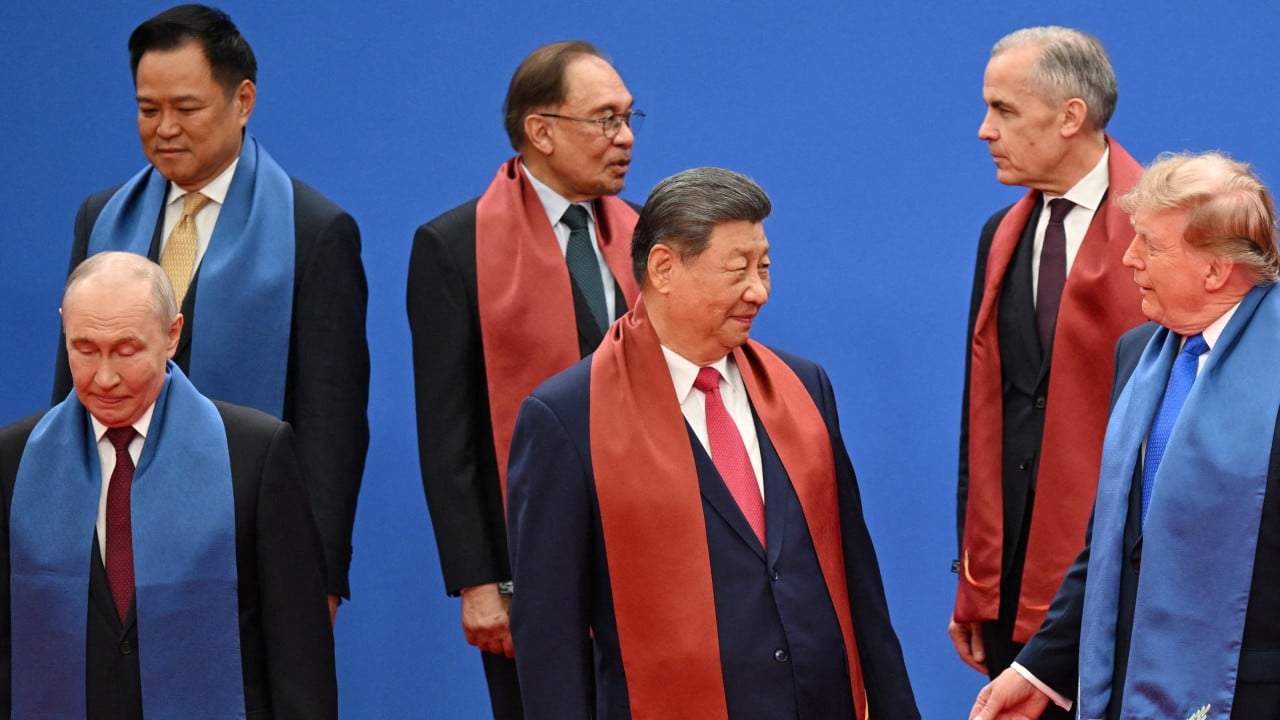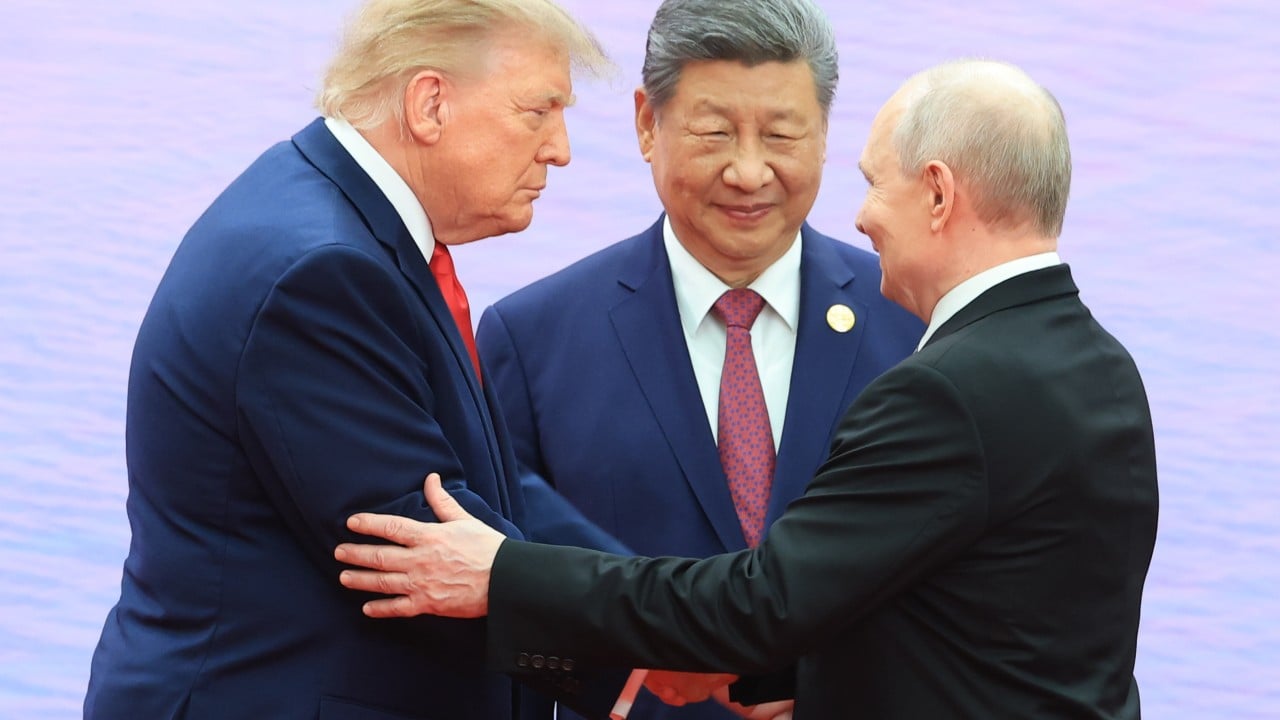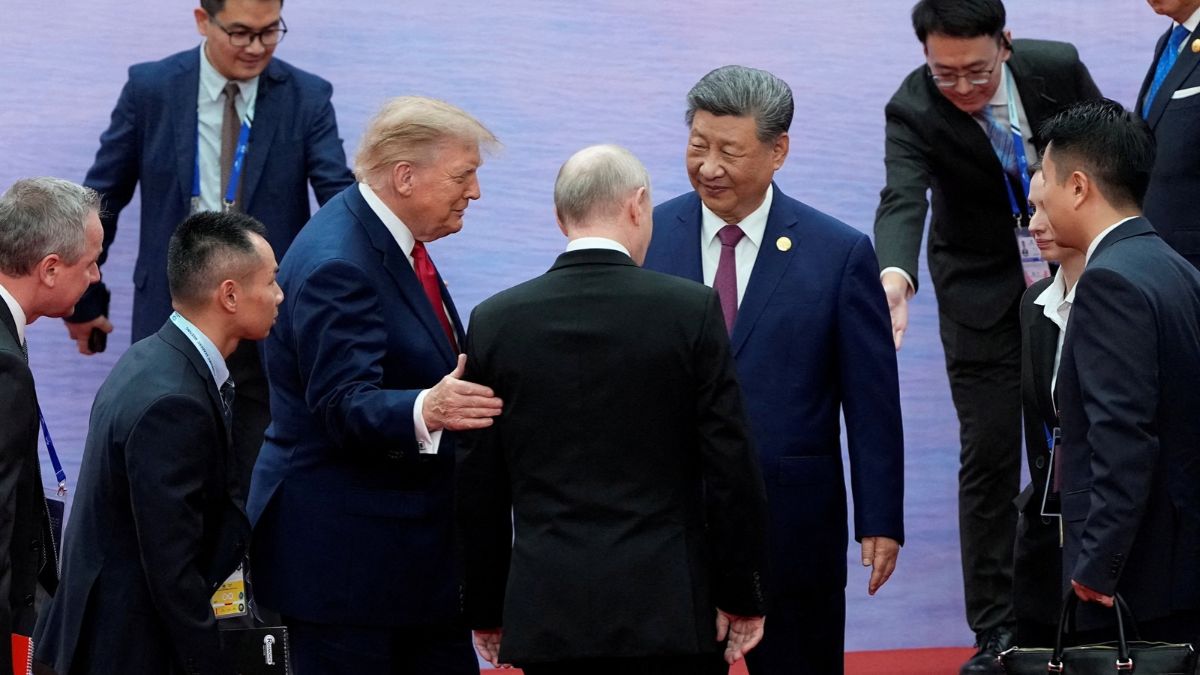
Everyone loves a good diplomatic body-language rumor. When side-by-side photos and clips circulate showing Chinese President Xi Jinping rolling out massive, theatrical pageantry for Donald Trump while offering Vladimir Putin a noticeably brisker, lower-key welcome, the internet immediately jumps to one conclusion. Putin got the cold shoulder.
Except he didn't.
If you've spent enough time watching how Beijing choreographs state visits, you quickly realize nothing on a Chinese tarmac happens by accident. Every red carpet length, honor guard formation, and airport greeter is calibrated down to the centimeter by China's Ministry of Foreign Affairs Protocol Department. When Xi treats Trump like visiting royalty and greets Putin like a regular coworker dropping by the office, he isn't signaling a falling out with Moscow. He's playing two completely different audiences.
Why Xi Jinping’s Receptions for Trump and Putin Look So Different
Let's look at the actual mechanics of Chinese state protocol. Beijing classifies foreign visits into distinct tiers, and the visual difference between a formal state visit and a working visit—or a multilateral summit arrival—is night and day.
When Trump visited Beijing during his presidency in November 2017, China didn't just give him a standard state visit. They invented a "state visit-plus." Xi personally hosted Trump and Melania inside the Forbidden City, shutting down the historic palace complex for a private tour and dinner. There were Peking Opera performances, military bands, and massive visual spectacles broadcast around the clock.
Now compare that to several of Putin's trips to China, including his appearances at the Belt and Road Forum or Shanghai Cooperation Organization summits, and even certain bilateral stops where senior officials like Premier Li Qiang or Foreign Minister Wang Yi handled the initial airport tarmac greeting instead of Xi himself. Critics and Western commentators instantly pounce on that contrast. They point to the lack of a Forbidden City banquet or the absence of Xi at the airplane stairs as proof that Beijing is cooling on Russia.
That reading misses the point entirely.
Protocol Tiers Are Not Personal Mood Swings
In Chinese diplomacy, frequency dictates formality. Xi and Putin have met in person more than 40 times since 2013. Think about that number for a second. When two leaders see each other multiple times a year—at BRICS summits, SCO meetings, G20 gatherings, and bilateral visits—you don't throw a once-in-a-century imperial banquet every single time one of them lands in Beijing.
Doing so would actually violate Chinese diplomatic norms. A formal state visit is typically reserved for once per presidential term. Working visits, on the other hand, strip away the 21-gun salutes and sprawling Tiananmen Square welcoming ceremonies so both sides can get straight into closed-door negotiations.
With Trump, Beijing had a very specific psychological calculation. Chinese strategists studied Trump's preferences extensively before his arrival. They knew he responded strongly to grandeur, personal flattery, and visible displays of respect. Giving Trump the Forbidden City treatment cost China almost nothing in policy concessions, yet it bought goodwill and softened the tone around trade friction—at least temporarily.
Putin doesn't need that kind of theatrical ego-stroking from Beijing. The Kremlin and Zhongnanhai already operate on a heavily institutionalized track. When Putin lands in China, the real work happens behind closed doors with energy executives, defense officials, and central bankers, not in front of cameras on a red carpet.
The Strategic Reality Behind Beijing’s Balancing Act
Here is where things get interesting, and honestly, a lot more nuanced than social media clips suggest. While Putin didn't get a personal "cold shoulder," Beijing does have strong incentives to manage how cozy it looks with Moscow in public.
China's economy relies heavily on Western consumer markets, European investment, and global financial plumbing. Russia's economy, by contrast, is heavily sanctioned and increasingly dependent on Chinese buyers for discounted oil, gas, and industrial goods. Beijing holds the leverage in this relationship, and both sides know it.
Because of that asymmetry, Xi has to walk a tightrope.
- To Washington and Brussels: Beijing wants to project stability, openness, and restraint. Over-the-top visual celebrations with Putin risk triggering secondary sanctions on Chinese banks or accelerating European trade restrictions against Chinese electric vehicles and green tech.
- To Moscow: Xi needs Russia stable, aligned against U.S. hegemony, and reliable as a supplier of cheap energy and raw materials. He reassures Putin through concrete economic lifelines and high-level strategic alignment rather than flashy photo ops.
- To the Chinese domestic public: State media frames Xi as the indispensable global statesman—someone who can command respect from an American president while effortlessly managing a junior partner in Moscow.
What Happens When Cameras Are Off
If you want to know how Xi actually treats Putin versus Trump, ignore the airport tarmac and follow the trade data and diplomatic communiqués.
Look at the joint statements signed during Putin's visits. They routinely feature language about a partnership with "no limits" or "no forbidden areas," alongside concrete agreements on the Power of Siberia pipelines, cross-border settlement in rubles and yuan, and joint military patrols in the Pacific. You don't sign multi-decade infrastructure and defense coordination deals with someone you're giving the cold shoulder.
Meanwhile, right after Trump's lavish 2017 "state visit-plus" in Beijing, the U.S. slapped sweeping tariffs on hundreds of billions of dollars in Chinese goods, launching a trade war that reshaped global supply chains. All that Forbidden City pageantry didn't stop a single tariff.
Pageantry in Beijing is often inversely proportional to underlying trust. When Beijing rolls out extraordinary pomp for a Western leader, it's frequently trying to smooth over deep structural hostility. When a visit looks understated and businesslike, it usually means the two sides have already hammered out the essentials before the plane even touched down.
How to Read Chinese Diplomatic Signals Yourself
Next time a viral clip claims Xi snubbed a foreign leader—or favored one over another—don't take the framing at face value. Run through a quick checklist before buying into the narrative.
- Check the official visit classification. Look up whether China's Ministry of Foreign Affairs labeled the trip a state visit, an official visit, or a working visit. Airport greetings by Xi himself are strictly tied to state visits; lower-ranking ministers greet working visits as standard practice.
- Count the frequency of recent meetings. If two leaders met three months prior at a multilateral summit, the follow-up meeting will almost always skip the ceremonial buildup.
- Watch who attends the closed-door delegation meetings. The real signal of importance isn't who stands on the tarmac—it's whether China's top economic planners, military vice-chairmen, and Politburo Standing Committee members sit at the negotiating table.
- Compare Xinhua's English and Chinese readouts. Beijing often softens language in English for international audiences while signaling firmer alignment in domestic Chinese coverage.
Understanding that distinction saves you from falling for surface-level spin every time a world leader steps off a plane in Beijing. Watch the delegation list and the trade agreements, not the red carpet.