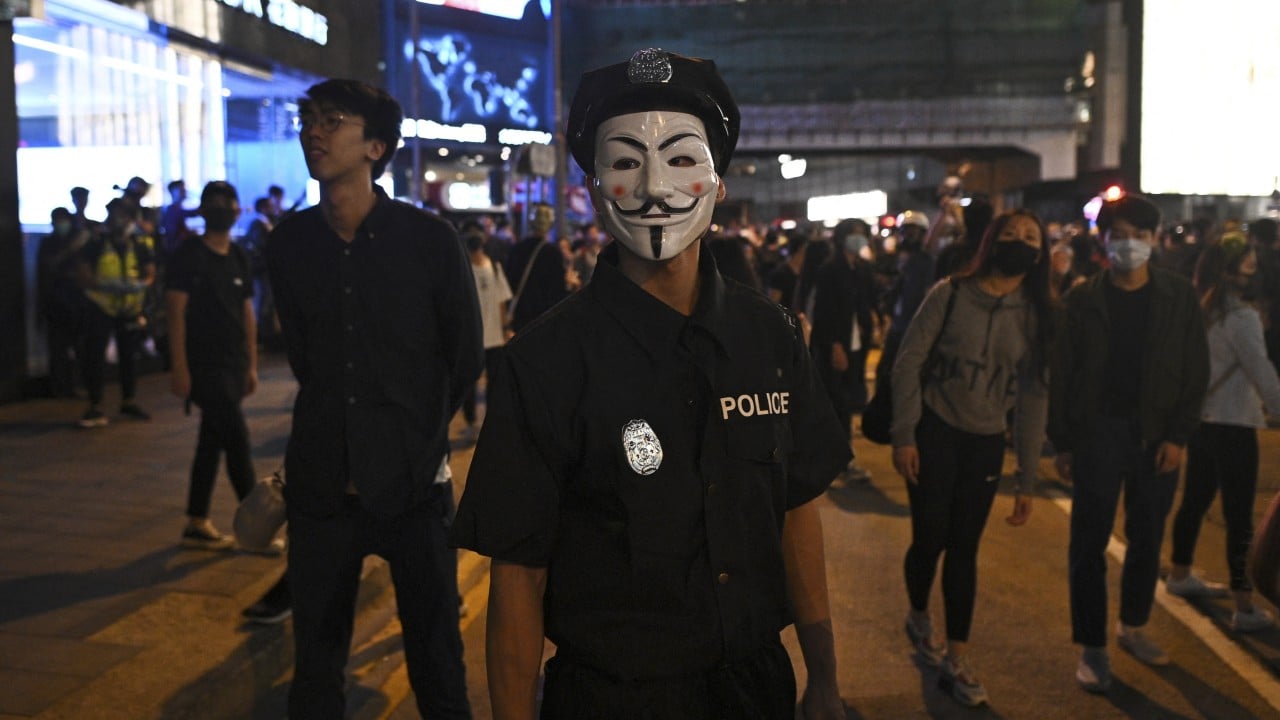
Dressing up as a cop for Halloween in Seoul isn't just a cultural faux pas—it's a jailable offense. Every October, headlines warn partygoers that South Korea's National Police Agency is hunting down fake badges and replica tactical vests. Most foreign travelers assume this is some temporary, panic-driven holiday rule cooked up after the 2022 Itaewon crowd disaster.
They're dead wrong.
The law banning imitation police gear has been on South Korea's books since 2014. It applies year-round, not just during spooky season, and violators face up to six months behind bars or a fine of up to 3 million won (roughly $2,200). What changes every October—including during the massive enforcement sweeps in late October 2026—is how aggressively police hunt down both sellers and buyers before nightlife districts pack out.
If you're planning to celebrate Halloween in Seoul, Busan, or anywhere else on the peninsula, you need to understand how this law actually works, why authorities take it so seriously, and where the line sits between a harmless costume and a criminal charge.
The Law Behind South Korea's Police Costume Crackdown
Let's clear up the biggest misconception right away. South Korean authorities didn't invent a "Halloween costume ban" out of thin air. Instead, they enforce a strict national statute called the Police Uniforms and Equipment Regulation Act, which originally took effect at the end of 2014.
Under Article 9 of this Act, anyone who isn't a sworn police officer is strictly barred from wearing, using, or carrying official police uniforms or gear. The statute goes much further than authentic government-issued clothing. It explicitly criminalizes wearing "similar police uniforms" if doing so could cause bystanders to mistake you for a real officer. Even carrying replica police equipment—like fake handcuffs, batons, or realistic badges—violates the law regardless of whether anyone gets confused.
The penalties aren't slap-on-the-wrist tickets either.
- For wearers and buyers: Wearing or possessing regulated imitation police uniforms or gear carries up to six months in prison or a fine of up to 3 million won.
- For sellers and manufacturers: Under Article 8, producing, selling, renting, or stocking replica uniforms for sale without government registration brings even harsher consequences—up to one year in prison or fines reaching 10 million won.
I've watched expats and tourists argue online every single autumn about whether the law only protects Korean police uniforms. That's a dangerous gamble. While the statute specifically defines official uniforms under Korean law, enforcement teams routinely target any realistic tactical gear, SWAT-style vests, or foreign law enforcement outfits that could trigger confusion in a dark, crowded street. In a split-second emergency, a panicked crowd won't stop to read the shoulder patch on your sleeve to check if it says "NYPD" or "Seoul Metropolitan Police".
Why Itaewon Changed Enforcement Forever
You can't separate South Korea's zero-tolerance stance on fake uniforms from the tragedy of October 29, 2022. That Saturday night, more than 100,000 people flooded Seoul's Itaewon nightlife district, leading to a catastrophic crowd crush in a narrow sloping alleyway that killed nearly 160 people.
In the chaotic aftermath, witness accounts and investigations revealed a disturbing problem. Several partygoers dressed in realistic police costumes had been mingling in the packed alleys. Some bystanders initially mistook costumed revelers for actual officers, while others assumed real police officers shouting crowd-control warnings were just drunk partygoers playing a prank. That hesitation cost precious seconds when crowd pressure reached lethal levels.
Since 2023, and continuing right through the fourth anniversary enforcement wave in October 2026, the Korean National Police Agency (KNPA) has treated imitation uniforms as a direct threat to public safety rather than harmless cosplay.
During the late-October 2026 crackdown—running from October 26 through November 1—authorities mobilized more than 4,500 officers nationwide. They didn't just patrol streets in hotspots like Itaewon and Hongdae. Cyber investigators simultaneously audited 54 major online shopping portals and secondhand marketplaces, working alongside the Korea Online Shopping Association to block search terms like "police uniform" and purge listings before buyers could even click checkout.
What Actually Counts as an Illegal Costume
Here's where most people trip up. They picture someone wearing a hyper-realistic Korean National Police uniform complete with embroidered rank insignia, and they think, "Well, my cheap party-store costume obviously looks fake, so I'm fine."
Not necessarily. Korean enforcement guidelines look at visual similarity and public confusion, not your personal intent. If an ordinary person glancing at you from ten feet away in a dimly lit alley might think you're law enforcement, you've crossed the legal line.
Items that routinely trigger police intervention include:
- Tactical vests and carrier rigs: Black or navy utility vests with Velcro patches, radio clips, or "POLICE" lettering—even if paired with casual jeans.
- High-visibility traffic gear: Neon yellow or lime reflective vests styled after Korean traffic control officers, especially if you're holding a glowing baton or whistle.
- Replica duty belts and accessories: Realistic handcuffs, holsters, badges, utility pouches, or mock firearms.
- Foreign law enforcement replicas: Realistic LAPD, NYPD, FBI, or SWAT outfits. South Korean prosecutors and police have repeatedly warned that foreign police uniforms aren't exempt if they resemble official authority figures.
Even military and firefighter outfits fall under separate Korean statutes that restrict unauthorized uniform use when it creates public confusion. Basically, if your costume represents any real-world emergency responder or armed state authority, you're inviting trouble.
Are There Any Legal Exceptions?
Yes, though none of them apply to bar-hopping in Hongdae. Under Article 8(3) of the Police Uniforms and Equipment Regulation Act, wearing or possessing police uniforms is permitted only for specific, documented purposes:
- Film, television, and theater productions: Actors and production crews shooting licensed cultural or artistic projects—provided the uniforms stay strictly on set and aren't worn out to grab dinner or drinks afterward.
- Public ceremonial or educational events: Official safety campaigns, crime-prevention demonstrations, or government-approved ceremonies.
- Clearly distinguishable designs: Items altered with legally prescribed identification marks that make it unmistakable to any observer that the garment isn't real police gear.
Notice what's missing from that list? Private house parties, club nights, and street festivals. Even if you're only walking fifty yards from a taxi to a private apartment party in Gangnam, stepping onto a public sidewalk in a replica uniform exposes you to arrest.
How Street Enforcement Plays Out in Seoul
If you visit Seoul's major entertainment districts during Halloween week, you'll see an overwhelming real police presence. In October 2026 alone, Seoul authorities deployed roughly 4,600 officers across key nightlife zones to manage pedestrian flow, block vehicle traffic on crowded streets, and keep narrow alleys clear.
When patrolling officers spot someone in a questionable uniform, they don't usually laugh it off or ask for a selfie. Standard procedure involves stopping the individual, inspecting the garment and accessories, confiscating the items as evidence, and booking the wearer for formal investigation under the Police Uniforms and Equipment Regulation Act.
For foreign nationals—including tourists, exchange students, and English teachers on E-2 visas—a criminal conviction or even a hefty prosecutor's fine carries consequences far worse than losing 3 million won. Immigration authorities review criminal records during visa renewals and extensions. A misdemeanor conviction for violating uniform regulations can trigger visa cancellation, deportation, or a multi-year re-entry ban. Suddenly, a $30 costume bought on an impulse turns into a life-altering legal mess.
Smart Costume Alternatives That Won't Get You Arrested
You don't have to skip Halloween in South Korea just because cop costumes are off-limits. Seoul's Halloween scene—while much more tightly managed and solemn around Itaewon's memorial sites than it was pre-2022—still thrives at theme parks like Lotte World and Everland, club events in Hongdae, and private gatherings.
If you want to dress up without attracting unwanted attention from real officers, stick to these practical rules:
- Go purely fictional or historical: Sci-fi space rangers, medieval knights, pirates, vampires, or anime characters carry zero risk of being confused with modern Korean civil servants.
- Swap authority figures for pop culture icons: Tracksuits from Squid Game or K-pop stage outfits are massively popular in Seoul and completely legal.
- Ditch realistic props entirely: Even if you're dressing as a fictional bounty hunter or video game character, leave realistic toy guns, metal handcuffs, and tactical batons at home. Seoul police routinely confiscate realistic-looking weapon props on sight.
- Check online listings carefully: If you're ordering from Korean platforms like Coupang or Karrot (Danggeun Market), don't try to bypass keyword blocks using coded slang. Police cyber units actively track sellers and buyers who use workarounds to trade restricted gear.
Before you head out the door in South Korea this October, take ten seconds to look in the mirror and ask one simple question: Could a stressed, distracted stranger in a crowded street mistake me for someone in charge of public safety? If there's even a slight chance the answer is yes, leave the outfit in your closet and pick something else.