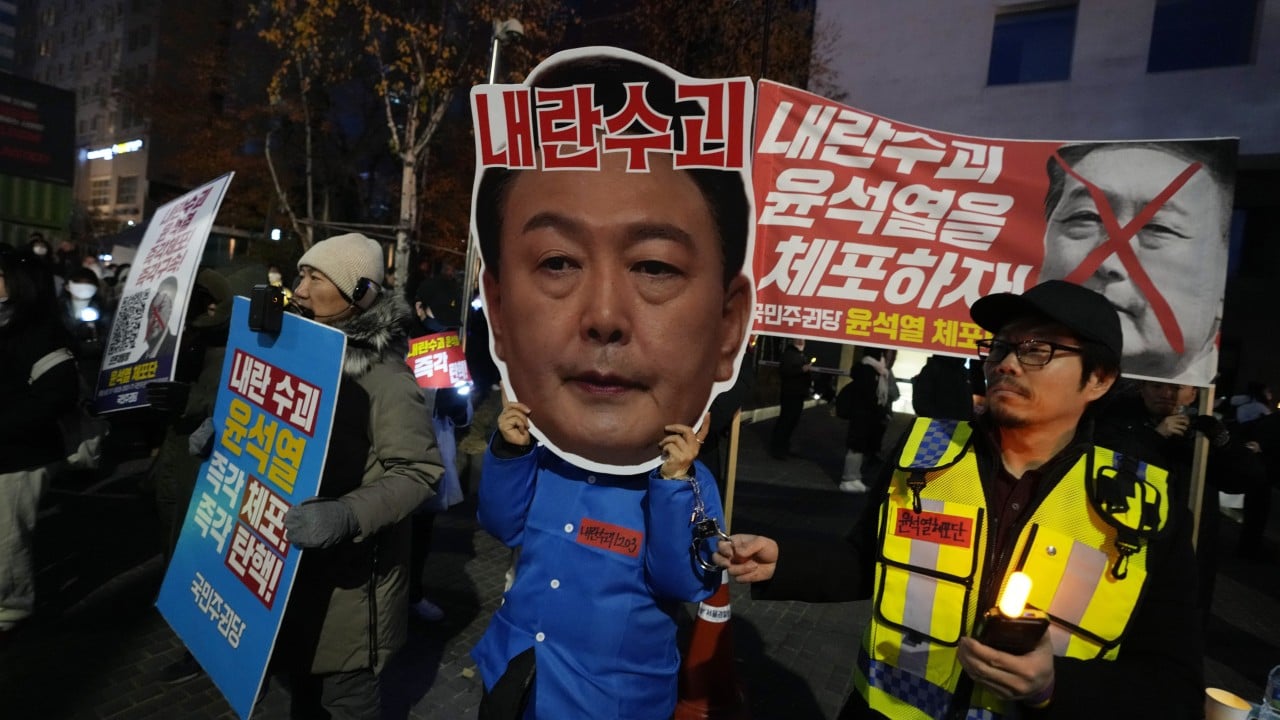
When headlines broke that a South Korean prosecutor seeks the death penalty for Yoon Suk Yeol over his December 2024 martial law declaration, international observers reacted as if an execution were scheduled for next Tuesday. It isn't. Not even close.
If you want to understand what is actually happening inside the Seoul High Court right now, you have to look past the sensational headlines. Special counsel Cho Eun-suk's team didn't demand capital punishment in a vacuum. They demanded it during an appellate trial—after Yoon had already been convicted of leading an insurrection and sentenced to life in prison back in February 2026.
Let's be honest about South Korean criminal law. Under Article 87 of South Korea's Criminal Act, the statutory punishments for the ringleader of an insurrection are extraordinarily narrow. Judges don't have a long menu of sentencing options. They have three: the death penalty, life imprisonment with labor, or life imprisonment without labor. That's it.
Because Yoon appealed his February life sentence, the special counsel doubled down in late October 2026, arguing to the Seoul High Court that life behind bars was simply too lenient for a former prosecutor general who plotted for at least eight months to subvert the constitution. Yet even if the judges grant the prosecution's demand, South Korea hasn't executed a single prisoner since December 1997. Amnesty International classifies the country as abolitionist in practice. So why is the prosecution pushing so hard for a punishment the state won't actually carry out?
Why the Prosecution Demands a Sentence That Won't Happen
In Seoul's legal circles, a death penalty demand in a high-profile political trial isn't about the gallows. It's about historical accountability and eliminating any wiggle room for a reduced sentence on appeal.
Think about how appellate courts operate in South Korea. When a lower court hands down a life sentence—as the Seoul Central District Court did on February 19, 2026—the defense inevitably argues for leniency. Yoon's legal team has consistently claimed that his late-night martial law decree on December 3, 2024, wasn't an actual coup attempt, but a desperate political gesture meant to break a legislative deadlock caused by the opposition party. Yoon himself even mocked the idea in court, asking how an "idiot" without political savvy could ever manage a long-term dictatorship.
Prosecutors aren't buying it, and they can't afford for the appellate bench to buy even a fraction of it. If the special counsel only asked to uphold the life sentence, the Seoul High Court might feel pressure to split the difference and shave the punishment down to a fixed term of decades. By demanding the maximum penalty allowed under the law, Cho Eun-suk's team anchors the court's perspective at the absolute ceiling of criminal culpability.
There's also the matter of who Yoon used to be. Before entering politics, Yoon spent decades as a hard-charging prosecutor, eventually serving as South Korea's Prosecutor General. As prosecutors pointed out during the initial trial, he knew better than almost anyone in the country that mobilizing armed troops to blockade the National Assembly was blatantly unconstitutional. Ignorance of the law isn't a defense you can pull off when you used to run the prosecution service.
Inside the December 2024 Martial Law Timeline
To see why prosecutors insist the crime warrants the ultimate statutory penalty, you have to look at the timeline they laid out in court. Most casual observers remember the chaos of that single night in December 2024, when heavily armed soldiers clashed with aides and citizens outside the National Assembly while lawmakers scaled fences to vote down the decree.
Special counsel investigators argued in October 2026 that the operation wasn't a spontaneous meltdown. According to the prosecution's timeline, preparations stretched back at least eight months prior to the December 3 announcement.
Consider how quickly the political and legal fallout unfolded after that night:
- December 3, 2024: Yoon declares emergency martial law in a late-night television address. Within hours, a quorum of lawmakers breaks past military and police blockades at the National Assembly and votes unanimously to lift it.
- December 14, 2024: The National Assembly votes to impeach Yoon, suspending his presidential powers immediately.
- April 2025: South Korea's Constitutional Court upholds the impeachment, permanently removing Yoon from office.
- January 2026: The legal hammer drops across multiple fronts. Yoon receives a five-year prison sentence in his first martial law-related verdict concerning arrest obstruction. Days later, his former prime minister is sentenced to 23 years for his role in the insurrection, and Yoon's wife, Kim Keon Hee, is jailed on separate corruption charges.
- February 19, 2026: The Seoul Central District Court convicts Yoon of leading an insurrection and sentences him to life imprisonment.
- October 29, 2026: During the appeals trial at the Seoul High Court, special counsel Cho Eun-suk again demands the death penalty, rejecting the life sentence as insufficient.
That sequence of events explains why the prosecution refuses to back down. In their view, a brief coup is still a coup. The fact that lawmakers successfully thwarted the blockade within hours doesn't erase the intent behind sending special forces into parliament to arrest political rivals.
The Other Massive Case Hanging Over Yoon
Even if you stripped away the insurrection appeal entirely, Yoon wouldn't be walking free anytime soon. A major blind spot in most coverage of the death penalty demand is that it treats the martial law insurrection trial as Yoon's only legal jeopardy. It isn't.
Alongside the Seoul High Court proceedings, Yoon is appealing a separate 30-year prison sentence. That conviction stems from charges of aiding the enemy—specifically, allegations that he ordered covert drone flights over North Korea to provoke a military crisis and manufacture a pretext for declaring martial law.
Yoon's defense attorneys argued those drone dispatches were simply a proportional response to North Korea floating thousands of trash-filled balloons across the border into the South. The trial court didn't buy that explanation, handing down a three-decade sentence that runs parallel to his insurrection case.
Meanwhile, the broader web of former officials tied to the December 2024 crisis has already faced severe consequences. Former Defense Ministry and police officials—including former National Police Agency chief Cho Ji-ho, who received 20 years, and former Seoul Metropolitan Police Agency chief Kim Bong-sik, who received 15 years—have been hit with heavy prison terms. When subordinates are serving 15 to 23 years for following orders, prosecutors argue it would be a travesty of justice for the commander-in-chief who issued those orders to receive anything less than the maximum punishment on the books.
South Korea's De Facto Death Penalty Moratorium
Whenever the phrase "death penalty" appears in news from Seoul, human rights groups immediately sound the alarm—and honestly, they have a point.
South Korea occupies a strange middle ground on capital punishment. It remains legal on paper, and courts occasionally hand down death sentences for heinous mass murders. Yet no administration—conservative or progressive—has signed an execution warrant since President Kim Young-sam left office in early 1998, following the last executions in December 1997.
Why keep a punishment on the books if you never use it? Partly because public opinion in South Korea remains deeply divided whenever high-profile crimes occur, and partly because lifting the nearly three-decade moratorium would trigger massive diplomatic backlash, particularly from the European Union, a major trade partner that strictly opposes capital punishment.
Because of this unofficial moratorium, a death sentence in South Korea functions in practice as life imprisonment without the possibility of parole. Prisoners on death row remain incarcerated indefinitely, stripped of the parole eligibility that typically applies after 20 years for standard life sentences.
That's the hidden legal reality behind the headline. When special counsel Cho Eun-suk demands the death penalty for Yoon, he isn't asking for an execution. He's fighting to ensure Yoon never qualifies for parole or a future presidential pardon—a real concern in South Korean politics, where past convicted presidents like Chun Doo-hwan and Roh Tae-woo (who also faced treason and mutiny charges in the 1990s) were eventually pardoned in the name of "national unity."
What Happens Next in the Seoul High Court
If you're following how this historic trial wraps up, ignore the noise about executions and watch the procedural milestones at the Seoul High Court.
Following the prosecution's October 29 sentencing demand, the appellate panel scheduled final procedural hearings, including Yoon's closing statement to the court, before setting a formal date for the verdict. Once the Seoul High Court issues its ruling, whichever side loses—and let's be realistic, Yoon's defense team will almost certainly appeal—the case will move to South Korea's Supreme Court for a final legal review.
Keep an eye on three specific things as the verdict approaches:
- Whether the court upholds the "premeditation" finding: If the judges agree with prosecutors that preparations began eight months before December 2024, Yoon has virtually zero chance of getting his life sentence reduced.
- How the court treats the distinction between life and death: Watch whether the appellate bench sticks with the lower court's life imprisonment ruling or elevates it to a symbolic death sentence to block future parole eligibility.
- The outcome of the North Korea drone appeal: Even if Yoon somehow catches a legal break on the insurrection charges, his separate 30-year sentence for the drone flights remains a massive barrier to ever walking out of prison.
To track the final verdict accurately, follow primary court dispatches from Seoul-based outlets like Yonhap News or The Korea Times rather than sensationalized social media summaries. Pay close attention to the exact wording of the Seoul High Court's ruling on Article 87 of the Criminal Act—that single legal determination will decide whether South Korea's former president spends the rest of his life behind bars.
Prosecutors Demand Death Penalty for Yoon in Insurrection Appeal
This broadcast report from Yonhap News TV covers the special counsel's arguments inside the Seoul High Court during the insurrection appeal, providing direct context on why prosecutors pushed for the highest legal penalty.