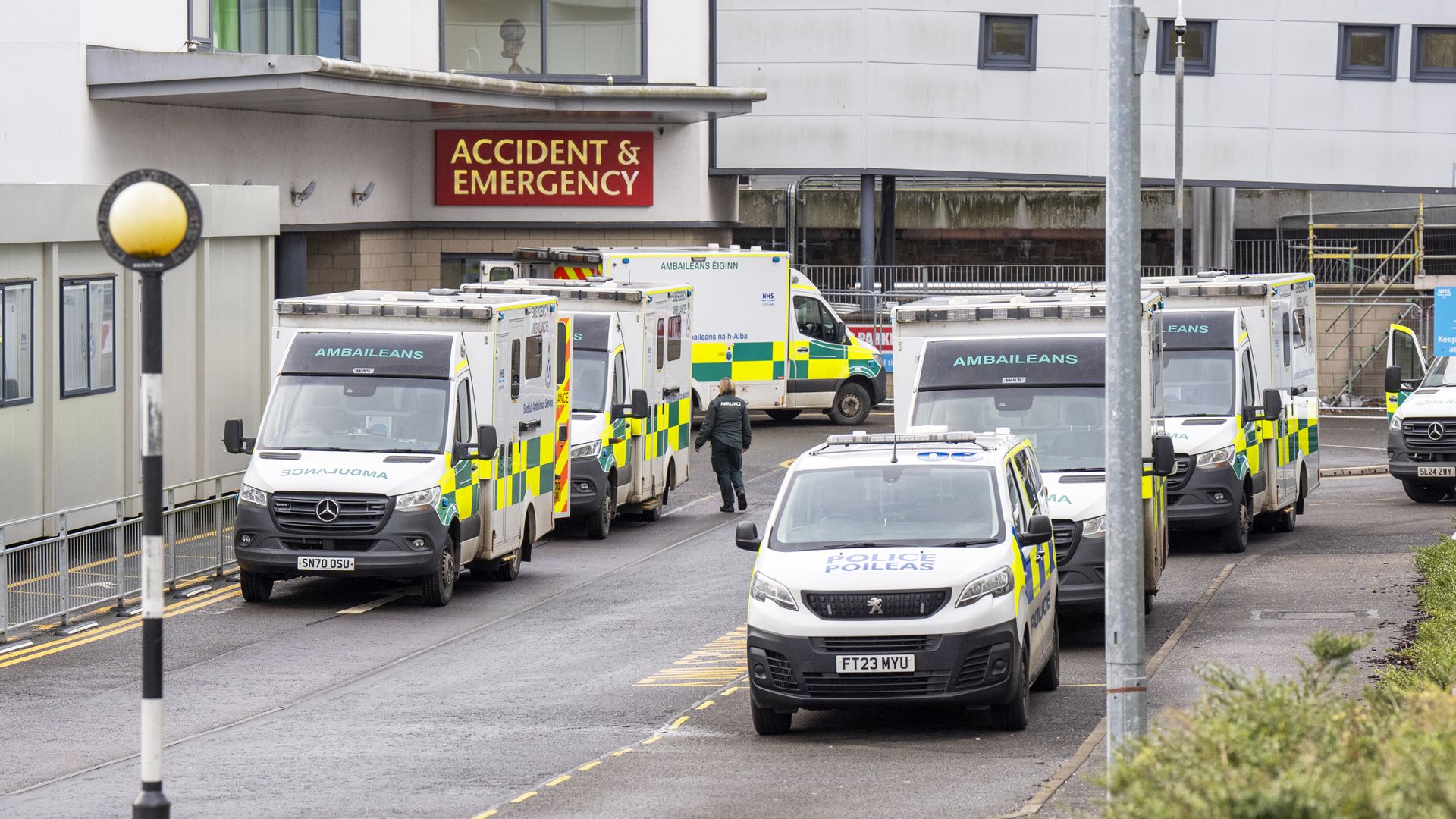
Every few months, the headlines return. Health boards across Scotland issue urgent pleas asking the public to use A&E only when strictly necessary because emergency departments face significant pressures.
Most people read those warnings and roll their eyes. They think the government is just trying to pass the buck for a broken system, or worse, they assume they're being told to stay home when they're genuinely sick. Both reactions miss the actual point of how emergency medicine works in Scotland right now—and they can put your health at risk if you get the rules wrong.
Let's be clear about what's happening. NHS Scotland's emergency departments aren't crying wolf. They are routinely dealing with record demand, severe ambulance turnaround delays, and chronic bed-blocking further inside the hospitals. When a health board like NHS Greater Glasgow and Clyde, NHS Lothian, or NHS Lanarkshire puts out a press release begging people to stay away unless it's life-threatening, it's a blunt instrument. It's a desperate triage attempt conducted through the local press.
Why A&E Bottlenecks Have Nothing to Do With the Waiting Room
Here's the biggest misconception about hospital waiting times. When you walk into an emergency department in Edinburgh, Glasgow, or Aberdeen and see forty people sitting under fluorescent lights, it looks like the reception desk is moving too slowly.
It isn't. The front door isn't the problem. The back door is.
Emergency doctors call it exit block. A patient arrives with severe pneumonia or a broken hip, gets stabilized in A&E, and needs to be admitted to an inpatient ward. Except there are no empty beds on the wards. Why? Because frail, elderly patients who are medically fit to go home are stuck in those beds waiting for social care packages, care home placements, or community nursing support that simply doesn't exist in sufficient numbers.
So the patient in A&E stays on a trolley in a corridor. The nurses who should be treating new arrivals are now acting as ward nurses for people who have already been diagnosed. Meanwhile, paramedics wait outside in idling ambulances because there's literally nowhere inside to offload the person in the back.
When health officials say "significant pressures," that's the chain reaction they're describing. Showing up at A&E with a sprained ankle or a bad earache doesn't just add ten minutes to your own night. It pulls clinical staff away from the resuscitation bays where someone is having a stroke or a major trauma.
What Actually Counts as an Emergency in Scotland
The phrase "only when necessary" is terrible public health messaging. Necessary to whom? If your kid has been screaming with a high fever for six hours at 11 PM on a Tuesday, it feels pretty damn necessary to you.
NHS Scotland defines emergencies strictly around threats to life or limb. If you're experiencing any of the following, ignore every headline about waiting times and go straight to A&E or call 999:
- Suspected heart attack or stroke symptoms, including chest pain, tightness, sudden numbness, or slurred speech
- Severe difficulty breathing or choking
- Heavy, uncontrolled bleeding that won't stop with direct pressure
- Deep wounds, severe burns, or major head injuries
- Loss of consciousness, sudden confusion, or seizures
- Suspected broken bones where the limb looks deformed or you can't bear weight
Notice what isn't on that list. Routine flare-ups of chronic conditions, minor cuts that might need a couple of stiches, urinary tract infections, dental pain, and run-of-the-mill viral bugs don't belong in an emergency department.
If you walk into A&E with a non-emergency, you will be seen eventually. Nobody gets turned away at the door. But because triage prioritizes clinical risk over arrival time, you'll sit there for eight, ten, or twelve hours while sicker patients rightly jump the queue ahead of you. You'll leave exhausted, furious, and exposed to whatever respiratory viruses are circulating in the waiting room.
How the NHS 24 System Really Works
When Scottish health boards tell you to avoid A&E, they almost always point you toward NHS 24 on 111. For a lot of people, that sounds like a polite brush-off. Nobody wants to sit on hold listening to automated messages when they're in pain.
Honestly, the system has its flaws, especially on Friday nights and Sunday mornings when call volumes spike. Yet knowing how to navigate it puts you miles ahead of someone blindly driving to the nearest hospital car park.
When you call 111, you aren't just talking to a generic call center worker reading from a script. You're entering a clinical triage funnel. Call handlers use clinically approved algorithms to filter out life-threatening emergencies immediately—if you describe red-flag symptoms, they'll dispatch an ambulance directly from the call.
If it's urgent but not life-threatening, your case gets passed to a nurse practitioner or a doctor at the out-of-hours service. Here's the part most people don't realize. NHS 24 can book you a scheduled arrival slot at a Minor Injuries Unit (MIU) or an urgent care center.
Think about that for a second. Instead of sitting in a chaotic A&E waiting room for nine hours, you stay on your own sofa until your designated appointment time, walk into a Minor Injuries Unit, get your X-ray or stitches, and go home.
Where to Go Instead of A&E
Scotland has a specific network of local healthcare options designed to absorb the stuff that used to clog up hospital corridors. Knowing which one handles what saves you hours of misery.
- Your Local Community Pharmacy. Under the NHS Pharmacy First Scotland scheme, pharmacists aren't just handing out boxes of paracetamol. They are clinically trained to assess and prescribe treatment for a long list of common conditions without you ever needing to see a GP. Urinary tract infections in women, impetigo, shingles, skin infections, allergies, and minor eye problems can all be handled at the pharmacy counter for free.
- Minor Injuries Units (MIUs). These clinics deal with things that hurt a lot and need prompt attention, like suspected fractures in arms or legs, sprains, minor burns, bites, and cuts that need closing. They have X-ray facilities and specialist nurse practitioners, and they don't get bogged down by major medical emergencies. You usually need to call 111 first to get an appointment slot.
- Your GP Practice (During Daytime Hours). GPs keep emergency slots open every single day for urgent, same-day problems. If your symptoms started at 7 AM, don't wait until 6 PM to call NHS 24. Call your GP surgery when the lines open. Many Scottish practices now use multidisciplinary teams, meaning you might get a same-day appointment with an advanced nurse practitioner, a musculoskeletal physiotherapist, or a mental health nurse rather than a doctor—which is often faster and more specialized for your specific issue.
- Emergency Dental Services. A&E doctors do not pull teeth, fill cavities, or treat standard dental abscesses. They can't. They'll just give you painkillers and tell you to call a dentist. If you're registered with a dentist, call their practice for an emergency slot. If you aren't registered, call 111 to be routed to your local health board's urgent dental care center.
The Winter Trap and Year-Round Strain
Used to be, these A&E warnings were strictly a January phenomenon. Flu season hit, icy pavements caused a spike in wrist fractures, and hospitals buckled for six weeks until spring arrived.
That seasonal rhythm is dead. Public Health Scotland's weekly performance figures show that emergency department pressures are now a year-round reality. Summer heatwaves trigger dehydration and respiratory issues in older adults. Bank holiday weekends bring a predictable surge in alcohol-related injuries and missed prescription refills.
At the same time, Public Health Scotland tracks the four-hour standard—the target stating that 95% of patients attending A&E should be admitted, transferred, or discharged within four hours. Scotland hasn't hit that national target consistently in years, with compliance frequently hovering in the 60% to 70% range, and thousands of patients regularly waiting over eight or even twelve hours.
Understanding those numbers changes how you prepare. You can't treat the health service like an on-demand convenience store anymore, because the slack in the system is completely gone.
Practical Steps to Protect Yourself Before You Get Sick
Don't wait until you're panicked at two in the morning to figure out your local options. Take ten minutes this week to set up your own healthcare safety net.
First, save the right numbers in your phone. Put 111 (NHS 24) and your local GP surgery's direct line into your favorites. Look up where your nearest Minor Injuries Unit is located—it's often at a different hospital site than the main A&E department, especially in cities like Glasgow where the New Victoria and Stobhill handle minor injuries while the Queen Elizabeth and Royal Infirmary take major trauma.
Second, audit your bathroom cabinet. A huge chunk of out-of-hours calls and unnecessary A&E visits happen because people run out of basic symptom relief at night. Keep a basic stock of paracetamol, ibuprofen, oral rehydration salts, antihistamines, antiseptic cream, and sterile dressings. If you have young kids, keep age-appropriate liquid pain relief and a working digital thermometer on hand.
Third, manage repeat prescriptions ruthlessly. Running out of blood pressure medication, asthma inhalers, or insulin on a Friday afternoon is a classic trigger for an urgent care crisis. Order your repeats at least seven days before you run out, especially ahead of Scottish public holidays when GP surgeries close on Mondays.
Finally, trust your gut on real danger, and use the system smartly for everything else. If someone is seriously ill or injured, never hesitate to call 999 or go straight to A&E out of guilt over a news headline. Emergency departments exist for those exact moments. For the sprains, infections, and sudden bugs that make up the rest of life, start with your pharmacist, your GP, or 111—you'll get treated faster, and you'll leave the resuscitation bays open for the people fighting for their lives.