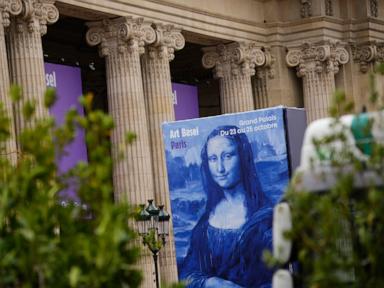
You booked the flights six months ago. You woke up at dawn for your timed-entry slot at the Louvre, only to find heavy iron gates padlocked shut and rows of riot police blocking the Rue de Rivoli. It happens more often than the glossy travel brochures admit. When nationwide strikes and France protests hit the streets, the French government doesn't just add a few extra patrols—it shuts down the country's biggest cultural landmarks and deploys tens of thousands of officers in a massive show of state force.
Most international news coverage treats these days like sudden, chaotic emergencies. They aren't. If you understand how French labor unions operate and why the Ministry of the Interior moves so aggressively to lock down Paris museums, you can actually navigate the disruption without losing your mind—or your vacation budget. Learn more on a related issue: this related article.
Why Paris Shuts Museums When Protests Erupt
It seems weird to outsiders. Why close the Eiffel Tower, the Musée d'Orsay, or the Palace of Versailles just because transport workers or public sector unions are marching three miles away?
There are two reasons, and neither has much to do with immediate physical danger inside the galleries. Additional analysis by The Washington Post explores comparable views on this issue.
First, museum staff are civil servants. The guards, ticket agents, and curators at national institutions like the Louvre or the Centre Pompidou belong to major French trade unions, particularly the CGT (Confédération Générale du Travail) and Force Ouvrière. When a national inter-union coalition calls for a journée d'action—a day of nationwide strikes—museum workers walk off the job in solidarity. Without the legally required minimum number of security personnel to monitor the rooms and manage fire exits, management has zero choice. They have to close the doors.
Second, landmarks are prime targets for symbolic occupation. Protesters know that blocking a tourist hotspot guarantees instant global headlines. During the 2023 pension reform demonstrations, strikers temporarily blocked access to the Louvre's glass pyramid, turning a routine morning queue into an international broadcast event. Police authorities hate that kind of optics. By preemptively closing major sites and throwing up metal barricades, the Paris Police Prefecture removes the stage before the actors can even arrive.
The Reality Behind Massive Police Deployments
When you read headlines about French police deploying "in big numbers," you're usually looking at a mobilization of anywhere from 5,000 to over 13,000 officers nationwide, with roughly 4,000 to 5,500 concentrated inside Paris alone. That isn't your standard beat cop walking around with a notepad.
The French security apparatus splits crowd control into distinct, heavily armored units:
- The CRS (Compagnies Républicaines de Sécurité): These are the national riot police with the distinctive yellow stripes on their helmets. They travel across the country in dark blue vans and form the static lines protecting ministries, banks, and cultural monuments.
- Gendarmerie Mobile: A branch of the French Armed Forces tasked with public order. They handle high-risk perimeters and often deploy armored vehicles when protests turn volatile.
- BRAV-M (Brigades de Répression de l'Action Violente Motorisées): Two-person teams on motorcycles who move rapidly through side streets to intercept black bloc agitators breaking away from the main march.
Honestly, the sheer scale of the hardware can rattle tourists who aren't used to seeing tear gas launchers and water cannons parked next to high-end bakeries. Yet the presence of heavy police lines actually signals strict containment. French authorities rely on pre-approved march routes—typically running from Place de la République to Place de la Nation, or from Place d'Italie toward Les Invalides. Outside those specific corridors, life in the city often looks bizarrely normal.
How Strikes Actually Affect Your Paris Itinerary
If you're on the ground during a major mobilization, don't trust generic news alerts that claim "Paris is shut down." It never is. Instead, disruption hits in very predictable waves.
Public Transit Bottlenecks
The RATP (Paris's transit authority) and SNCF (national rail) carry the heaviest union membership in France. On big protest days, automated metro lines—specifically Line 1 and Line 14—usually keep running at normal or near-normal frequencies because they don't require human drivers. Meanwhile, older lines like Line 4, Line 7, or the RER commuter trains might run at 25% capacity, operating only during peak morning and evening windows.
Stations directly along the protest route get shuttered completely by police order around midday. If you're trying to transfer at République, Bastille, or Châtelet, expect locked grates and long detours on foot.
Last-Minute Museum Cancellations
Here's the frustrating part for travelers. Museum management rarely announces closures the night before. They wait until 8:00 AM or 9:00 AM on the morning of the strike to count how many staff members actually clocked in. You might wake up to an optimistic green checkmark on the museum's website, hop on the metro, and arrive just in time to see a printed paper sign taped to the entrance announcing an "exceptional closure due to industrial action."
When a national museum closes because of a strike, you're entitled to a full refund or a rescheduled ticket. Don't throw away your booking confirmation. Most institutions automatically refund online purchases within a few weeks, though you sometimes have to fill out a quick form on their official ticketing portal.
Common Mistakes Tourists Make During French Protests
People panic when they see riot shields. That panic leads to bad decisions that ruin an otherwise fine afternoon.
Mistake 1: Walking toward the smoke to take photos.
It sounds obvious, yet dozens of travelers do it every single time. When police deploy tear gas (lacrimogenic gas) to disperse breakaway groups near the tail end of a march, the wind carries that cloud several blocks down narrow Haussmannian streets. Your eyes will burn, your throat will lock up, and you'll instantly regret trying to get a dramatic Instagram story.
Mistake 2: Relying on taxis or rideshares.
When metro lines slow down, everyone opens Uber, Bolt, or G7 at the exact same moment. Surge pricing spikes, and cars get trapped in gridlock caused by rolling roadblocks around the Seine bridges and major roundabouts. Walking is almost always faster for distances under three miles.
Mistake 3: Assuming private attractions are closed too.
While state-run giants like the Louvre, Orsay, and Sainte-Chapelle shut down easily, private museums and smaller foundations usually stay open. Places like the Fondation Louis Vuitton, Musée Marmottan Monet, Atelier des Lumières, or the Musée Jacquemart-André operate under different labor agreements and rarely close during public-sector strikes.
Why These Protests Keep Happening
To understand why France erupts like this every few months, you have to look past the immediate trigger—whether it's pension age hikes, budget cuts, inflation, or agricultural subsidies.
In countries like the United States or the UK, strikes are usually a last resort after months of failed negotiations. In France, street mobilization is an established part of the political bargaining process. Unions use massive street turnout to prove their legitimacy to the government in Paris. The French Constitution even enshrines the right to strike as a fundamental liberty.
Because the French state is heavily centralized—with major policy decisions radiating out from the Élysée Palace and the National Assembly in Paris—protesters converge on the capital to make their grievances impossible for lawmakers to ignore. It's loud, messy, and inconvenient, but it's deeply baked into the country's civic DNA.
Practical Moves If You Are Caught in a Strike Day
If you check the local news tomorrow morning and see alerts for nationwide protests and police deployments across France, skip the stress and adjust your plan immediately:
- Download the Bonjour RATP and Citymapper apps. Both update in real time with exact station closures and line-by-line traffic forecasts published the evening before a strike.
- Check the museum's official X (Twitter) feed at 8:30 AM. Museums like
@MuseeLouvreand@MuseeOrsaypost operational updates on social media far faster than they update their main website homepages. - Shift your itinerary to the Left Bank or outer arrondissements. If a march is moving through eastern Paris between République and Nation, spend your afternoon wandering Montmartre, the Jardin du Luxembourg, or the boutique streets of Saint-Germain-des-Prés.
- Book backup tickets for private collections. Keep a list of non-state museums in your phone so you can pivot within ten minutes if your primary monument locks its gates.
- Carry physical ID and wear comfortable walking shoes. Police regularly conduct bag checks and perimeter screenings near major transit hubs during high-security alerts, and you'll likely walk twice as far as planned.
Stay clear of the main demonstration corridors after 2:00 PM when the peaceful union marches wrap up and fringe groups occasionally clash with police lines, stick to neighborhood bistros away from the major squares, and treat the disruption as an excuse to explore the quieter corners of the city most tourists miss anyway.