Wall Street lost its collective mind when $600 billion evaporated from Nvidia's market cap in a single week. Tabloid headlines screamed about secret affairs, alleged Chinese espionage, a sudden CEO resignation, and an equally bizarre reinstatement days later. If you just skimmed the cable news tickers, you probably assumed the world's most valuable chipmaker was collapsing from the inside out.
It wasn't. Not even close.
The November 2026 Nvidia crisis is a masterclass in how personal scandals collide with geopolitical paranoia and algorithmic panic selling. Let's separate the real national security risks from the noise, look at why the board blinked on Jensen Huang, and figure out what actually matters for the artificial intelligence hardware market right now.
How a Personal Scandal Became a National Security Crisis
Most corporate scandals stay trapped in the business section. This one jumped straight to the front page because of who was involved and what Nvidia builds.
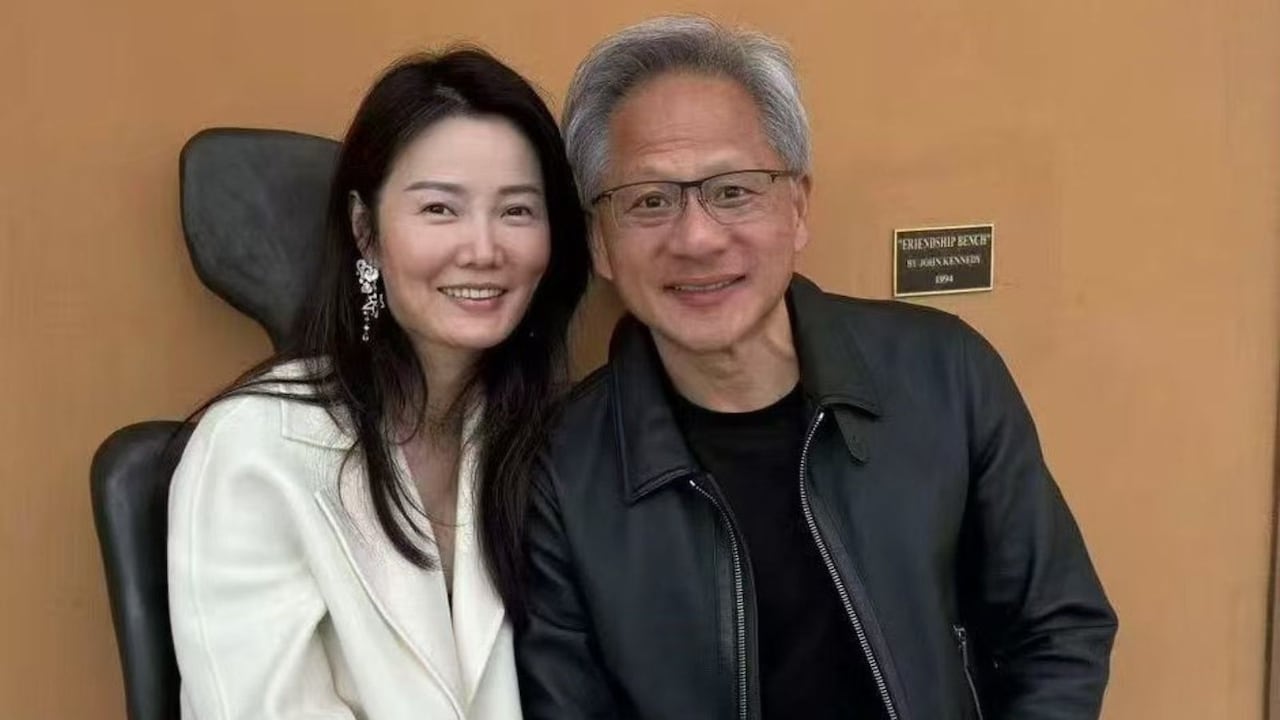
In late October 2026, reports surfaced that U.S. intelligence officials had been surveilling Alice Huang. Despite sharing a last name with Nvidia's co-founder, the two aren't related. Alice Huang ran Megaspeed International, a Singapore-based cloud firm that bought over $4.8 billion worth of Nvidia hardware. Intelligence agencies suspected she was cultivating a close personal relationship with Jensen Huang to extract technical secrets and push Nvidia toward loosening export restrictions on advanced chips headed for China.
Things escalated fast. On November 8, Jensen Huang sent an internal memo to staff admitting he had been unfaithful to his wife, Lori, whom he married back in 1985 before Nvidia even existed. He apologized to his family and pledged to cooperate with an independent board inquiry.
Then the dominoes fell:
- Workplace relationships: The New York Times reported a second relationship with Kimberly Powell, Nvidia's vice president for healthcare who reported directly to him. Later reporting from Reuters and other outlets pointed to at least three or four workplace affairs in total.
- Washington piles on: President Donald Trump confirmed the FBI was investigating the allegations, while Senate Democratic leader Chuck Schumer and Republican lawmakers demanded congressional testimony over national security risks.
- The ouster: Facing mounting pressure, Nvidia's board announced on November 12 that Huang was stepping down immediately as president, CEO, and board member. CFO Colette Kress stepped in as interim chief executive, and Harvey Jones became the company's first-ever board chair.
Why the $600 Billion Market Rout Was Mostly Panic
Numbers like "$600 billion" sound apocalyptic. They make great chyrons. When you actually look under the hood of how equity markets price mega-cap tech stocks, the panic tells a very different story.
First, market capitalization isn't cash sitting in a vault in Santa Clara. When Nvidia dropped from its October peak near $5.8 trillion down toward the $4 trillion mark—shedding roughly $600 billion during that chaotic week—not a single customer canceled a GPU order. Hyperscalers like Microsoft, Alphabet, and Meta still needed every Blackwell and Rubin rack they could get their hands on.
I've watched institutional desks trade semiconductor news for years, and the pattern is always the same. Funds overweight in a single winner use any headline uncertainty as an excuse to lock in gains. Bernstein downgraded the stock to "market perform," Morgan Stanley pulled it from its top picks list, and automated momentum funds dumped shares simultaneously.
Meanwhile, Huang's personal net worth took a $19.2 billion haircut in four days. Seven Nvidia-linked billionaires saw roughly a third of their combined paper wealth vanish overnight. Retail investors panicked because they confused governance chaos with operational failure. Those are two completely different things.
The China Connection and Megaspeed Reality Check
If you want to understand the genuine risk here, ignore the gossip columns and look at Singapore.
Washington has spent years building a wall around high-end AI silicon, starting with the 2022 bans on A100 and H100 exports to China and tightening loopholes in 2023. Because Chinese firms couldn't buy top-tier chips directly, shell companies and third-party cloud providers across Southeast Asia became prime suspects for gray-market diversion.
Megaspeed International sat right at the center of that suspicion. Senator Tom Cotton had pushed the Commerce Department to investigate the firm's massive $4.8 billion chip purchases. Yet look at what official probes actually found. Singapore's Ministry of Home Affairs investigated Alice Huang and Megaspeed and stated clearly that the case involved suspected false declarations around server purchases and exports—not espionage. Beijing denied the spy claims, and Nvidia maintained that chip diversion accusations had been investigated and debunked.
Could foreign intelligence services try to exploit a billionaire CEO's personal life? Obviously. Intelligence agencies have used honeytraps since the Cold War. Still, there's a massive gap between attempting to influence an executive and successfully compromising proprietary chip architectures or bypassing federal export controls. No public evidence has shown that Nvidia's core intellectual property was handed over to Beijing.
The Stunning Board U-Turn Nobody Saw Coming
For eleven days, Wall Street tried to price in a post-Jensen Nvidia. Analysts like Gil Luria at D.A. Davidson warned that product roadmaps, acquisitions, and partner commitments would stall without the founder's iron grip on execution. On November 17, board chair Harvey Jones even told investors on the quarterly earnings call that the board had unanimously accepted Huang's resignation and had no plans to bring him back.
Six days later, they reversed course completely.
On November 23, Nvidia's board reinstated Jensen Huang as president, CEO, and director with immediate effect. Shares rocketed more than 30% on the news, clawing back huge chunks of the selloff.
Why the sudden change of heart? Two things happened behind closed doors:
- Political pressure from the top: President Trump—who initially floated Apple's Tim Cook as a replacement on Truth Social—revealed on CNBC that he personally spoke with Nvidia's board and convinced them to rehire Huang, offering assurances regarding national security. Financial disclosures also showed Trump held tens of millions of dollars in Nvidia stock, giving him plenty of incentive to want the rout reversed.
- Irreplaceable founder leverage: You don't just swap out a founder who turned a 1993 graphics startup into a multi-trillion-dollar computing monopoly. Nvidia's competitive moat isn't just hardware; it's the CUDA software ecosystem and Huang's relentless supply-chain orchestration with TSMC and SK Hynix. Without him, key engineering talent risked walking out the door—especially with rivals like Elon Musk publicly joking on X that he'd happily hire Huang.
Huang returned humbled, telling employees at an all-hands meeting that he violated the company's code of conduct and is attending 90-minute daily therapy sessions. To appease regulators and institutional shareholders, the board created a new National Security and Export Control Oversight Committee and opened a search for a dedicated Chief Compliance Officer.
How to Approach Nvidia and AI Stocks After the Chaos
If you hold semiconductor stocks or manage tech exposure, emotional reactions will cost you money. The last few weeks proved that governance headlines can trigger violent 15% to 30% swings even when underlying demand hasn't budged.
Here is how you should evaluate the fallout practically:
- Watch compliance enforcement, not rumor mills. The real threat to Nvidia's revenue isn't tabloid coverage; it's Department of Justice or Commerce Department sanctions. Track the hiring of Nvidia's new Chief Compliance Officer and any formal findings from federal investigators regarding Megaspeed's server shipments. China and Hong Kong accounted for roughly 13% of Nvidia's revenue—around $17 billion—in fiscal 2025. Tighter enforcement on Southeast Asian middlemen could trim near-term top-line growth by a few percentage points.
- Separate founder key-man risk from business fundamentals. Nvidia's board just admitted out loud that they don't have a ready successor who matches Huang's operational clout. Keep your position sizing realistic. Any single-stock allocation that keeps you awake when a CEO makes a personal mistake is too large.
- Check hyperscaler capital expenditure. Ignore daily share price noise and track quarterly capex guidance from Microsoft, Amazon, Google, and Meta. As long as cloud giants keep pouring tens of billions into data center clusters, Nvidia's order backlog remains insulated from boardroom drama.
- Monitor customer diversification. Custom ASICs from Broadcom and Marvell, alongside AMD's Instinct accelerators, benefit whenever hyperscalers feel nervous about relying on a single vendor. Watch whether cloud buyers accelerate secondary supplier contracts over the next two quarters.
Treat November 2026 as a loud reminder that even the most dominant tech monopolies are run by flawed human beings. Stick to the supply-chain numbers, respect position limits, and never trade off breaking political theater.