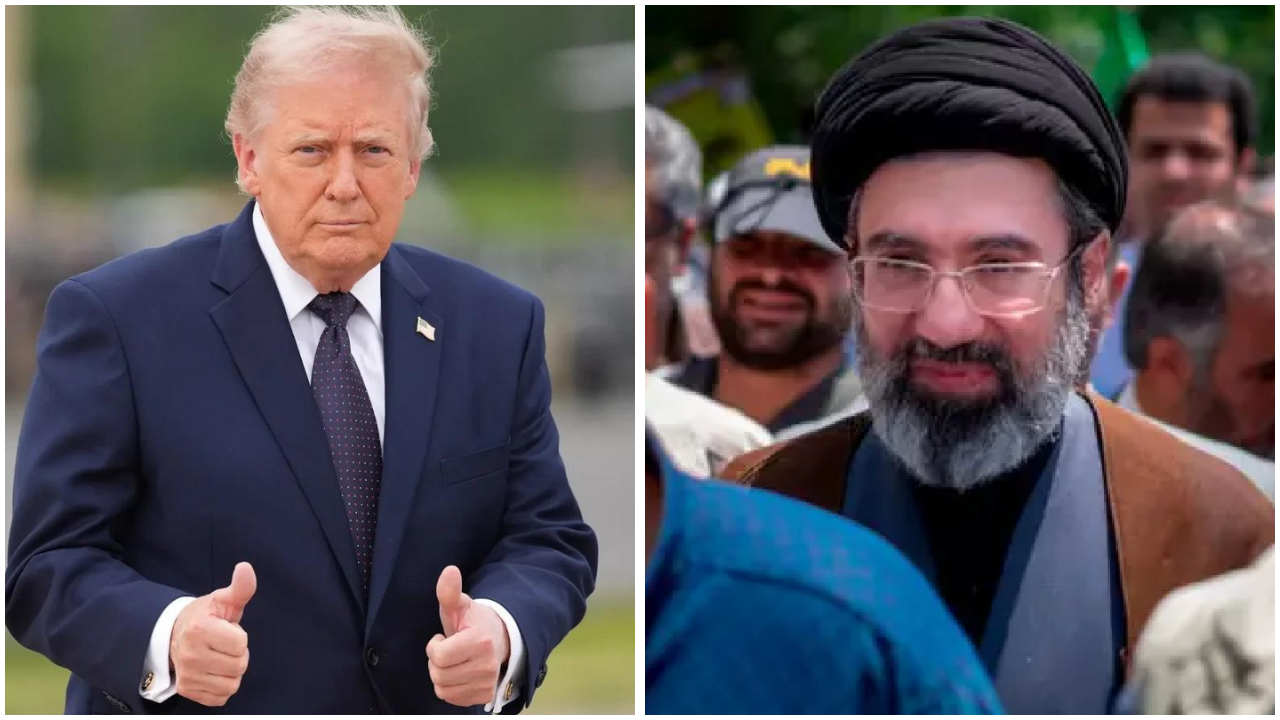
Donald Trump claims he is on the verge of a historic peace breakthrough in the Middle East, boasting on Truth Social that a massive deal with Iran is "largely negotiated." According to leaked intelligence reports, Tehran has even agreed in principle to surrender its prized stockpile of highly enriched uranium.
If it sounds too good to be true, that's because it probably is. For an alternative perspective, read: this related article.
Look past the triumphant headlines and you will quickly see a high-stakes game of geopolitical chicken where both sides are telling entirely different stories to their domestic audiences. While Washington celebrates a massive diplomatic victory, the Islamic Revolutionary Guard Corps (IRGC) is already pushing back, calling Trump’s narrative inconsistent with reality. I've watched these nuclear standoffs play out for over a decade, and the current optimism overlooks the massive, unresolved roadblocks built into this framework.
The Secret Uranium Ultimatum That Forced Iran to the Table
The real reason Iran suddenly shifted its stance on its nuclear stockpile boils down to a credible threat of total military destruction. The current crisis traces back to February 28, 2026, when a joint US-Israeli air campaign battered Iranian infrastructure. While a fragile ceasefire has been in place since April, negotiations recently hit a brick wall. Related coverage on this matter has been published by Al Jazeera.
Iranian negotiators, operating under instructions from Supreme Leader Mojtaba Khamenei, initially insisted that their nuclear program was completely off the table for this initial round of talks. They wanted to discuss maritime trade and sanctions relief first, leaving the uranium for later.
Trump wasn't having it.
American military planners recently presented Trump with aggressive operational blueprints to permanently neutralize Iran's primary nuclear assets. These options included targeting the heavily fortified underground facility at Isfahan with heavy GBU-57 bunker-busting bombs. White House officials even vetted a high-risk, joint US-Israeli commando raid designed to physically seize the nuclear material.
When American intermediaries made it clear that the US would walk away from the table and resume devastating air strikes if Iran didn't concede, Tehran blinked. According to data from the International Atomic Energy Agency (IAEA), Iran sits on roughly 970 pounds (nearly 400 kilograms) of uranium enriched to 60% purity. That is dangerously close to weapons-grade material. Israeli intelligence maintains this stockpile is more than enough to fuel multiple nuclear warheads with just a few weeks of additional refinement.
Under the broad terms of the new memorandum of understanding, Iran has committed in principle to relinquishing this material. The proposed solutions mirror the 2015 Joint Comprehensive Plan of Action (JCPOA)—an ironic twist given Trump's past hatred of the Obama-era deal. The uranium will either be shipped out of the country to a third party like Russia or mechanically blended down to a low enrichment level that makes it useless for weaponry.
What is Actually in the 14 Point Framework Agreement
This is not a final, comprehensive treaty. It is a 60-day extension of the current ceasefire wrapped in a preliminary memorandum of understanding. The framework relies heavily on a complex mediation web led by Pakistan's military chief, Field Marshal Asim Munir, alongside the leaders of Saudi Arabia, the UAE, Qatar, Egypt, Jordan, and Turkey.
The immediate architecture of the deal relies on a straightforward, transactional trade-off.
- What the West Gets: A formal declaration halting the active war, a 30-to-60-day window to negotiate a permanent nuclear treaty, and an immediate halt to attacks on shipping corridors.
- What Tehran Gets: The phased unfreezing of up to $25 billion in Iranian assets blocked in overseas accounts, the lifting of the US naval blockade on domestic ports, and access to international reconstruction funds.
Trump needs a massive foreign policy win, and he wants it now. He told media outlets he views the chances of a successful deal as a "solid 50/50," adding that if the agreement falls through, he is prepared to hit Iran harder than any country has ever been hit before.
The Strait of Hormuz Trap
The most immediate point of friction is the Strait of Hormuz. Roughly one-fifth of the world’s daily oil supply flows through this narrow choke point, and it has been effectively gridlocked since the war began.
Trump confidently announced that the agreement dictates the Strait of Hormuz will be opened without tolls. Yet almost immediately after his post went live, Iran’s state-aligned Fars News Agency fired back. Their message was clear: the shipping lane will remain under the strict administrative and military management of Tehran.
This isn't a minor detail; it’s a foundational contradiction. If Trump promises global energy markets that the US navy has secured free, uninhibited passage through the strait while the IRGC insists they are still holding the keys to the gate, the entire ceasefire rests on quicksand.
The Political Backlash is Already Starting
Trump's "peace in our time" moment is facing intense friendly fire from his own political base. Veteran hardliners are furious that this framework leaves the ruling regime intact in Tehran while offering billions of dollars in economic lifelines.
Hawkish lawmakers like South Carolina Senator Lindsey Graham and Texas Senator Ted Cruz have publicly slammed the proposal. They argue that any deal failing to permanently dismantle Iran's domestic enrichment infrastructure simply pours gasoline on regional proxy conflicts in Lebanon and Iraq. Former Secretary of State Mike Pompeo went even further, labeling the framework as an abandonment of "America First" principles and comparing it directly to the 2015 Obama deal that Trump spent years tearing down.
On the other side of the ledger, regional partners are terrified of what happens if the deal collapses. Gulf states like Saudi Arabia and the UAE have urged caution. They know that if the US resumes bunker-busting operations on Isfahan, Iran’s retaliatory ballistic missiles won't just target Israel—they will rain down on the vital oil infrastructure of neighboring Gulf capitals.
The Immediate Road Ahead
Don't let the grand declarations fool you into thinking the Iranian nuclear threat is resolved. The hard work hasn't even started yet.
If you are tracking the stability of global energy markets or international security, ignore the political spin and watch three specific pressure points over the next 72 hours.
First, look for whether the official text of the Memorandum of Understanding is signed by both Washington and Tehran by the end of the weekend, or if the dispute over the Strait of Hormuz delays the pens. Second, monitor whether the IAEA receives formal notification regarding the logistics of monitoring or moving that 970-pound highly enriched uranium stockpile. Finally, watch the rhetoric out of Jerusalem. Prime Minister Benjamin Netanyahu may have had a "very well" received phone call with Trump, but Israel rarely lets its security blueprint be dictated entirely by Washington's diplomatic timelines.