Say the words "nuclear submarine" in Tokyo, and half the room immediately pictures ballistic missiles pointed at Beijing. That knee-jerk confusion is distorting the sharpest defense fight Japan has seen in decades.
Under Prime Minister Sanae Takaichi, Japan's ruling coalition is rewriting the country's three foundational security documents ahead of schedule in late 2026. Right at the center of those closed-door talks is a question that used to get politicians instantly sidelined: should the Japan Maritime Self-Defense Force (JMSDF) pursue nuclear-powered submarines?
Let's clear up the biggest misconception right away. Nobody in the Takaichi administration is proposing nuclear-armed submarines. The debate is strictly about nuclear propulsion—swapping out diesel engines and lithium-ion batteries for a compact nuclear reactor so a submarine can stay underwater indefinitely, run faster, and carry heavier long-range conventional missiles.
Even with that distinction, the political, legal, and financial hurdles are massive. Having followed Indo-Pacific naval procurement for years, I can tell you that announcing a study is the easy part. Building a nuclear sub fleet from scratch in a country scarred by Hiroshima, Nagasaki, and Fukushima is a completely different beast.
Why Tokyo Is Reopening a Postwar Taboo Now
Japan didn't suddenly wake up wanting nuclear reactors under the waves. Three converging pressures forced this onto the table in 2026.
First, China's naval expansion has completely changed the math in the East China Sea and Western Pacific. Beijing isn't just building surface ships at breakneck speed; it's pushing nuclear-powered attack submarines and oceanographic vessels deeper into waters around Japan's southwestern Nansei islands. If a crisis erupts over Taiwan, Chinese anti-submarine networks will hunt anything that has to come near the surface to breathe.
Second, the neighborhood is going nuclear underwater. Six nuclear-armed states—the United States, Russia, China, Britain, France, and India—already field nuclear submarines. North Korea claims it's building one. Australia is spending tens of billions through AUKUS to get them. Even South Korea received Washington's blessing in October 2025 to move ahead with its own nuclear-powered boats. Japanese defense planners look at that map and wonder why the region's most capable conventional navy is handicapping itself.
Third, Japan's domestic politics shifted. After taking office, Prime Minister Takaichi accelerated the revision of the National Security Strategy, National Defense Strategy, and Defense Buildup Program—documents originally meant to last through the early 2030s. Defense Minister Shinjiro Koizumi has repeatedly refused to take nuclear propulsion off the table, telling lawmakers Tokyo shouldn't rule out any option when studying next-generation systems.
The Coalition Split Inside Tokyo
If you read casual headlines, you'd think Japan is already cutting steel for a nuclear boat. It isn't. The ruling bloc itself can't even agree on how far to push.
The loudest advocate is Nippon Ishin no Kai (the Japan Innovation Party), the junior partner in the governing coalition. Back in June 2026, Ishin formally urged the government to move toward the early introduction of nuclear-powered submarines. Their argument is blunt: regional deterrence is eroding fast, and waiting another ten years to even ask the question is reckless.
Takaichi's Liberal Democratic Party (LDP) is far more cautious. While LDP security hawks like former Defense Minister Yasukazu Hamada's research commission have debated both nuclear propulsion and U.S. nuclear sharing, senior party drafts have leaned toward softer phrasing—committing to "research and studies" on next-generation propulsion rather than an outright acquisition pledge.
Why the hesitation? Because once you put acquisition in an official cabinet document, you're on the hook for laws, budgets, and voter blowback that the LDP isn't sure it can survive.
How Japan's Current Submarines Actually Stack Up
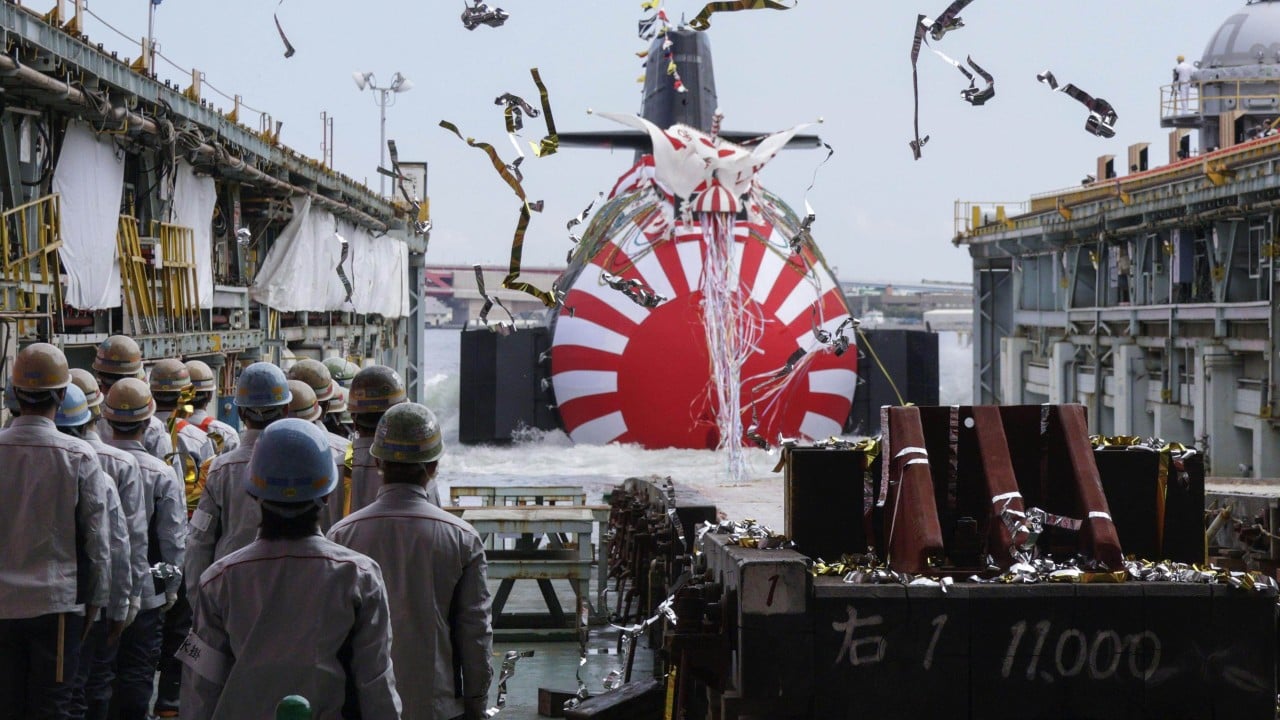
To understand whether Japan truly needs nuclear propulsion, you have to look at what it already sails. The JMSDF operates roughly two dozen of the quietest conventional submarines on earth, anchored by the Soryu class and the newer Taigei class (whose seventh hull, Shōgei, launched in Kobe in October 2026).
Here is what makes the Taigei class remarkable—and where it hits a wall:
- Lithium-ion dominance: Instead of older lead-acid batteries or foreign Air-Independent Propulsion (AIP) systems, Japan pioneered high-capacity lithium-ion batteries in operational subs. At slow patrol speeds, a Taigei-class boat is practically a ghost.
- The snorkeling trap: Physics doesn't care how good your batteries are. When a conventional submarine sprints at high speed to intercept a target or evade a destroyer, those batteries drain fast. Eventually, the boat must rise to periscope depth and run diesel generators via a snorkel to recharge—exposing itself to modern radar, infrared sensors, and satellite tracking.
- Payload limits: Japan is buying Tomahawk cruise missiles and developing longer-range standoff weapons to strike enemy bases if attacked. Cramming vertical launch systems (VLS) for large land-attack missiles onto a 3,000-tonne diesel-electric hull squeezes out torpedoes, fuel, or crew space.
A nuclear-powered attack submarine (SSN) solves all three problems at once. It can sprint across the Pacific at over 25 knots for weeks without surfacing, generate massive electrical power for advanced sonar, and carry a dedicated vertical launch module.
The Four Brutal Roadblocks Nobody Wants to Price Out
Advocates love talking about infinite underwater range. Defense economists and naval engineers look at the bill and wince. If Tokyo decides to go down this road, four massive obstacles stand in the way.
1. The Eye-Watering Price Tag
One nuclear submarine isn't a fleet. Because boats spend months in dry dock for refueling, maintenance, and crew rotation, naval planners estimate Japan would need at least three to four nuclear submarines just to keep one continuously deployed at sea.
At roughly 1 trillion yen ($6.3 billion) per boat—before you even build specialized port facilities, radiation monitoring stations, and training simulators—you're looking at a multi-trillion-yen commitment. Meanwhile, Washington has been pressing allies to push defense spending toward 3.5% of GDP, and Tokyo is already struggling to fund the buildup it promised in 2022. Every yen spent on a nuclear reactor is a yen taken away from ammunition stockpiles, drone swarms, or missile defense.
2. Rewriting the Atomic Energy Basic Law
Japan's 1955 Atomic Energy Basic Law explicitly restricts the research, development, and use of nuclear energy to "peaceful purposes". For seven decades, successive Japanese governments have interpreted that clause to mean the Self-Defense Forces cannot operate nuclear-powered vessels.
Changing that law isn't a minor technicality. It requires full parliamentary legislation, opening the door to fierce opposition attacks and constitutional debates. And that's separate from Japan's Three Non-Nuclear Principles (not possessing, producing, or permitting the introduction of nuclear weapons). Even though nuclear propulsion doesn't violate those three principles on paper, anti-nuclear civic groups treat the two issues as inseparable—proven when tens of thousands of citizens delivered petitions to the Defense Ministry in November 2026 demanding the government drop the submarine plan altogether.
3. The Missing Industrial Ecosystem
Japan has world-class shipbuilders like Mitsubishi Heavy Industries and Kawasaki Heavy Industries, and deep civilian nuclear engineering talent. What it does not have is a naval reactor program.
Designing a compact, shock-hardened, whisper-quiet pressurized water reactor that fits inside a 9-meter-wide hull takes well over a decade. Could Japan buy reactors or hulls from the United States, similar to Australia's AUKUS arrangement? Maybe, though American shipyards are already severely backlogged building Virginia-class subs for the U.S. Navy and Australia. Building domestically means starting from zero on naval fuel enrichment, reactor testing, and decommissioning.
4. The Crewing Crisis
You can't automate away an entire nuclear engineering department. The JMSDF already struggles to recruit young sailors in a rapidly aging, shrinking population. Nuclear submarines require highly trained reactor operators who endure grueling 90-day submerged patrols. Pulling top technical talent out of Japan's existing 22-submarine conventional fleet to staff three or four nuclear boats could hollow out the very force Japan relies on to guard the Ryukyu island chain.
Does Japan Actually Have Smarter Alternatives
Several respected defense analysts—including experts at institutions like Defense Priorities and Japanese security scholars—argue that chasing nuclear subs might actually be a strategic trap for Tokyo.
Think about geography. America needs nuclear submarines because its bases are in Guam, Hawaii, and California, thousands of miles from the Taiwan Strait. Japan doesn't have to cross an ocean to reach the East China Sea. Its bases in Kure and Yokosuka sit right next to the chokepoints Chinese ships must pass through to reach the open Pacific.
In shallow, noisy coastal waters around the First Island Chain, a smaller, super-quiet lithium-ion submarine is actually harder to detect than a massive nuclear boat pumping cooling water through its reactor. Rather than blowing $20 billion on three nuclear submarines that won't hit the water until the late 2030s, Japan could stretch its existing Taigei hull design, integrate vertical launch tubes for standoff missiles on conventional boats, and invest heavily in unmanned underwater vehicles (UUVs) and seabed sensor networks.
What to Watch Before the Year Ends
If you want to know whether Japan's nuclear submarine debate turns into real policy or fades into another bureaucratic study, ignore the cable news shouting matches and watch three concrete milestones over the next few weeks:
- The early December expert panel report: Look closely at the exact verbs used in the coalition's recommendations. Words like "study" or "examine next-generation propulsion" signal a political compromise to keep Nippon Ishin happy without committing funds. Words like "introduce" or "develop" signal a historic break with postwar policy.
- Amendments to the Atomic Energy Basic Law: Watch the Diet's legislative calendar for early 2027. Until the government drafts an amendment redefining "peaceful purposes" or carving out a defense exception, not a single yen can legally go toward a naval reactor.
- FY2027 defense budget line items: Defense strategy documents are wish lists; budgets are reality. Check whether the Ministry of Defense requests dedicated R&D seed money for compact maritime reactors or instead doubles down on stretched Taigei-class hulls and unmanned undersea drones.
Japan's security environment really has deteriorated faster than anyone in Tokyo expected five years ago. Reopening the nuclear propulsion debate proves that postwar taboos no longer hold veto power over Japanese defense planning. Whether nuclear-powered submarines are the smartest answer to China's naval buildup—or an expensive distraction from fighting smarter closer to home—is the multi-trillion-yen bet Takaichi's government is about to make.