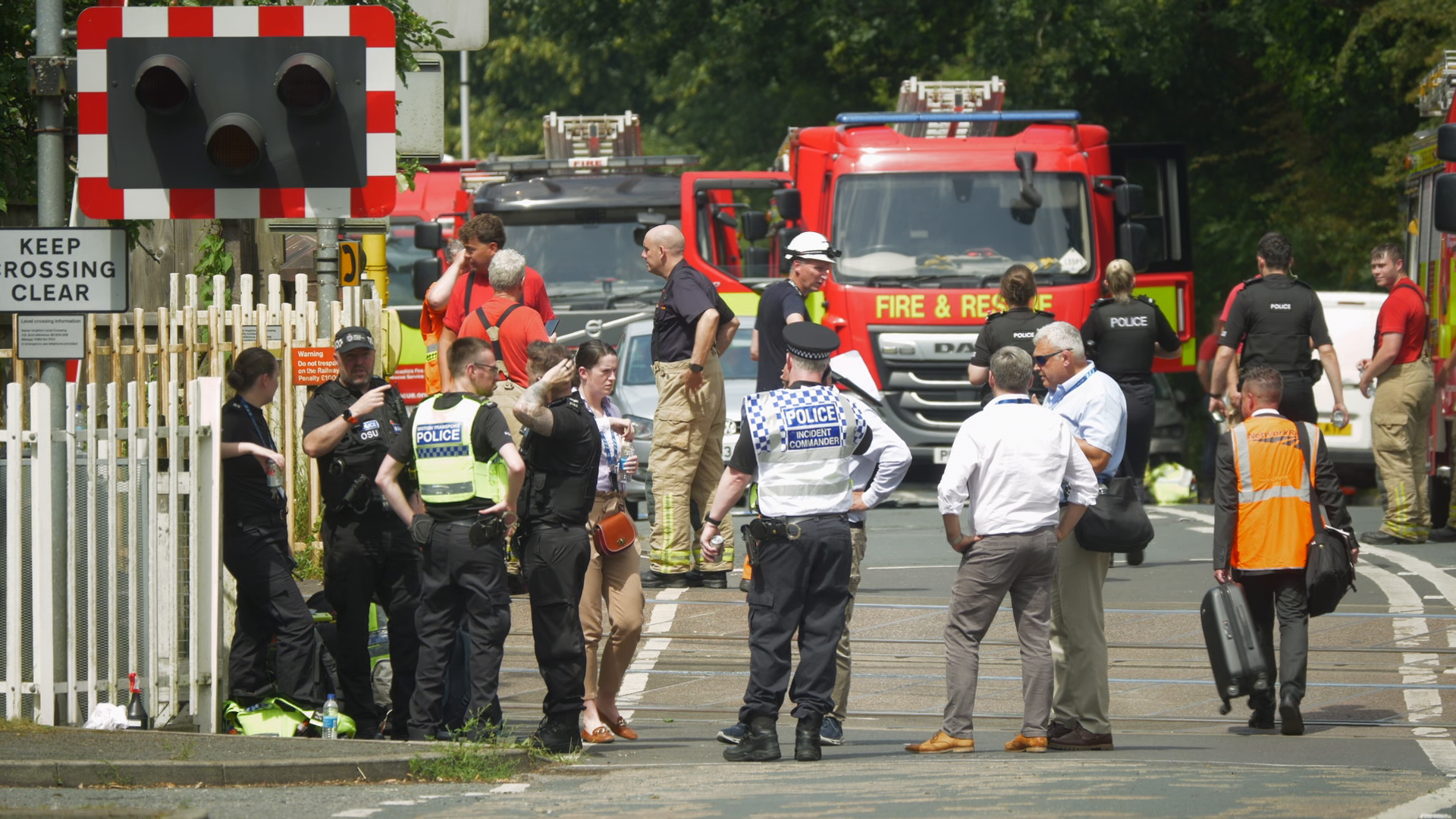
A standard commuter train weighs roughly 400 tons. When it hits a passenger car, the physics are identical to an automobile crushing an empty soda can. Yet, we keep seeing the same devastating headlines in the news cycles. A woman loses her life, a young child is left fighting for survival in a critical condition, and a family is shattered in seconds.
People always ask how this keeps happening. They assume the driver was trying to beat the train, or that the signals failed. Most of the time, the reality is much more mundane, and far more terrifying. Drivers get trapped by traffic, freeze in sudden panic, or simply do not understand how railroad crossings actually operate.
Understanding the underlying mechanics of grade crossing safety is the only way to prevent these catastrophes. Let's look at why cars get stuck, what happens during a collision, and exactly what you need to do if your vehicle ever stalls on the tracks.
The Illusion of Distance and Speed
The human brain is terrible at judging the speed of large objects. When you look at an approaching train, an optical illusion called the Saxon Illusion tricks your eyes. Because the train is so massive, it appears to be moving much slower than its actual speed.
By the time you realize it is moving at 60 miles per hour, it is often too late to react.
According to data from the Federal Railroad Administration, a freight train traveling at 55 miles per hour takes a full mile to stop after the engineer slams on the emergency brakes. That is the length of 18 football fields. The engineer cannot swerve, and they cannot stop on a dime. The train simply cannot yield.
Why Vehicles Get Trapped on the Tracks
Gridlock and traffic queuing cause a significant portion of crossing accidents. Drivers routinely pull onto railroad tracks while waiting for a traffic light ahead to change. This is a fatal mistake. If the light stays red and the crossing gates begin to descend, you are trapped between the bars with nowhere to go.
Mechanical failures and low-clearance high-centering also play a role. Low-slung vehicles or long trailers can hang up on the elevated apex of a crossing. Once the wheels lose traction on the hump, the vehicle is immobilized.
Then comes the psychological trap. When the crossing arms start coming down, many drivers freeze. Panic takes over, override systems in the brain fail, and they stay inside the vehicle trying to restart the engine instead of fleeing.
The Step Action Plan for a Track Emergency
If your car stalls or becomes stuck on a railroad crossing, you have seconds to act. Forget about trying to save the vehicle. Your only priority is getting everyone out immediately.
First, evacuate the vehicle immediately. Do not grab your bags, your phone, or your valuables. Unbuckle children, get everyone out of the doors, and move away from the tracks.
Second, run away from the tracks at a 45-degree angle toward the direction the train is coming from. This sounds completely counterintuitive, but it is basic physics. When the train hits your car, it will launch the debris forward in the direction of the train's travel. Running toward the incoming train ensures you are well clear of the flying metal and shattering glass.
Third, look for the Blue Sign. Every public railroad crossing has a small, blue Emergency Notification System sign posted on the signal post or housing. This sign contains a toll-free emergency number and a unique United States Department of Transportation crossing number. Calling this number routes you directly to the railroad's dispatch center. They can immediately radio local trains to halt them before they reach your location.
If you are stuck and no train is visible, calling 911 is your next move, but always prioritize the blue sign phone number first. The railroad dispatchers can stop a train much faster than a local police dispatcher can relay the message through multiple agencies.
https://www.youtube.com/watch?v=S6l0ov3F6Tc
This broadcast details a recent fatal collision where a vehicle was stopped directly on the tracks inside the crossing gates, illustrating how quickly these situations turn lethal when a vehicle fails to clear the right-of-way before the train arrives.