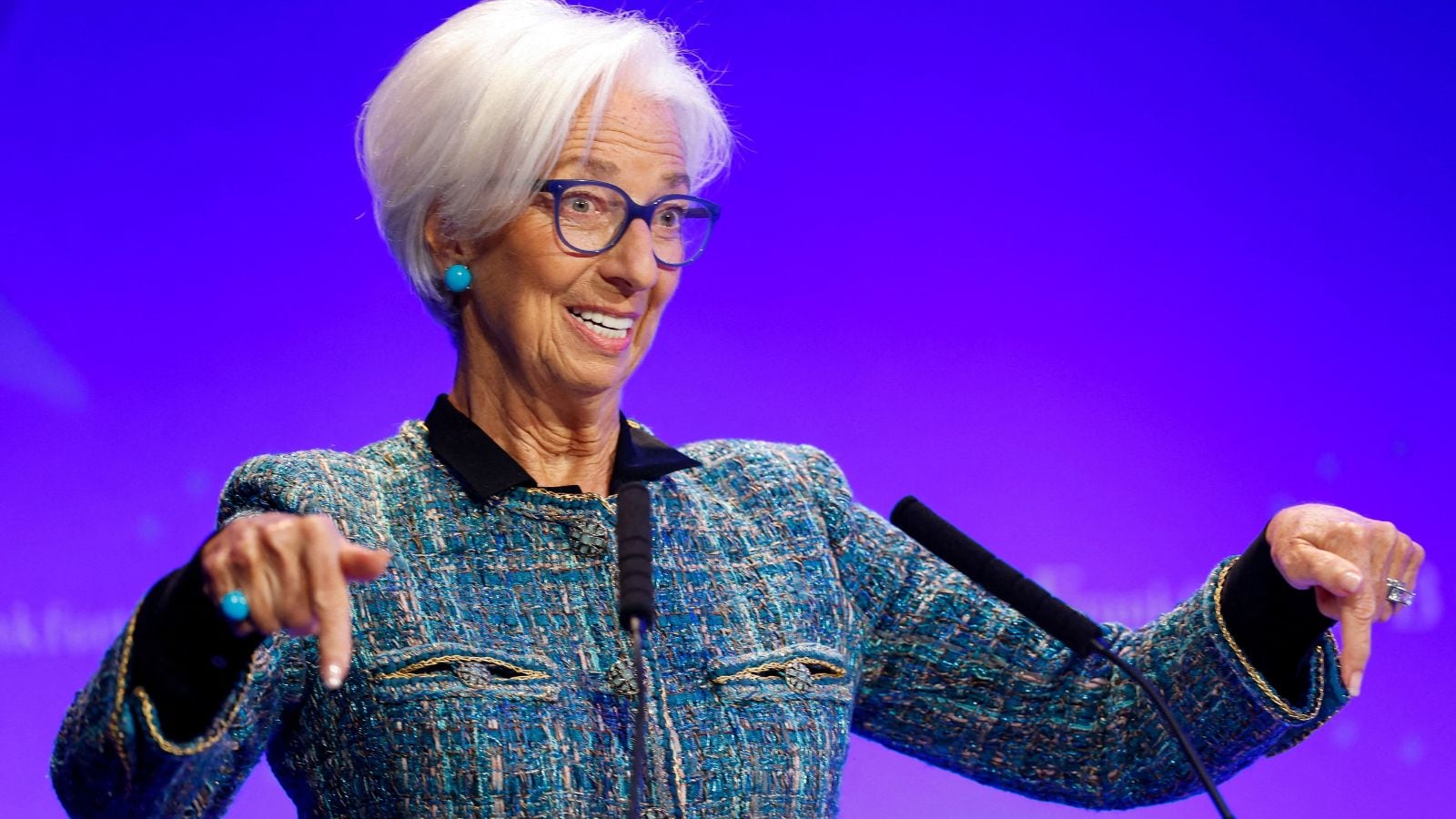
Christine Lagarde isn't walking away from the European Central Bank because she got tired of interest rate spreadsheets. On October 29, 2026, she announced her resignation effective February 7, 2027—cutting short an eight-year term originally scheduled to run through October 31, 2027.
Most headlines frame her exit as a sudden shock right when Europe can least afford instability. That's half true. Inflation in the 21-nation euro area climbed back to 3.8% in September 2026, energy costs are squeezing households again, and French government bond yields have been flashing warning signs. Leaving nine months early looks like bad timing on paper. Also making news lately: Inside the Starbucks Turnaround Numbers Wall Street Is Misreading.
Look closer, though. Lagarde's early departure isn't an abandonment of duty—it's a calculated political maneuver.
The Real Reason Behind Christine Lagarde Resigning Early
During her October 29 press conference in Frankfurt, Lagarde choked up while explaining why she couldn't stay until late 2027. Her official reason boiled down to one word: neutrality. More information on this are covered by The Wall Street Journal.
"I don't think that I can remain neutral," she told reporters. "I don't think that I can be comfortable in that neutrality at the present time. And I'm interested in the truth, and I see the truth being very often damaged, contradicted by misrepresentation."
Central bank chiefs don't get to weigh in on geopolitics, trade wars, or domestic election rhetoric. The moment an ECB president comments on political falsehoods, markets panic about central bank independence. Lagarde clearly wants her voice back, and rumors have swirled for months about a potential leadership role at the World Economic Forum.
Still, there's an elephant in the room she refused to address at the podium.
The French Election Timing Nobody in Frankfurt Will Admit Out Loud
France holds its next presidential election in spring 2027. If Lagarde had waited until October 2027 to step down, a newly elected French president—potentially from Marine Le Pen's far-right movement—would hold veto power over who runs Europe's most powerful monetary institution.
By stepping down in February 2027, Lagarde hands the appointment process to the current European leadership before French voters head to the polls. European commentators, including analysts at Germany's Süddeutsche Zeitung, immediately spotted the calendar math. You don't resign nine months early during an inflation flare-up unless locking in your successor before a major election matters more than finishing your victory lap.
Why Half the ECB Executive Board Is Walking Out the Door at Once
If Lagarde's exit were the only leadership change in Frankfurt, bond traders wouldn't blink. It isn't.
The ECB is undergoing an unprecedented changing of the guard across its six-person Executive Board:
- Isabel Schnabel, the influential German board member overseeing market operations, resigns on January 3, 2027, to join the International Monetary Fund.
- Christine Lagarde steps down as president on February 7, 2027.
- Philip Lane, the ECB's chief economist who shapes rate projections, finishes his non-renewable term on May 31, 2027.
Losing your president, your chief economist, and your market operations chief within five months is wild. In central banking, institutional memory keeps markets calm when data gets messy. Replacing half the top table simultaneously forces European capitals into a high-stakes horse-trading session over who controls borrowing costs for 350 million people.
The Paris-Berlin Deal Taking Shape Behind Closed Doors
If you've watched European politics long enough, you know merit rarely decides top EU jobs on its own. Geography and national ego always get a vote.
On November 20, 2026, Eurogroup President Kyriakos Pierrakakis confirmed that member states submitted only two nominations to replace Schnabel and Lane on the Executive Board: Markus Brunnermeier from Germany and Laurence Boone from France. Running unopposed means Brunnermeier is virtually guaranteed to become chief economist, while Boone steps into the market operations seat.
Watch how that unlocks the presidency. Because Germany gets the chief economist role, Berlin won't push a German candidate for the top job. Instead, Paris and Berlin appear to be aligning behind Pablo Hernández de Cos, the respected former governor of the Bank of Spain, over former Dutch central bank chief Klaas Knot.
Both men are seasoned central bankers. Knot spent years as one of the Governing Council's most vocal inflation hawks, while Hernández de Cos built a reputation in Madrid as a pragmatic consensus builder who understands southern European debt dynamics. Either choice signals continuity rather than an ideological shock.
The Economic Mess Waiting for Lagarde's Successor
Whoever sits in Lagarde's chair on February 8, 2027, won't get a honeymoon. Europe's economic backdrop has turned ugly again, and the ECB's tools are stretched thin.
At its October 2026 meeting, the Governing Council held its benchmark deposit rate steady at 2.5%, while warning that surging energy prices could force another rate hike as soon as December 2026. That puts Frankfurt in a nasty bind. Raising rates when headline inflation sits at 3.8% makes textbook sense, yet higher borrowing costs hammer economies that are barely growing.
Then there's the fiscal elephant: France.
French government bond yields have climbed steadily as investors question Paris's ability to rein in its budget deficits. As analysts at Germany's Frankfurter Allgemeine Zeitung pointed out following Lagarde's announcement, the ECB cannot act as a permanent bailout machine for heavily indebted governments. If French borrowing costs spike during the 2027 presidential campaign, the new ECB president will face an immediate test of nerve: deploy emergency bond-buying tools to calm markets, or force politicians in Paris to fix their own fiscal mess.
Why Financial Markets Barely Flinched
Here's the part that surprises people outside finance. When Lagarde dropped her resignation bombshell, the euro didn't crash and European bond markets barely moved.
Why? Because markets trust the machine more than the person holding the microphone.
Goldman Sachs head of fixed income macro investing Simon Dangoor summed it up bluntly after the announcement: institutional behavior at the ECB is entrenched enough to outlast Lagarde, and policy will look remarkably similar regardless of who wins the nomination. Danske Bank economist Piet Haines Christiansen echoed that view, noting that frontrunners like Hernández de Cos and Knot are known quantities who won't rewrite the rulebook.
Lagarde's real legacy isn't a specific interest rate level—it's how she managed crisis after crisis without letting the eurozone fracture. She steered monetary policy through the pandemic, survived the post-2022 inflation shock, and kept 21 wildly different economies rowing in roughly the same direction. Unlike her predecessor Mario Draghi, who relied on dramatic "whatever it takes" solo pronouncements, Lagarde operated like a seasoned diplomat, brokering compromises between northern inflation hawks and southern fiscal doves.
What You Should Actually Watch Between Now and February 2027
If you hold euro-denominated assets, run a business exporting to Europe, or simply track global macro shifts, ignore the gossip about where Lagarde works next. Focus on three concrete triggers over the next 90 days:
- The December 2026 ECB Rate Decision: Watch whether persistent energy-driven inflation forces the Governing Council to pull the trigger on another hike above the 2.5% deposit rate. A December hike locks in tighter financial conditions right through the leadership handover.
- Official European Council Nomination of the Next President: Under Article 283 of the Treaty on the Functioning of the European Union, EU leaders must formally nominate Lagarde's replacement, followed by consultations with the ECB Governing Council and the European Parliament. Confirming Pablo Hernández de Cos—or a surprise compromise candidate—before January removes any lingering succession discount from the euro.
- French OAT-Bund Spreads: Keep an eye on the yield gap between French and German 10-year government bonds. If that spread widens sharply ahead of spring 2027, watch how aggressively incoming board members Markus Brunnermeier and Laurence Boone signal their willingness—or reluctance—to intervene.
Lagarde timed her exit to protect the ECB from political interference, not to escape a sinking ship. Whether that gamble pays off depends entirely on how fast Berlin and Paris finalize her successor before European politics turns loud in the spring.