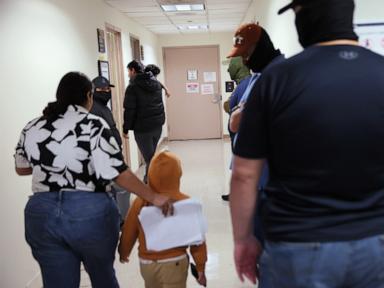
Immigration policy rarely hits headlines without noise, but the quiet mechanics driving federal courtrooms right now deserve a hard look. If you've been following recent updates, you know the Trump administration faced intense scrutiny over accusations of fast-tracking migrant children's asylum cases. Critics call it a deportation assembly line. Defenders claim it's a necessary push to clear historic backlogs.
The reality on the ground is far messier, highly technical, and intensely stressful for everyone involved. Let's break down what is actually happening behind the courtroom doors, why legal advocates are sounding alarms, and what this means for the future of the immigration system. Meanwhile, you can find related developments here: Why Tributes to Manchester Cotton Workers Miss the Point of Real Solidarity.
The Mechanics of the Speed-Up
For months, attorneys representing unaccompanied minors have pointed to a dramatic shift in how immigration courts handle youth dockets. Instead of the standard cadence that allows months for legal research, evidence gathering, and finding representation, the timeline has compressed into a blur.
Under accelerated scheduling directives, some detained children have been given mere weeks—or even days—to file complex asylum applications. Hearings are grouped into rapid-fire proceedings where dozens of minors cycle through a single docket. To explore the complete picture, check out the detailed report by NPR.
When you strip away political talking points, the operational goal is clear: process cases as fast as possible. But speed in a legal setting rarely coexists with due process. When a child who barely speaks English, has experienced severe trauma, and lacks a lawyer is pushed to plead their case in minutes, the outcome is predictable. Errors compound. Deadlines are missed. Deportation orders pile up.
Why Legal Experts Are Sounding the Alarm
You might wonder why rushing these cases draws such fierce pushback from civil rights groups and immigration lawyers. After all, shouldn't backlogs be cleared?
The issue isn't about efficiency. It's about fundamental fairness. Immigration law is notoriously complex—often described by legal scholars as second only to tax law in its intricacy. Expecting an unaccompanied minor to navigate statutory definitions of persecution, file formal applications, and cross-examine evidence without counsel is an impossible burden.
Advocates point to several recurring friction points in this accelerated framework:
- Shortened notice periods that leave children and their sparse legal representation scrambling to prepare.
- Restrictions on continuances, meaning judges deny requests for more time even when vital documents or sponsor background checks are pending.
- Reduced access to legal service funding and administrative hurdles that sideline nonprofit organizations.
Federal judges have taken notice. Legal battles have erupted across multiple jurisdictions, with various courts stepping in to temporarily block or modify expedited interview rules and funding cuts. These legal injunctions highlight a deep constitutional tension between executive branch enforcement priorities and judicial oversight.
The Human Cost Behind the Statistics
Data points and court filings mask the daily reality of children caught in the middle of these policy shifts. Many of these minors fled gang violence, extreme poverty, or political instability in Central America and other volatile regions.
When cases are rushed, vetting breaks down. Sponsors who could provide safe homes face administrative delays, while the children themselves languish in shelters or face pressure to accept voluntary departure simply because the legal process feels insurmountable.
It's easy to view immigration through the lens of macro-economics or national security debates. But when applied to minors, the margin for error is razor-thin. A mishandled asylum claim doesn't just mean a closed file; it often means returning a vulnerable individual to the very dangers they escaped.
The battle over fast-tracked youth asylum cases is far from resolved. As federal courts continue to weigh injunctions and legal teams fight to protect due process standards, the system remains a pressure cooker. Keep an eye on how district court rulings shape upcoming dockets, because the precedent set here will echo through the immigration system for years.