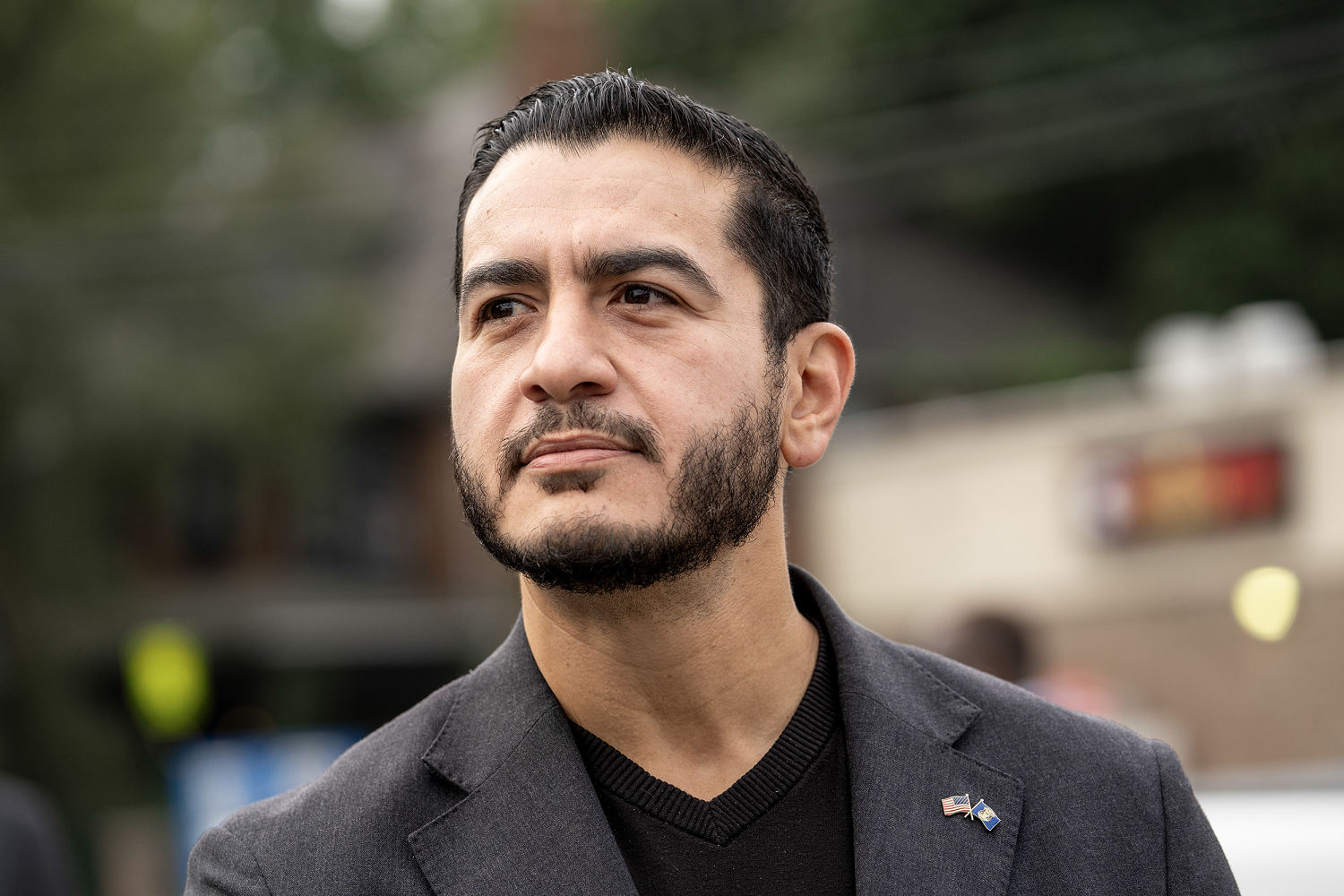
Politics makes for strange bedfellows, especially when American healthcare costs reach a breaking point. When progressive physician and former Detroit health director Abdul El-Sayed floated the idea of rebranding single-payer healthcare as "Trumpcare," pundits on both sides of the aisle lost their minds. Critics called it a cheap publicity stunt. Supporters called it political genius. Both groups missed the actual point of what El-Sayed was trying to accomplish.
You have to look past the cable news outrage to understand why this happened. For years, progressive politicians have struggled to sell Medicare for All to working-class voters in rust-belt states like Michigan. The policy itself polls remarkably well when you strip away partisan labels. People hate insurance deductibles. They hate fighting with billing departments while recovering from surgery. Yet the moment a Democrat attaches their name to universal coverage, half the country reflexively rejects it as government overreach. For an alternative look, check out: this related article.
El-Sayed saw a shortcut. He realized that Donald Trump operates entirely on branding, loyalty, and populist grievances against entrenched corporate elites. By dangling the ultimate legacy project in front of a president obsessed with his place in history, El-Sayed wasn't suddenly turning into a conservative. He was testing whether populist rhetoric could break a decades-old legislative stalemate.
Why the Trumpcare Pitch Caught Fire
Most political commentators treat ideological labels like rigid boxes that nobody ever steps outside of. That's a mistake. If you've ever spent time talking to voters in Macomb County, Michigan, or rural Ohio, you know that people hold seemingly contradictory views on healthcare all the time. They distrust big government, yet they fiercely protect Medicare and Social Security. They despise corporate insurance executives who deny claims, yet they fear losing their employer-sponsored plans. Similar reporting on this trend has been published by The Washington Post.
El-Sayed understood this tension intimately from his time running the Detroit Health Department after the city's bankruptcy. He watched working families go bankrupt over routine medical emergencies while politicians in Washington argued over abstract economic theories. When he suggested that Donald Trump could cement his legacy by delivering universal healthcare under the "Trumpcare" banner, he was speaking a language Trump actually understands.
Think about how Trump approached healthcare during his first term. He repeatedly promised something "terrific" that would cover everybody for less money, even while congressional Republicans tried to repeal the Affordable Care Act without a viable replacement. Trump never cared about the rigid free-market orthodoxy of traditional conservatives like Paul Ryan. He cared about winning, delivering a massive visible benefit to his base, and outshining Barack Obama.
El-Sayed's pitch played directly into that dynamic. By framing private health insurance companies as the real "swamp" draining money from hardworking Americans, the argument shifts from a left-versus-right debate to an us-versus-them fight. Suddenly, taking on insurance middlemen looks like an act of economic nationalism rather than socialism.
The Economics Behind the Rebrand
Strip away the provocative name, and the underlying policy mechanics remain the exact same single-payer framework El-Sayed has championed since his 2018 Michigan gubernatorial run. You don't need an economics degree to see why the current American system frustrates almost everyone who interacts with it.
The United States spends roughly twice as much per capita on healthcare as other wealthy nations, yet our life expectancy lags behind. A massive chunk of that money doesn't pay for doctors, nurses, or hospital beds. It pays for administrative bloat. Private insurers employ armies of people whose sole job is to deny claims, while hospitals employ equally large armies of billing specialists just to get paid.
Under a unified single-payer system, those administrative costs shrink dramatically. Medicare currently operates with an overhead rate of around two percent, compared to the twelve to eighteen percent commonly seen in the private insurance market. El-Sayed's argument has always been straightforward. If you eliminate the profit motive and the billing bureaucracy, you can cover every citizen while still saving money overall.
Here is where the "Trumpcare" framing gets really interesting for business owners. Small and medium-sized companies across the Midwest are getting crushed by rising health insurance premiums. Every year, employers have to choose between raising wages or absorbing another double-digit rate hike from their insurance carrier. A universal system decouples healthcare from employment. For a populist movement focused on revitalizing American manufacturing and helping small businesses compete globally, removing the burden of employer-sponsored healthcare is actually a massive competitive advantage.
Why Traditional Democrats Hated the Idea
If the policy math stays the same, why did so many establishment Democrats recoil at El-Sayed's pitch? Honestly, it comes down to institutional pride and fear of losing their signature issue.
For over a decade, protecting and expanding the Affordable Care Act has been the central pillar of the Democratic platform. The thought of handing Donald Trump credit for achieving universal coverage—the elusive goal Democrats have chased since Harry Truman—feels like the ultimate betrayal to party loyalists. Many progressive activists also argued that legitimizing Trump by offering him a policy olive branch ignores his administration's efforts to weaken preexisting condition protections and cut Medicaid funding.
Those criticisms aren't baseless. There is a massive gap between floating a catchy brand name on a podcast or in an op-ed and actually drafting legislation that survives the Senate. Conservative lawmakers in Congress would fiercely resist any expansion of government-run healthcare, regardless of whether it carries Trump's name on the front page. Plus, pharmaceutical lobbies and private hospital networks spend hundreds of millions of dollars every election cycle to ensure the status quo stays intact.
Yet El-Sayed wasn't claiming that a single clever slogan would magically pass a bill overnight. He was exposing a massive blind spot in how political movements communicate. Democrats often fall in love with complicated, means-tested policies that nobody understands, while Republicans master simple, emotional branding. By borrowing a page from Trump's own playbook, El-Sayed forced a conversation about whether results matter more than who gets the credit.
What History Tells Us About Political Rebrands
American political history is full of moments where a leader adopted an opponent's policy and claimed it as their own. Richard Nixon created the Environmental Protection Agency and seriously explored a guaranteed minimum income. Bill Clinton signed welfare reform and declared that the era of big government was over. Politicians regularly cross ideological lines when the political incentives align.
Healthcare itself has a tangled partisan history that most people forget. The individual mandate at the heart of the Affordable Care Act didn't originate in a progressive think tank. It was developed by the conservative Heritage Foundation in the late 1980s as a market-based alternative to single-payer systems, and Mitt Romney famously implemented it in Massachusetts before Barack Obama adopted it nationally.
Once Obama embraced the idea, conservatives immediately disowned their own creation and fought it tooth and nail for ten years. That history proves a crucial point that El-Sayed recognized early on. In modern American politics, the messenger matters infinitely more than the policy details. Voters rarely read thousand-page legislative bills. They take cues from the leaders they trust.
If a progressive politician proposes eliminating private insurance deductibles, conservative voters hear "socialist takeover." If a populist conservative proposes the exact same thing as a way to stop greedy insurance corporations from ripping off American families, those same voters suddenly listen with an open mind.
The Real Obstacle Isn't Branding
Even if you accept that rebranding single-payer healthcare could shift public opinion, you still run straight into the brick wall of Washington lobbying. The American healthcare industry isn't just a sector of the economy. It is the largest lobbying force in the country, routinely outspending defense contractors, tech giants, and Wall Street banks.
Every dollar of wasteful administrative spending in our healthcare system is someone else's profit margin. Pharmacy benefit managers, hospital conglomerates, medical device manufacturers, and private insurers all have deeply entrenched financial incentives to keep the system fragmented and opaque. When you propose consolidating payment into a single public pool, you aren't just debating ideology. You are threatening trillions of dollars in private revenue streams.
That is why political slogans alone never get the job done. Whether you call it Medicare for All, single-payer, or Trumpcare, any serious attempt to overhaul healthcare financing will trigger an all-out war from industry groups. They will flood local television stations with ads warning seniors that their coverage is at risk. They will threaten lawmakers with primary challenges. They will fund astroturf advocacy groups to manufacture grassroots opposition.
El-Sayed knows this reality better than most. Having run a statewide campaign where corporate political action committees spent heavily against him, he understands that rhetoric only opens the door. Walking through that door requires sustained grassroots pressure that makes politicians more afraid of their voters than their donors.
How to Actually Evaluate Healthcare Proposals
When politicians throw around catchy names like Trumpcare or Medicare for All, it's easy to get distracted by the political theater. If you want to cut through the noise and figure out whether a healthcare proposal would actually help your family, ignore the label and look at four specific mechanics.
First, check who is covered and whether coverage is automatic. True universal systems tie eligibility to residency or citizenship, not employment status or income brackets. If a plan still leaves millions of people uninsured because they fall into coverage gaps or can't afford premiums, it isn't universal.
Second, look closely at out-of-pocket costs at the point of care. Having an insurance card in your wallet means very little if you still face a six-thousand-dollar deductible before your coverage kicks in. Meaningful reform eliminates or drastically caps copays, deductibles, and surprise out-of-network billing so people don't delay necessary treatment out of fear of debt.
Third, examine how the system controls underlying medical prices. Simply shifting who pays the bills doesn't solve the problem if hospitals can still charge fifty dollars for a single Tylenol pill or drug companies can double the price of insulin overnight. Effective systems give the payer the authority to negotiate drug prices and set standardized reimbursement rates across all providers.
Fourth, ask how the transition affects healthcare workers and rural hospitals. Any major structural shift creates winners and losers in the short term. A serious proposal has to include concrete funding mechanisms to keep rural clinics open and ensure nurses and doctors aren't squeezed by sudden reimbursement cuts.
What Comes Out of This Debate
Abdul El-Sayed's Trumpcare pitch succeeded in doing what few policy papers ever manage to do. It broke through the partisan echo chamber and forced people across the political spectrum to confront a basic question. Do we want to win an ideological argument, or do we want to fix a broken system?
You don't have to like Donald Trump to see the strategic logic behind El-Sayed's move, and you don't have to be a progressive socialist to recognize that American healthcare costs are unsustainable. When a system fails working families year after year, clinging to traditional party talking points stops making sense.
Watch how politicians talk about healthcare over the next two years. Pay attention to which leaders focus on lowering your actual out-of-pocket costs versus those who just recycle tired partisan slogans. Start asking your representatives directly how they plan to rein in insurance denials and hospital price gouging, and don't let them hide behind party labels when they answer.