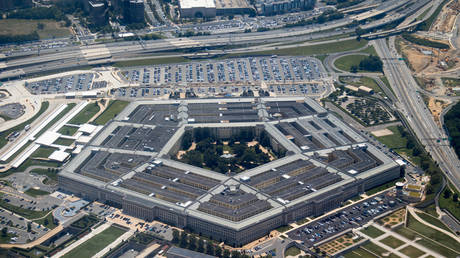
The media wants you to panic about a three-way nuclear standoff. Every defense correspondent in Washington is currently hyperventilating over classified leaks and strategic guidance updates, painting a picture of an inevitable, multi-front atomic collision between the United States, Russia, and China.
It is a neat, terrifying narrative. It also completely misunderstands how modern state conflict actually works.
I have spent decades watching defense bureaucracies plan for the last war while the ground shifts beneath their feet. When the Pentagon drafts new nuclear guidance targeting a concurrent axis of adversaries, the headline writers salivate. They call it a return to Cold War bipolarity on steroids. They assume deterrence works the same way it did in 1962, just with more players on the board.
They are dead wrong.
The lazy consensus is that nuclear strategy is an exercise in pure math: count the warheads, map the delivery systems, calculate mutual assured destruction, and pray nobody pushes the button out of spite or miscalculation. That framework is obsolete. Beijing and Moscow are not building massive strategic arsenals to fight a traditional nuclear exchange. They are using their nuclear umbrellas as shields behind which they wage total economic, cyber, and cognitive warfare—domains where traditional strategic missiles are entirely useless.
The Flawed Physics of Modern Deterrence
Let us look at the core premise driving the current defense establishment panic: the idea of a two-peer nuclear challenge.
During the Cold War, deterrence rested on a relatively stable bilateral logic. Mutually Assured Destruction meant that a first strike guaranteed suicide. The variables were finite. Communication lines, though tense, were direct.
Today’s analysts love to trot out the tripartite dilemma: how do you deter two nuclear peers simultaneously when your own arsenal is capped by old treaties? The question itself is a trap. It assumes deterrence is a static fence line you reinforce with more concrete.
I have watched defense contractors and think-tank analysts pitch billions of dollars in modernization programs using this exact mental model. They want more submarines, new intercontinental ballistic missiles, and upgraded gravity bombs. It is a brilliant business model for the defense industrial base. It is a catastrophic strategic strategy for the nation.
Imagine a scenario where the United States maintains parity with a combined Russian and Chinese strategic stockpile through sheer manufacturing volume. What does that actually buy us? Nothing. Because neither Beijing nor Moscow intends to engage in a missile exchange that turns their own industrial heartlands into radioactive glass.
They understand something our planners refuse to admit: kinetic nuclear weapons are political dead currency. You cannot use them to seize shipping lanes in the South China Sea. You cannot use them to secure microchip supply chains. You cannot use them to absorb foreign debt or subvert democratic elections.
By treating the looming conflict as a nuclear numbers game, the Pentagon is falling straight into a strategic distraction.
The Asymmetric Reality We Refuse to See
Ask any armchair strategist what happens if a localized skirmish over Taiwan spirals out of control. They immediately draw a straight line to strategic escalation, theater nuclear weapons, and continental strikes.
This is lazy thinking dressed up as professional realism.
China’s nuclear expansion—the rapid construction of hundreds of new silo fields in the western desert—is not a signal that Beijing is preparing to launch a first strike against the American mainland. It is an insurance policy. It is designed to create a high-end strategic threshold that paralyzes Washington's decision-making, allowing China to achieve its regional objectives below the nuclear tripwire.
Russia does the exact same thing with its tactical nuclear doctrine, often referred to in policy circles as "escalate to de-escalate." Moscow threatens low-yield strikes not to start a global nuclear war, but to freeze a conventional conflict on its terms, daring Washington to risk New York to save a contested borderland.
Our response? We draft documents. We hold interagency meetings. We update nuclear employment guidance to account for multiple adversaries as if we are playing a game of three-dimensional chess, failing to notice that our opponents are playing a completely different game altogether.
The real threat is not a coordinated, synchronized first strike by Moscow and Beijing. They do not trust each other enough for a joint venture of annihilation. The real threat is chronic, low-intensity erosion. It is the steady chipping away of American hegemony through grey-zone aggression while our nuclear warheads sit safely in their silos, gathering dust and consuming billions in maintenance budgets.
The Cost of Strategic Obsession
Let us talk about the opportunity cost. Every dollar poured into maintaining and expanding a redundant strategic triad to fight a phantom three-way nuclear war is a dollar stolen from the capabilities we actually need.
I have seen organizations bleed out because they optimized for the existential threat while ignoring the operational reality eating them alive from the inside. The Pentagon is doing this on a national scale.
While leadership obsesses over counter-force targeting packages against two nuclear-armed superpowers, our conventional logistics lines are brittle, our shipbuilding capacity is a national embarrassment, and our cyber resilience resembles a screen door on a submarine.
We are preparing to fight a war nobody will win, using doctrines that assume rational actors operating under twentieth-century rules, while our adversaries systematically outmaneuver us in the domains that matter today.
Stop asking how many warheads we need to deter Beijing and Moscow at the same time. It is the wrong question, born of a bureaucratic need to justify old budgets and comfortable assumptions.
The right question is why we are investing our finite resources in the ultimate weapons of non-use while losing the conflicts happening right in front of us.
Until the defense establishment stops treating nuclear strategy as a security blanket for institutional inertia, we will remain completely unprepared for the world as it actually exists.