The headlines are predictable. They scream about the "asymmetric threat" of Iranian-designed Shahed drones. They moan about the cost-exchange ratio of a $2 million Patriot missile swatting down a $30,000 lawnmower with wings.
They are all missing the point.
The crisis isn't that the drones are cheap. The crisis is that the U.S. defense industrial complex has become a gold-plated suicide pact that physically cannot build anything simple anymore. We aren't being outmaneuvered by Iranian genius; we are being bankrupted by our own inability to stop over-engineering the solution.
The Myth of the Asymmetric Miracle
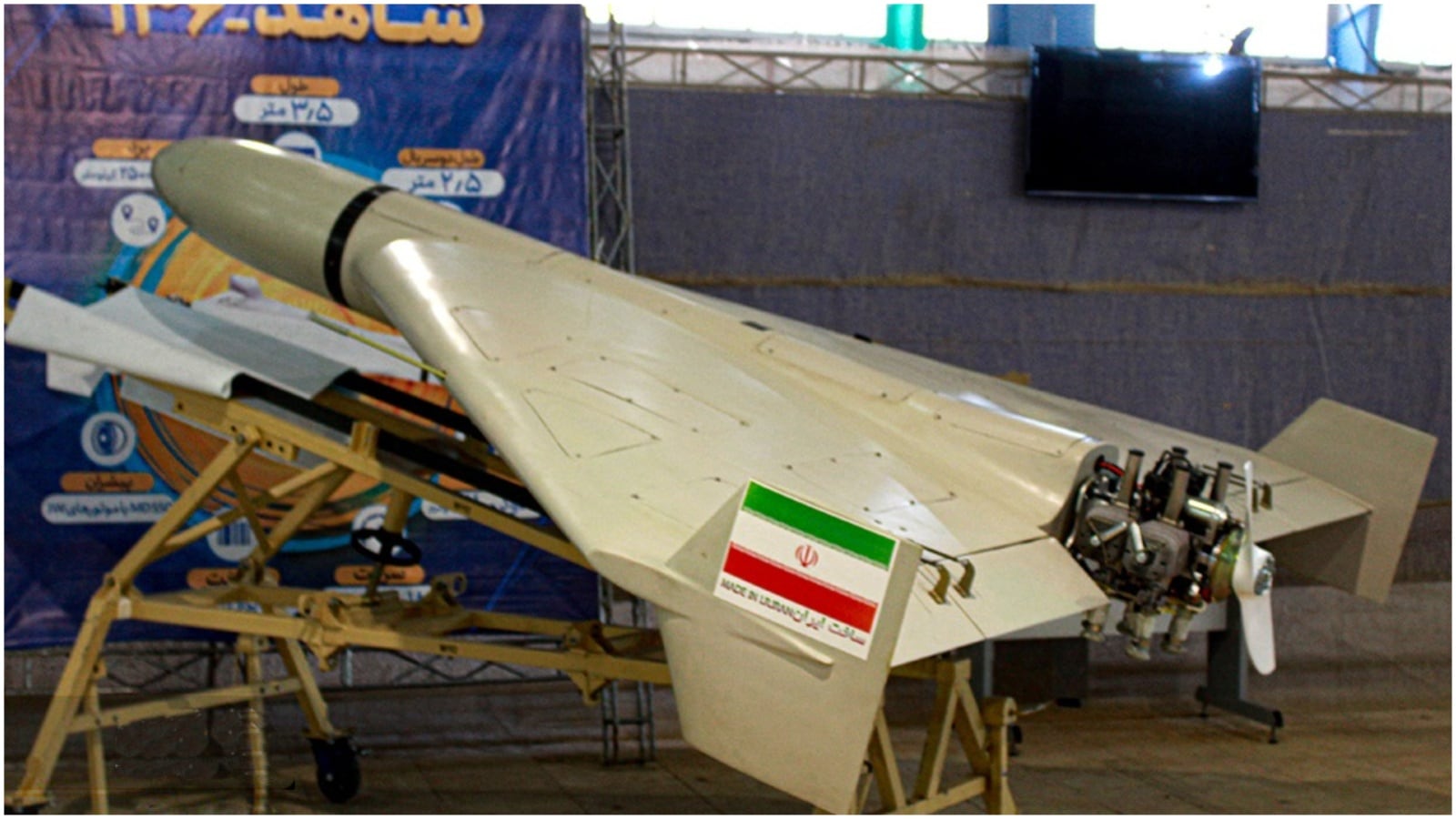
Stop calling the Shahed-136 a "high-tech" threat. It’s an insult to the word.
A Shahed is essentially a Model T Ford with a GPS chip and a moped engine. It flies slow. It’s loud enough to be heard from miles away. It has the radar cross-section of a small barn. In any sane world, these should be trivial to knock out of the sky.
The "asymmetry" isn't in the technology. It’s in the bureaucracy.
I’ve sat in rooms with defense contractors where a simple request for a kinetic interceptor—basically a flying brick—spirals into a five-year development cycle with a $400 million price tag. Why? Because the Pentagon doesn't know how to buy a "good enough" solution. They only know how to buy the "ultimate" solution.
When you use a sophisticated, multi-stage interceptor to kill a drone made of plywood and consumer-grade electronics, you aren't "defending" anything. You are participating in the enemy's economic attrition strategy. You are doing their job for them.
The Cost-Exchange Ratio Is a Distraction
Every pundit loves to cite the $2,000,000 vs. $20,000 figure. It’s a shocking number, but it’s the wrong metric.
The real danger isn't the dollar amount. It’s the capacity.
Raytheon and Lockheed Martin can only produce a handful of high-end interceptors per month. The manufacturing tail for a single Patriot or RIM-162 ESSM involves specialized sensors, rare earth minerals, and highly trained technicians.
Iran, Russia, and their proxies can 3D-print drone frames and slap on engines bought from Alibaba faster than you can fill out the paperwork for a missile test.
We are trading "exotics" for "commodities." In a prolonged conflict, the side that relies on commodities always wins because their supply chain is "antifragile." If a factory making Shahed engines gets bombed, they buy them from a different lawnmower supplier. If the factory making the seeker heads for our missiles goes down, the entire defense posture of the United States Navy stalls for six months.
Stop Trying to "Solve" Drones With Missiles
The "lazy consensus" says we need better, cheaper missiles. Wrong. We need to stop using missiles entirely for this tier of threat.
The answer isn't "more tech." The answer is "old tech" updated for the 2020s.
- Direct Energy is a Pipe Dream (For Now): Everyone points to lasers as the "pennies per shot" savior. I’ve seen the testing data. Atmospheric interference, "dwell time" requirements, and massive power cooling needs mean lasers are still years away from being a reliable, mass-deployable shield.
- The Return of the Flak: We abandoned anti-aircraft artillery (AAA) because we thought the era of the dogfight was over. We were wrong. We need high-velocity, programmable airburst ammunition. Systems like the German Gepard have shown more utility in Ukraine than almost any other platform because a 35mm shell costs a fraction of a missile and doesn't care about electronic jamming.
- Electronic Warfare (EW) is a Double-Edged Sword: We love to talk about "jamming" the drones. But when you blanket a battlefield in high-powered interference, you blind your own systems, too. You can’t run a "network-centric" war if you’ve turned the local spectrum into white noise.
The "Innovation" Trap
I’ve watched "disruptive" startups try to enter the defense space with low-cost interceptors. They usually fail for one of two reasons.
First, the "Requirement Creep." The military starts by asking for a $50,000 drone-killer. Then they decide it needs to work in a sandstorm. Then it needs to be salt-water resistant. Then it needs to integrated into a legacy Command and Control system from 1994. Suddenly, your $50,000 solution costs $800,000 and requires a PhD to operate.
Second, the "Lobbying Wall." The big primes—the Boeings and Northrops—have no financial incentive to build something cheap. Their business model is built on "cost-plus" contracts. If they make a product that is 100 times cheaper, they make 100 times less profit. They aren't incentivized to solve the problem; they are incentivized to manage the problem with the most expensive tools possible.
What No One Wants to Admit
The hard truth? We might have to accept that some things just get hit.
In the Cold War, we understood "acceptable loss." Today, we have a zero-defect mentality. We treat every $30,000 drone like it’s a nuclear-tipped ICBM. We panic. We fire the $2 million missile because no commander wants to be the one who let a "cheap" drone hit a warehouse.
But by protecting the warehouse, we are depleting the national treasury and the limited magazine of our warships. We are winning the tactical skirmish and losing the industrial war.
If we want to actually "neutralize" the threat of cheap drones, we have to stop treating them like high-end targets. We need to build "disposable" defense. We need our own swarms.
Imagine a swarm of 500 interceptor drones, each costing $5,000, orbiting a carrier strike group. They don't need fancy radars. They just need a simple optical sensor and a willingness to crash into the enemy.
But we won't do that. Because there’s no "synergy" in a $5,000 drone. There’s no massive, multi-decade maintenance contract. There’s no ribbon-cutting ceremony for a weapon that is designed to be as unremarkable as a box of nails.
The Brutal Reality of the Next War
If a conflict breaks out in the Pacific or escalates further in the Middle East, the "missile gap" will become a canyon within the first 72 hours. We will run out of the "good stuff" while the enemy is still uncating their second thousand drones.
We are currently bringing a scalpel to a sledgehammer fight. The scalpel is beautiful. It is precise. It cost a billion dollars to develop. But the sledgehammer doesn't care how sharp the scalpel is when it's swinging at your head.
Stop looking for the "game-changing" missile. Start looking for the factory that can churn out 10,000 "dumb" interceptors a month. Until then, we are just the world's most expensive target practice.
Go build a flying brick and stop overcomplicating the end of Western hegemony.