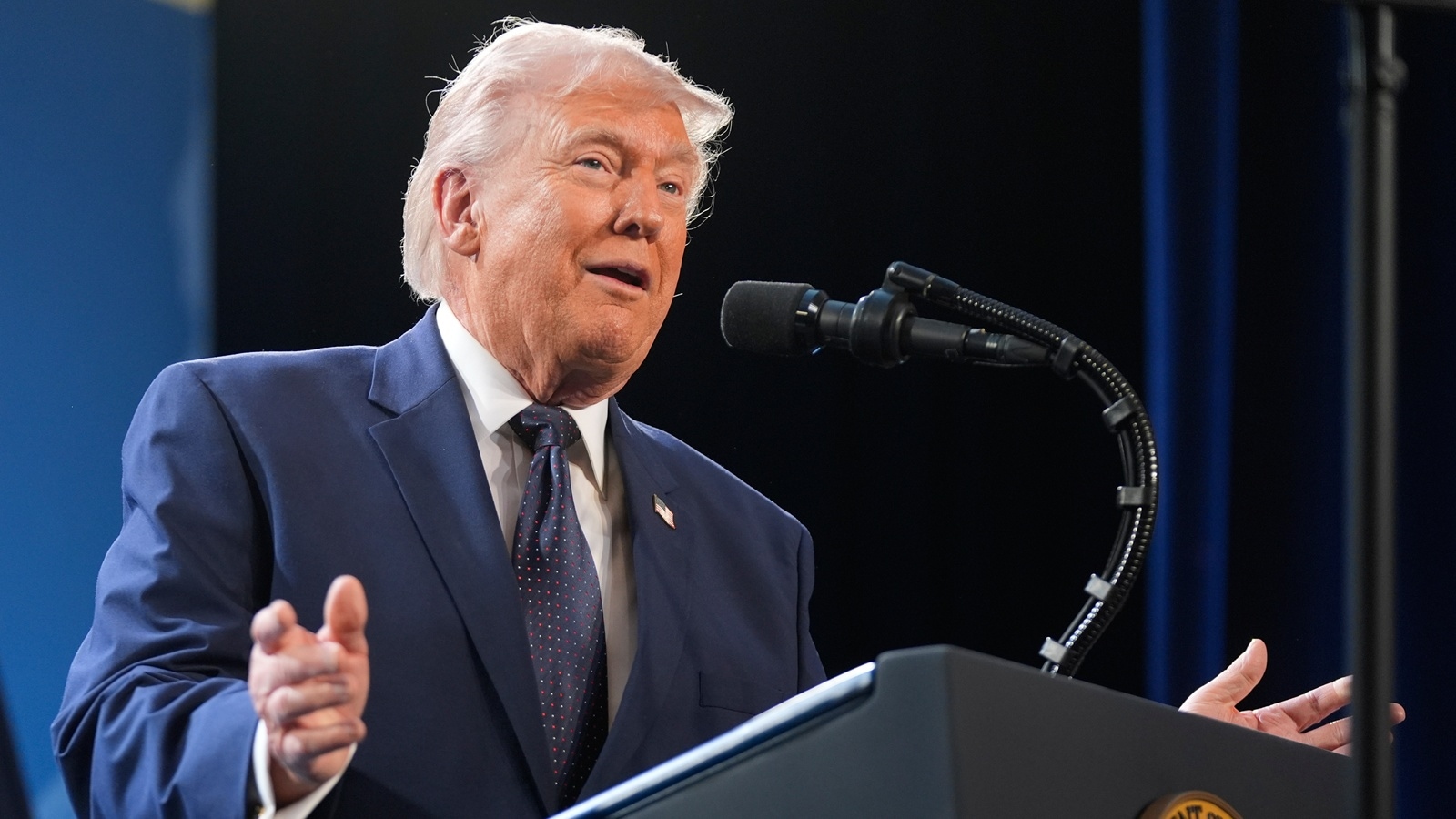
The media is obsessed with the "chaos" of a divided executive branch. They see a President claiming a conflict is "pretty much over" while the Pentagon brass insists they have "only just begun," and they scream about a vacuum of leadership. They are wrong.
What the pundits mistake for dysfunction is actually the most sophisticated application of "Good Cop, Bad Cop" in modern geopolitical history. While the press remains hyper-focused on the perceived "flip-flop" regarding Iran, they are missing the mechanical reality of how power is actually projected in 2026. The friction isn't a sign of weakness. It is the strategy.
The Myth of the Unified Front
Conventional wisdom dictates that a government must speak with one voice to be effective. This is a corporate-speak delusion. In the high-stakes theater of Middle Eastern brinkmanship, a unified message is a predictable message. Predictability is the death of leverage.
When the Commander-in-Chief signals a de-escalation, he creates a diplomatic off-ramp. He gives the adversary a way to save face. Simultaneously, when the Department of Defense (DoD) signals an increase in operational tempo, they maintain the "credible threat of force" that makes the diplomatic off-ramp attractive.
If both sides said "it's over," the adversary would re-arm in the shadows. If both sides said "we've just begun," the adversary would be backed into a corner where total war is the only logical response. By holding both positions at once, the U.S. creates a state of strategic ambiguity that paralyzes the opponent's decision-making matrix.
Why the Pentagon Always Wants More
The "lazy consensus" suggests the Pentagon is "defying" the White House. This ignores the fundamental nature of the military-industrial complex and the bureaucratic reality of the Joint Chiefs.
The Pentagon is a risk-mitigation machine. Their job is not to find peace; it is to ensure that if peace fails, they have the hardware, the positioning, and the budget to win. When they say "we've only just begun," they aren't necessarily thirsting for a ground invasion. They are protecting their "Program of Record."
- Budgetary Inertia: A war that is "over" is a budget that gets slashed.
- Force Posture: Admitting a conflict is finished means withdrawing Carrier Strike Groups. Once you leave, returning is ten times more expensive and diplomatically fraught.
- Intelligence Collection: The "beginning" the Pentagon refers to is often the transition from kinetic strikes to deep-tissue signals intelligence (SIGINT) and cyber-warfare.
I have watched organizations throw billions at "alignment" meetings, trying to get everyone on the same page. In the real world, the most effective teams are those where the visionary at the top and the operators on the ground are in constant, productive tension. That tension prevents the visionary from becoming a dreamer and the operator from becoming a tyrant.
The False Premise of the "Flip Flop"
The media loves the "flip flop" narrative because it’s easy to write. It fits into a 24-hour news cycle that demands heroes, villains, and flip-floppers. But look at the data of U.S. troop movements over the last eighteen months.
Despite the rhetoric, the actual footprint in the region hasn't shifted more than 15% in either direction. The "chaos" is purely verbal. On the ground, the machine is moving with terrifying consistency.
People ask: "Is the U.S. going to war with Iran?"
The answer is: We have been in a "gray zone" war with Iran for forty years. The current headlines are just the latest scene in a play that has no final act. To ask if it's "over" or "beginning" is to misunderstand the nature of modern conflict. It doesn't start or stop; it merely changes frequency.
The Cost of Transparency
The critics want a "clear policy." They want a white paper that outlines exactly what the U.S. will do and when.
If you give your enemy a roadmap, don't be surprised when they plant IEDs along the path. The "contradiction" between the White House and the Pentagon is a smokescreen that prevents Tehran from knowing which version of the U.S. they are dealing with on any given Tuesday. Are they dealing with the deal-maker who wants a "Grand Bargain," or the generals who want to testing their new hypersonic delivery systems?
This uncertainty is the only thing keeping the regional powers from overplaying their hands.
The Actionable Truth
If you are a business leader or a policy maker, stop looking for "alignment" in the traditional sense. Alignment is for mid-level managers. At the elite level, you want Functional Dissonance.
- Establish a Public Goal: This is your "War is Over" statement. It sets the market expectation and calms the stakeholders.
- Enable a Shadow Objective: This is your "We've only just begun" stance. It’s the internal drive to keep innovating, keep aggressive, and keep the competition off-balance.
- Embrace the Leak: Don't fear the internal disagreement. Use it. If your competitors think your board is fighting with your CEO, they will wait for you to implode. While they wait, you execute.
The danger isn't that the President and the Pentagon disagree. The danger is the day they finally agree on everything. That’s the day we either have a dictatorship or a total collapse of the checks and balances that make the American system the most resilient, albeit loudest, power structure on earth.
Stop waiting for the "resolution" of this conflict. It isn't coming. The "war" isn't over, and it hasn't just begun. It is simply being managed through the deliberate use of conflicting signals.
Learn to play the dissonance, or get off the stage.
Would you like me to analyze the specific budgetary shifts in the 2026 NDAA to show you where the money is actually moving?


