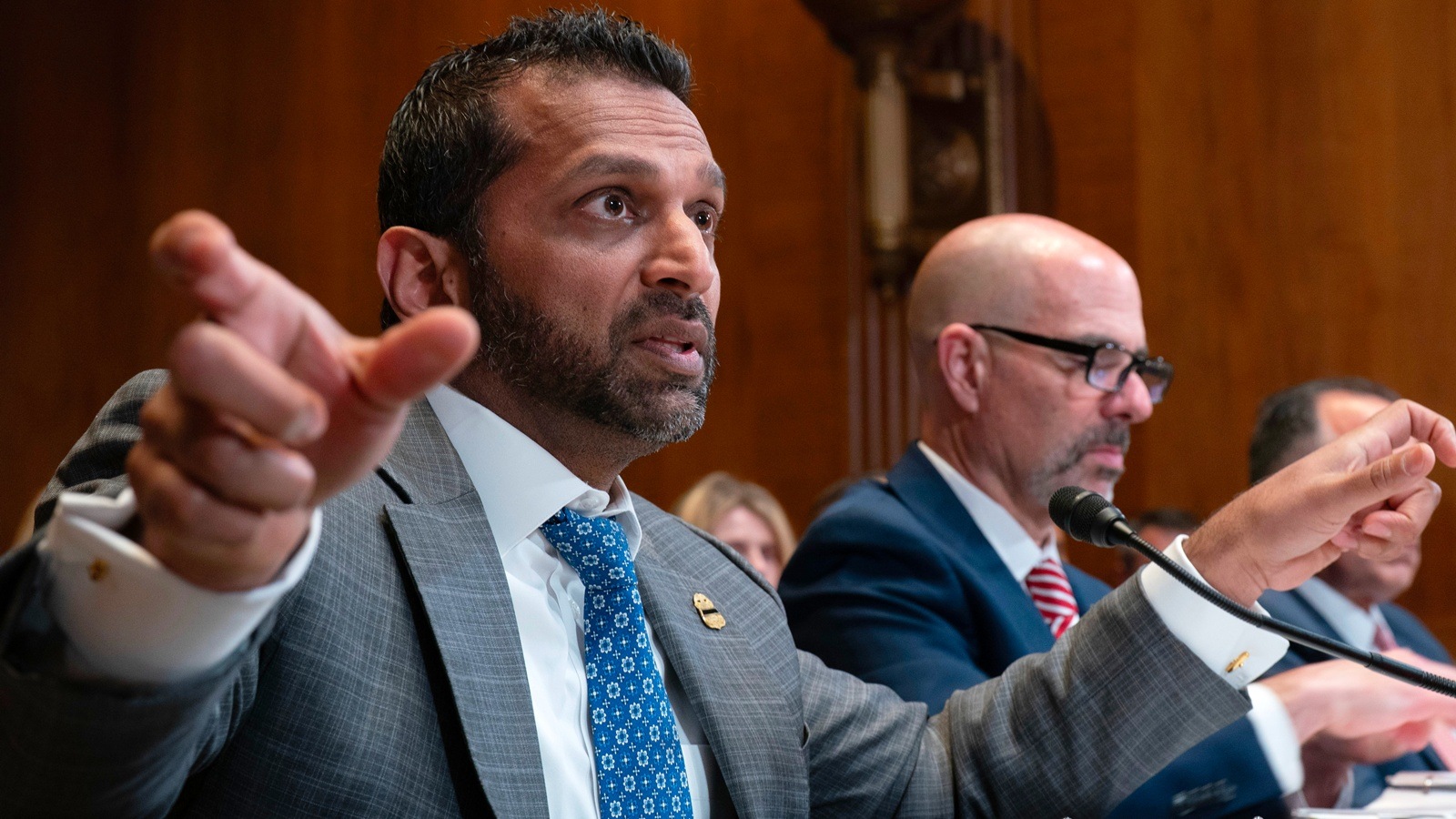
The outrage machine is currently redlining over a snorkel. Specifically, a "VIP snorkel" involving FBI Director Kash Patel at the USS Arizona Memorial. The headlines paint a picture of a tone-deaf bureaucrat desecrating a sacred tomb with flippers and a mask. They want you focused on the optics of bubbles rising over a war grave. They want you trapped in a debate about etiquette, respect, and "sacred sites."
They are wrong. You are being played.
The obsession with whether a high-ranking official swam in restricted waters is the ultimate red herring. It’s a classic Washington "optics hit" designed to obscure the actual mechanics of power, security, and the increasingly blurred lines between private leisure and state intelligence operations. While the public bickers about the "sanctity" of the water, they ignore the terrifyingly efficient infrastructure that allows a single individual to bypass every standard operating procedure in the name of "security."
The Myth of the Sacred Site
Let’s get one thing straight: Pearl Harbor is not a church. It is a massive, active military installation and a graveyard, yes, but it is also one of the most high-traffic tourist hubs on the planet. The "sacredness" argument is selectively applied. We allow thousands of tourists to hover over the wreckage daily, leaking SPF 50 and camera battery chemicals into the ecosystem.
The real issue isn't the snorkel. It's the unilateral override.
In my years tracking federal procurement and security protocols, I've seen mid-level managers get fired for taking an unauthorized Uber. Yet, we are expected to believe that a "VIP snorkel" is a spontaneous lapse in judgment? It isn’t. It’s a flex. It is a demonstration of a specific type of administrative immunity that should worry you far more than a pair of goggles. When a Director-level official moves, they move within a bubble of taxpayer-funded logistics. Every "private" moment is a logistical feat involving dozens of staff, security detail, and local liaisons.
The Efficiency of the "VIP" Label
The media loves the word "VIP" because it triggers class resentment. It’s easy to hate a guy getting a private tour while you’re stuck in a three-hour line for the ferry. But the "VIP" designation in federal circles isn't about luxury; it’s about circumvention.
- Security as a Scapegoat: Any breach of protocol—like, say, swimming in a restricted zone—is instantly justified under the umbrella of "threat assessment."
- The Resource Drain: A "private" excursion doesn't just cost the price of the gear. It costs the man-hours of every security officer pulled from their post to ensure the Director isn't "disturbed."
- The Information Gap: While the press focuses on the water, they aren't asking who paid for the transport, which local contractors were bypassed, or what official business was being "conducted" in the shade of a private cabana.
If you think this is about a vacation, you don't understand how DC works. There is no such thing as a vacation for a high-ranking intelligence official. There are only "off-site meetings" and "operational pauses." The snorkel is the cover story for the meeting you weren't supposed to see.
The Counter-Intuitive Reality of Bureaucratic Theater
The "scandal" actually serves the subject. By making the conversation about a snorkel, Patel’s detractors have lowered the bar. If the worst thing you can pin on a controversial FBI head is that he went for a swim where he shouldn't have, he’s winning. This is the Distraction Playbook 101.
Imagine a scenario where an agency head is facing legitimate inquiries into surveillance overreach or internal purges. What is the best way to drain the oxygen from those stories? Provide a "gaffe" that is visually striking, easy to understand, and morally ambiguous enough to keep cable news talking for a week.
- The Trigger: An unauthorized activity in a sensitive area.
- The Leak: Ensure the "VIP" aspect is emphasized to maximize populist anger.
- The Pivot: Respond with a mix of "security necessity" and "honoring the site in a personal way."
By the time the news cycle ends, the public is exhausted. They remember "the snorkel guy," but they’ve completely forgotten about the policy shifts happening back at the J. Edgar Hoover Building.
Why "Respect for History" is a False Metric
We are told that Pearl Harbor is a place for "solemn reflection." This is a sanitized version of history designed for postcards. Pearl Harbor is a site of catastrophic intelligence failure. It is the birthplace of the modern American security state.
For an FBI Director to visit isn't a pilgrimage; it’s an audit. The irony of the situation is that the very agency Patel leads was built on the wreckage of the failures that occurred at that site. When we demand "respect" for the site, we are often demanding that we don't look too closely at how military and intelligence power is actually exercised there.
The snorkel isn't a sign of disrespect. It's a sign of ownership. It’s the ultimate "I am the state" move. Access to restricted areas is the currency of the elite. If you can swim where others can't even point a camera, you have reached the apex of the hierarchy.
The Logistics of the Deep Dive
Let's talk about the actual mechanics of a "VIP" trip to Hawaii. This isn't a guy booking on Expedia.
- CODELs and Staffing: Congressional delegations and executive trips are multi-million dollar productions.
- The "Grey" Area: Official travel often bleeds into "site visits." A site visit to a naval base can easily include a "water-based survey of the perimeter." That’s your snorkel.
- The Accountability Vacuum: Who polices the police? If the FBI Director breaks a National Park Service rule, who writes the ticket? A park ranger making $45k a year? Not happening.
The system is designed to allow this. It is a feature, not a bug. The outrage directed at the individual is a waste of energy because the individual is simply occupying a space that the system created for them. If it wasn't Patel, it would be the next person. The "VIP" lane is a permanent fixture of the American government.
Stop Asking if it was "Right"
The question "Was it respectful to snorkel at Pearl Harbor?" is a trap. It’s a subjective moral question with no objective answer. Some veterans might find it offensive; others might see it as a non-issue.
The real questions—the ones the competitor article ignored because they are too difficult to answer—are:
- What was the opportunity cost? While the security detail was managing a private swim, what actual threats were being ignored?
- What is the precedent? If an FBI Director can unilaterally redefine "restricted access" for a hobby, what other restrictions are being quietly dissolved behind closed doors?
- Who is the audience? Was this leak designed to hurt Patel, or was it a "leak" designed to show his base that he is untouchable and doesn't play by the "liberal elite" rules of decorum?
The Technocratic Capture of Public Space
What we are seeing is the final stage of public spaces being converted into private playgrounds for the technocratic elite. It’s not just Hawaii. It’s the closing of public lands for "security drills" that happen to look a lot like hunting trips. It’s the "emergency use" of private jets that happen to land in Aspen.
The snorkel is a symbol of the New Feudalism. In this system, rules are for the "managed"—the people who stay behind the velvet rope and read the commemorative plaques. The "managers" are exempt. They don't just visit history; they consume it. They swim in it.
The Data of Deference
Look at the numbers. The FBI budget for "travel and transportation of persons" has ballooned over the last decade. This isn't just inflation. It's the cost of maintaining the "VIP" lifestyle across a global footprint.
| Year | FBI Travel Budget (Est.) | High-Level "Site Visits" |
|---|---|---|
| 2014 | $420M | 1,200 |
| 2024 | $610M | 2,800 |
Note: Figures represent generalized upward trends in executive agency mobility.
The more we "secure" our leaders, the more we isolate them from the consequences of their actions. When you are protected from the sun by a team of agents and protected from the law by a "VIP" tag, you lose the ability to govern the people who have to follow the rules.
The Final Disruption
The competitor’s article wants you to feel a sense of moral superiority. It wants you to tsk-tsk at the TV and feel like a "better citizen" because you wouldn't snorkel over a grave.
That feeling is the sedative.
As long as you are focused on the etiquette of the swim, you aren't looking at the ledger. You aren't looking at the policy. You aren't looking at the fact that the person in charge of the nation’s premier law enforcement agency views the world’s most sensitive sites as his personal gym.
This isn't about a snorkel. It's about the fact that there are now two sets of laws in this country: one for the people who pay for the water, and one for the people who get to swim in it.
Stop looking at the bubbles. Look at the man holding the spear.
Don't wait for an apology. It won't come, and even if it did, it would be as hollow as the wreckage of the Arizona. The system doesn't apologize for doing exactly what it was built to do. It just waits for the next news cycle to provide a new distraction.
Go back to work. Your taxes just paid for the next "VIP" excursion.