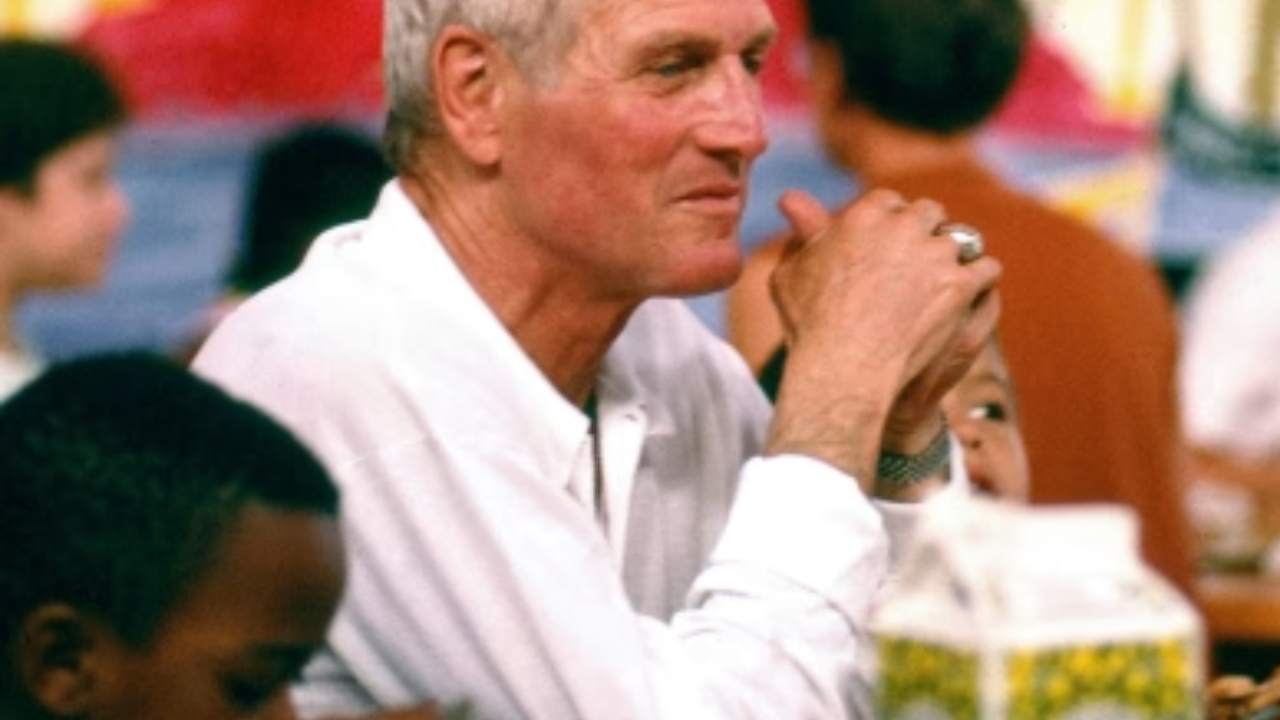
In the winter of 1982, a Hollywood icon and a writer friend bottled an oil-and-vinegar concoction in old wine bottles in a Westport basement, expecting it to be a passing holiday joke that would amuse their neighbors. Instead, Paul Newman and A.E. Hotchner accidentally engineered a structural disruption of the consumer packaged goods industry. Newman's Own did not just sell salad dressing; it invented a permanent commercial mechanism where corporate profitability was legally bound to philanthropy, funneling over $600 million to educational and charitable causes over the subsequent decades. Most business analyses treat this phenomenon as a heartwarming anomaly of celebrity charity, a sweet story about a movie star who happened to make good sauce. That interpretation misses the hard-nosed corporate mechanics, the supply chain vulnerabilities, and the radical legal architecture that actually sustained the enterprise long after Newman’s death.
To understand how a homemade condiment became a financial powerhouse, one must examine the baseline economics of grocery store shelf space in the early 1980s. At the time, supermarket aisles were dominated by entrenched conglomerates like Kraft, Unilever, and Proctor & Gamble. These multi-brand monoliths spent staggering sums on advertising, trade allowances, and slotting fees to buy premium eye-level placement. A new entrant with no manufacturing plants, no national distribution network, and no prior food-industry experience had virtually zero statistical probability of survival. Industry insiders predicted the brand would collapse within six months, dismissed as a vanity project by an actor dabbling in a hobby. Recently making waves in related news: Why Your Local Starbucks Keeps Disappearing and What It Means for SoCal.
Newman and Hotchner avoided conventional corporate failure by exploiting an invisible marketing asset that money cannot buy: absolute, verifiable authenticity. When Newman appeared on television talk shows to promote the dressing, he did not pitch a product feature or a lifestyle aspiration. He stated a radical proposition. Every single penny of profit, after taxes, would go to charity. This was not a corporate social responsibility initiative where a company donated a fractional percentage of net earnings while protecting shareholder dividends. It was an immutable legal structure. Because Newman refused to take a salary or royalties, and because the company was organized to distribute 100% of its post-tax profits, consumers were not merely buying a bottle of vinaigrette; they were participating in an alternative economic transaction where consumption functioned as a direct philanthropic donation.
The operational reality behind the scenes required far more grit than Hollywood glamour. Newman refused to build factories. Instead, he forged white-label manufacturing and distribution partnerships with existing food producers, leveraging their unused capacity. This asset-light model protected Newman's Own from massive capital expenditures, but it introduced severe margin pressures. In the grocery business, margins are notoriously thin, often measured in fractions of a cent per unit. To compete with mass-market brands, Newman's Own had to match quality while operating under a self-imposed handicap: they could not use accumulated profits to buy out competitors or accumulate vast cash reserves for hostile market downturns. Every dollar not spent on operational survival had to leave the balance sheet immediately. More information into this topic are covered by The Wall Street Journal.
Critics often overlooked the underlying genius of the product itself. If the dressing had tasted mediocre, the novelty would have worn off after a single purchase. Repeat business is the lifeblood of fast-moving consumer goods. The original olive oil and vinegar recipe, featuring a sharp punch of garlic and Worcestershire sauce, was genuinely superior to the highly processed, corn-syrup-laden dressings that filled supermarket shelves in 1982. Newman insisted on high-grade ingredients, reasoning that if the project was going to give away its money, it had to respect the consumer enough to deliver a premium product. That uncompromising commitment to quality established a baseline trust that allowed the brand to expand from salad dressing into lemonade, popcorn, salsa, pasta sauce, and eventually dog food and frozen pizza.
As the enterprise scaled into a multi-million-dollar operation, internal friction inevitably surfaced. Scaling a philanthropic enterprise within a ruthlessly competitive capitalist market creates a permanent tension between mission and execution. Corporate buyers at major supermarket chains do not care about charity when negotiating shelf space; they care about velocity, margins, and scan data. Newman's Own had to navigate brutal retail negotiations without compromising its core principle. If a grocery chain demanded lower wholesale prices that threatened the viability of the supply chain, management had to push back with marketing muscle driven entirely by Newman's personal brand equity.
When Paul Newman passed away in 2008, industry skeptics predicted the immediate death of the company. Celebrity-backed brands typically decay rapidly once the celebrity is no longer alive to maintain public visibility. Yet Newman anticipated this vulnerability. Years before his death, he structured the governance of Newman's Own Foundation to ensure perpetual adherence to his original mandate. He appointed a board of directors comprising trusted friends, family members, and industry professionals who understood that the brand was not a personal asset to be inherited, sold off to private equity, or milked for executive bonuses.
This governance model faced its most severe stress test in the decade following his death. The competitive environment shifted dramatically with the rise of direct-to-consumer brands, organic startups, and aggressive private-label supermarket lines. Traditional grocery store middle-market brands found themselves squeezed from both sides. To maintain relevance, Newman's Own had to modernize its packaging, diversify its product lines toward organic and non-GMO certifications, and adapt to digital marketing channels that did not rely on late-night talk show appearances by a charismatic movie star.
The transition from a founder-led phenomenon to an institution required a shift in strategic execution. Professional executives brought in to run the day-to-day operations had to balance corporate modernization with the preservation of Newman's iconoclastic spirit. Critics occasionally pointed out administrative expenses and foundation overhead, arguing that no philanthropic vehicle operates at absolute zero friction. However, comparative analyses against traditional corporate foundations revealed that Newman's Own maintained an unusually high efficiency ratio, funneling the vast majority of gross revenues back into the mission.
The deeper lesson of the Newman's Own experiment challenges standard economic theory regarding the sole fiduciary duty of the corporation. Milton Friedman’s doctrine argued that the only social responsibility of business is to increase its profits for shareholders. Newman inverted that premise. He proved that a commercial entity could utilize the immense wealth-generation engine of the free market while completely eliminating shareholder extraction. The profits did not accumulate in offshore accounts or inflate stock options; they built the Hole in the Wall Gang Camps for critically ill children, funded agricultural research, and supported emergency food relief networks across the globe.
Yet, this model also exposes the structural limitations of relying on benevolent capitalism to solve systemic social failures. A salad dressing company, no matter how successful, cannot replace systemic public funding for education, healthcare, or social infrastructure. The $600 million milestone, while staggering for a single food brand, represents a drop in the ocean compared to the massive capital requirements of modern social welfare. Furthermore, the reliance on consumer spending means that the engine of charity remains tethered to the health of consumer wallets during economic downturns. When inflation spikes and household budgets tighten, premium-priced condiments are often the first items consumers drop from their shopping carts in favor of generic store brands.
The modern incarnation of the brand continues to grapple with these economic realities. Private equity firms routinely circle legacy food brands, offering astronomical valuations for companies with strong brand equity and loyal consumer bases. The fact that Newman's Own remains fiercely independent, locked in by legal covenants that prevent a traditional corporate buyout, stands as a unique achievement in American corporate history. It remains an outlier, a commercial vessel operating inside enemy territory, utilizing the weapons of mass-market capitalism to fund socialist-leaning human services.
Looking closely at the mechanics of the enterprise reveals that its survival was never guaranteed by sentimentality. It survived because it mastered the unglamorous fundamentals of distribution, maintained rigorous quality control, and refused to dilute its core message with corporate double-speak. Paul Newman understood that modern consumers possess a highly sensitive radar for corporate hypocrisy. By removing the profit motive entirely from the ownership equation, he eliminated the skepticism that ruins most celebrity ventures.
The legacy of that Westport basement experiment extends far beyond the monetary figure printed on annual reports. It redefined the boundary between commerce and conscience, demonstrating that a corporation does not need to maximize shareholder value to survive. As the grocery aisles of the future fill with algorithmic brands and synthetic alternatives, the simple glass bottle of oil and vinegar remains a monument to an unlikely proposition. Business can be run for the benefit of strangers, provided the person at the top cares more about the sauce than the stock price.