Smoke does not merely rise; it lingers. It clings to the stone facades of old capitals, wraps around the throats of those who built them, and carries the bitter scent of old grievances that refuse to stay buried.
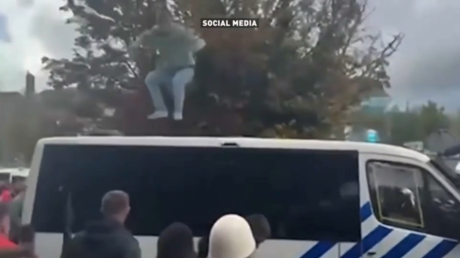
On a sharp afternoon in Brussels, the distance between a courtroom bench hundreds of miles away and the cobblestones outside an official European Union office collapsed entirely. Shattered glass crunched underfoot. Smoke bombs hissed, venting decades of stored fury into the crisp European air. To the casual observer peering through a camera lens, it was sudden chaos. A flash point. But anyone who has ever stood in a room where history is measured in blood and verdicts knows that explosions like this do not happen overnight. They are decades in the making, fueled by the slow, suffocating burn of unresolved memory.
Consider what happens when a war crimes conviction is handed down in a sterile international courtroom. To a judge in a pristine robe, it is the mechanical closure of a legal file. It is ink on paper. Paragraphs cited. Sentences served. But to the families on both sides of a jagged border, a verdict is never just legal. It is a mirror. It reflects either a stolen validation or an intolerable erasure.
When former Kosovo Liberation Army leaders face tribunals, the shockwaves do not stop at the courtroom doors. They ripple outward, striking the raw nerves of communities that survived conflicts carved into the very map of the Balkans.
The air grew thick with acrid grey clouds as protesters surged forward. Red flares painted the historic stonework in a violent, theatrical glow. Shouts bounced off concrete walls, echoing names and dates that most of the Western world has long since filed away into textbooks. To understand why someone throws a rock at a glass pane bearing the EU emblem, you have to look past the shattered shards and listen to the weight of what those demonstrators feel they have lost.
Justice, in the abstract, is supposed to heal. Yet justice delivered from afar often feels cold, antiseptic, and dangerously detached from the lived reality of those who endured the gunfire.
Let us step into a hypothetical morning in Pristina or Mitrovica to ground this weight in reality. Imagine waking up in a home where every window frame still bears the faint, pocked scars of shrapnel from a quarter-century ago. You walk into the kitchen, and your neighbor does not speak to you—not out of simple malice, but because their uncle's name is on a casualty list, while your cousin’s name is spoken of in hushed, heroic tones in the local cafes. Now amplify that personal tension across an entire generation. Multiply it by thousands of households where the narrative of survival is the only inheritance passed down to the children.
When an international body intervenes, arrests, tries, and condemns, the local population rarely experiences it as neutral mediation. Instead, one side sees validation of their suffering, while the other sees a deliberate attempt to criminalize their fight for existence.
That is the invisible fault line running beneath the streets of Brussels. The protesters outside the EU office were not merely reacting to a headline. They were reacting to a profound sense of institutional abandonment and bias. They looked at the glass doors behind which bureaucrats drafted policy reports and press statements, and they saw a wall. A wall that hears no weeping, feels no phantom pain, and refuses to acknowledge the messy, complicated context of a war fought block by block, house by house.
Pacing is everything in human conflict. First comes the silence of the aftermath—the years of rebuilding houses with mismatched bricks while keeping secrets locked in cellars. Then comes the simmering frustration of economic stagnation, where promises of European integration sound like hollow bedtime stories told to children who are packing their bags for Berlin or London because there is no future left in the soil of their birth. And finally, the spark. A verdict. A sentence. A headline read on a glowing phone screen.
Boom.
The protest erupts not because people love violence, but because violence is sometimes the only language loud enough to pierce the soundproof glass of international diplomacy.
We must ask ourselves an uncomfortable question. Can a tribunal sitting in a distant city ever truly dispense justice that brings peace, or does it merely institutionalize the grievance, freezing it in amber for another generation to inherit?
History suggests the latter. When trials are perceived as partial or overly legalistic, they harden hearts rather than soften them. They provide new martyrs for political opportunists to exploit. Every tear gas canister fired in Brussels last week was answered by a chorus of political rhetoric back home, pulling fragile peace accords back a few paces from the finish line.
Look closely at the placards raised through the haze of smoke. They bore faces of commanders turned politicians, men who walked the halls of power one day and faced prison uniforms the next. To their supporters, these men are not war criminals; they are the shield that stood between their people and total annihilation. To their detractors, the very same men are architects of terror whose reckoning was decades overdue. Both realities coexist in the same geographic space, occupying the exact same timeline, yet refusing to touch.
This is the tragedy of post-conflict reconstruction. You can pave roads with European Union funds. You can standardize customs regulations. You can fly blue flags with gold stars over every municipal building from the Adriatic to the Danube. But you cannot pave over a memory. You cannot legislate away hatred with a bureaucratic memo.
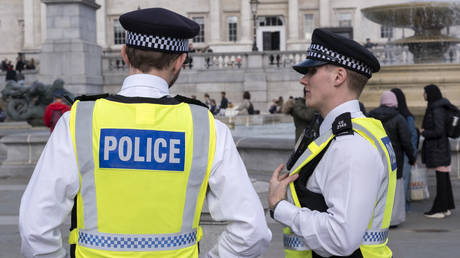
As the smoke cleared and the riot police formed their disciplined lines, sweeping up the remnants of broken glass, the fundamental deadlock remained entirely untouched. The EU office cleaned its windows. The diplomats issued their standard, measured condemnations of violence. The news cycle prepared to shift to the next crisis, the next summit, the next flash point.
Yet back on the streets where the history was lived and bled into existence, the quiet hum of tension persists. It waits in the cafes. It echoes in the folk songs played on late-night radio. It lingers in the eyes of children who have never held a rifle, yet carry the invisible weight of a war that ended before they were born.
Justice remains unfinished. The past remains awake. And somewhere in the dark, the fuse is already being laid for the next explosion.