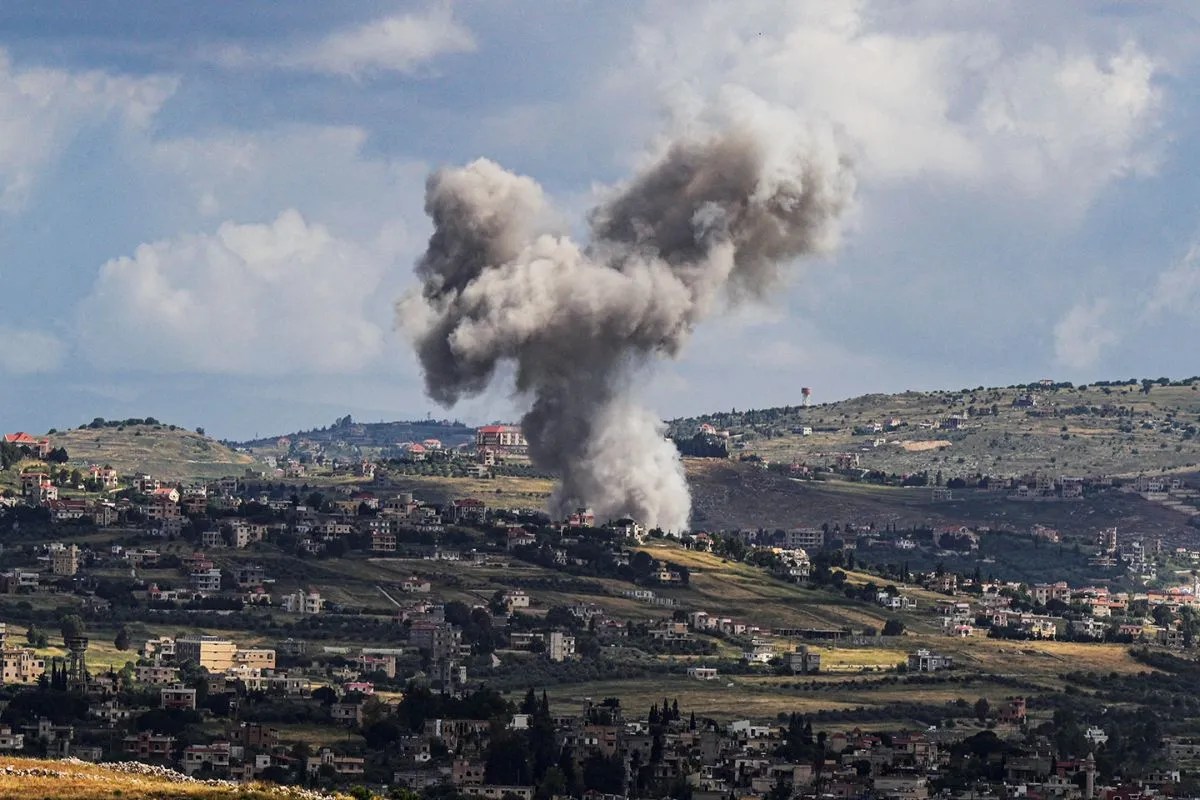
Sirens in the 17th arrondissement do not just wail. They echo. They bounce off Haussmann-era stone, slice through the smell of tear gas and charred rubber, and rattle the windows of apartments where families sit in the dark, watching the streetlights flicker out.
In the summer of 2023, France was on fire. A 17-year-old delivery driver named Nahel Merzouk had been shot and killed by a police officer during a traffic stop in the working-class suburb of Nanterre. Within hours, grief curdled into fury. Flames consumed city halls, looted storefronts, and overturned cars across Nahems home turf, radiating outward until even the cobblestones of central Paris felt the heat.
Across the Atlantic, five thousand miles away, a man in a gilded Palm Beach estate sat in front of a screen.
Donald Trump did not see the nuanced, decades-long friction of French housing projects, the economic decay of outer-ring suburbs, or the fraught relationship between post-colonial identity and strict French secularism. He saw content. He saw an opening. Taking to Truth Social, Trump held up the burning streets of France as a cautionary tale—a direct preview, he argued, of what happens when a nation allows open borders and weak leadership to take root.
Then came the response from the Élysée Palace.
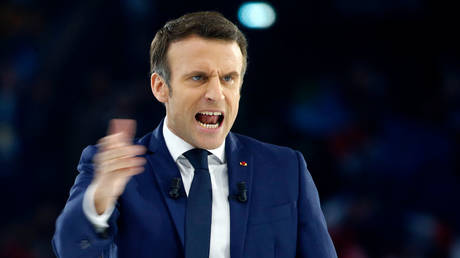
Emmanuel Macron did not just disagree. He pivoted. In a sharp counterstroke, the French President turned the critique back on Trump, warning against foreign leaders using another country's domestic trauma to score cheap political points at home. It was a moment where global diplomacy collapsed into culture-war spectacle, revealing a frightening truth about modern statecraft: local tragedies no longer stay local. They are fuel for an international outrage economy.
The Sound of a City Undone
To understand why Macrons pushback against Trump was so sharp, you have to understand the sheer pressure inside France that week.
Imagine standing on a balcony in Saint-Denis as night falls. The air is thick with humidity and the acrid tang of burning plastic. Down below, young men—some barely in their teens—dart through alleyways, their faces covered by black neck gaiters. Firefighters step over shattered glass, their hoses snaking through streets that usually echo with the laughter of bistro patrons.
For Macron, this was not an abstract political debate. It was an existential threat to the Republic. Over 45,000 police officers were deployed across the nation. More than 3,000 people were arrested in less than a week. The economic damage topped a billion euros.
When a country is tearing itself apart at the seams, its leader is playing a game of high-stakes domestic chess. Every statement, every public appearance, every deployment of armored vehicles is calibrated to lower the temperature.
Enter Donald Trump with a blowtorch.
Trump’s commentary was simple, sharp, and designed for maximum viral spread. He pointed at the smoke over Paris and told his followers: This is what happens when you lose control. He framed the riots as a direct failure of Western European immigration policies, wrapping French pain into his own campaign narrative for the 2024 U.S. presidential election.
It was classic political opportunism, but it hit a raw nerve in Paris.
The Invisible Stakes of Digital Sovereignty
Why should a French president care what a former American president posts on an alternative social network?
Because in the 21st century, narrative is power.
When a foreign political figure projects a simplified, weaponized image of your national crisis to millions of viewers, they aren't just commenting. They are actively shaping global perception, market confidence, and diplomatic leverage.
Macron’s response was calculated to draw a line in the sand. He implicitly called out the habit of foreign politicians looking through a telescope at complex European sociology and reducing it to a 280-character campaign slogan.
Consider how easily the truth gets lost in this exchange. The riots following Nahel's death were complex. They were about race, policing, suburban neglect, systemic poverty, and youth disillusionment. They were deeply, uniquely French—born out of the specific tension between the French ideal of universal citizen equality and the lived reality of marginalized youth in the banlieues.
Yet, with a few posts from Florida, that complex human tragedy was imported into the American political machine, stripped of its context, and re-exported as a generic horror story about immigration.
This is the hidden tax of living in an hyper-connected world. Local pain becomes global spectacle. The people suffering on the ground—the store owners who lost their livelihoods, the families frightened in their homes, the young people desperate to be heard—become backdrop extras in someone else's political commercial.
Two Visions of Leadership in a Fractured World
The clash between Macron and Trump over the French riots offers a stark contrast in modern political theater.
On one side sits Trump’s strategy: diagnostic reductionism. Take a complex crisis, strip away the nuance, identify a visible scapegoat, and use it to validate a pre-existing worldview. It is remarkably effective because it requires zero cognitive heavy lifting from the audience. It trades in fear and certainty.
On the other side sits Macron’s strategy: managerial defense. Try to contain the fire domestically while fiercely protecting the national brand internationally. But Macron faces his own hypocrisy. While scolding foreign leaders for misinterpreting French violence, his government struggled to address the deep, systemic fractures within French police forces and suburban integration that sparked the violence in the first place.
Neither leader could fully control the narrative because the internet operates on friction, not truth.
The real victims of this political crossfire are the people who actually live in the suburbs of Paris, Marseille, and Lyon. For a week, their neighborhoods were turned into a battleground, and then into a talking point, before the world's attention simply drifted to the next trending disaster.
The Ash on the Cobblestones
By the time the smoke cleared and the street sweepers moved into Nanterre, the political circus had moved on. Trump shifted to his next rally. Macron turned his attention back to economic reforms and European defense policy.
But if you walk through those suburbs today, the scorch marks are still visible on the concrete. The glass has been replaced, but the quiet tension remains, hovering over the playgrounds and bus stops like a low fog.
Politics at the highest level has become an arena of echoes, where a tragedy in a French alleyway can be weaponized in a Florida ballroom within minutes. We are left watching leaders trade barbs across oceans while the real work—the messy, unglamorous, human work of repairing broken communities—happens slowly, out of sight, long after the cameras have turned away.
The fires in France eventually burned out. The noise on our screens never does.