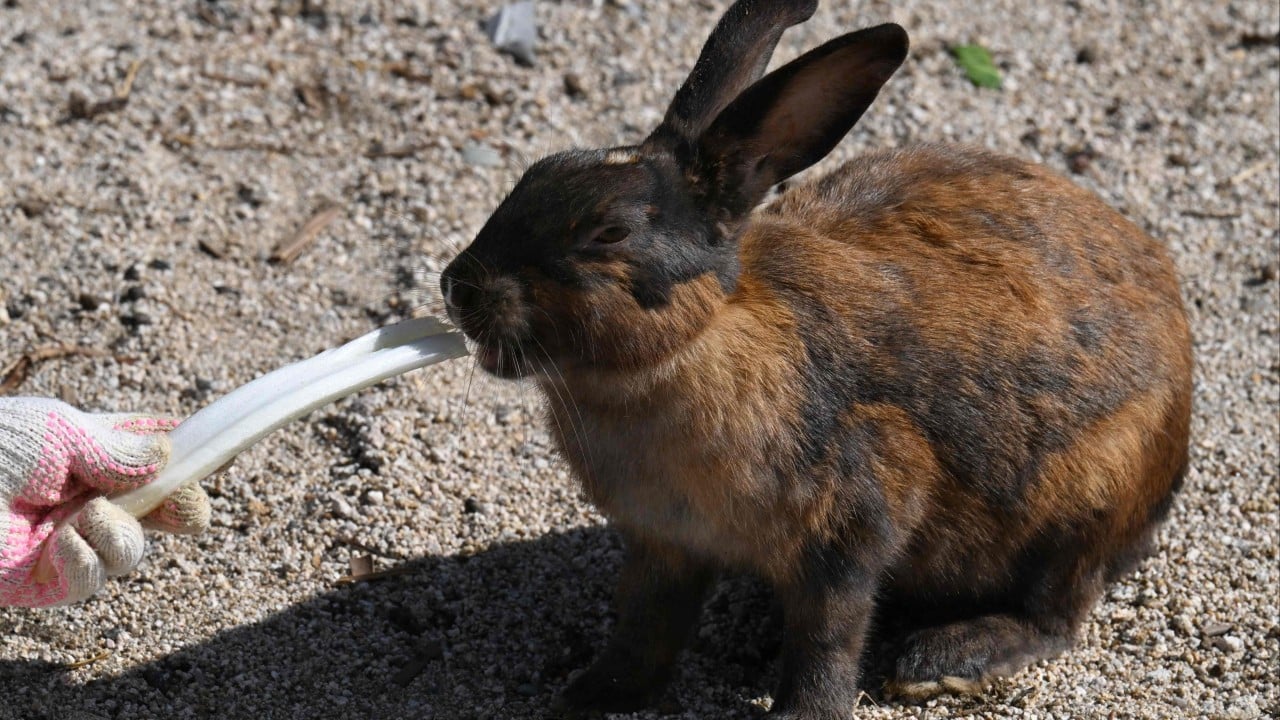
Okunoshima operates as a dual-purpose destination where the physical remnants of a covert Imperial Japanese chemical weapons facility coexist with an unconstrained, hyper-dense population of feral European rabbits. Standard travel journalism treats this juxtaposition as a quirky viral anomaly, reducing a complex intersection of military history, ecological mismanagement, and behavioral economics to a superficial contrast between "fluffy bunnies" and "dark wartime past." That framing obscures the operational mechanics driving the island's modern tourism model. Understanding Okunoshima requires dissecting how emotional dissonance generates viral demand, how supplemental feeding distorts wildlife population dynamics, and why the current visitor management architecture threatens both the historical infrastructure and the animal population it monetizes.
The Mechanics of Emotional Dissonance in Dark Tourism
Conventional tourism marketing relies on thematic consistency; destinations project a singular brand identity—relaxation, adventure, or solemn remembrance. Okunoshima succeeds precisely because it violates this rule through cognitive contrast. Located in the Seto Inland Sea within Hiroshima Prefecture, the 70-hectare island functions simultaneously as a high-stimulation wildlife attraction and a site of industrial atrocity.
From 1929 to 1945, the Imperial Japanese Army operated the Tokyo Second Army Arsenal's Okunoshima branch on this site, manufacturing over six kilotons of chemical agents, including mustard gas, lewisite, tear gas, and cyanogen chloride. The facility was deliberately erased from official maps to maintain operational security. Today, the reinforced concrete shells of power plants, poison gas storehouses, and munitions bunkers remain standing in various states of structural decay.
Visitors do not arrive primarily to study twentieth-century chemical warfare logistics. Rather, they are drawn by the immediate, tactile gratification of interacting with hundreds of unafraid rabbits—an experience engineered for visual social media consumption. Once on the island, however, the spatial layout forces an unavoidable confrontation with the physical ruins. A tourist pursuing a rabbit along a paved path inevitably walks past the ventilation shafts of a mustard gas storage facility or the crumbling facade of the former laboratory.
This creates a self-reinforcing attentional loop:
- The Acquisition Hook: Viral imagery of rabbits swarming visitors lowers the psychological barrier to entry, attracting mainstream demographics who would typically avoid dark tourism sites like Hiroshima's Peace Memorial Park or chemical warfare museums.
- The Friction Event: The stark visual interruption of brutalist military ruins triggers cognitive dissonance, prompting visitors to photograph the contrast and research the underlying history.
- The Retention Mechanism: The Okunoshima Poison Gas Museum, opened in 1988, captures a subset of this traffic, converting passive wildlife tourists into active consumers of historical documentation regarding the human cost of the facility—both the Chinese combatants and civilians exposed to the weapons and the Japanese factory workers who suffered chronic respiratory illnesses and cancers.
The island's tourism economy therefore relies on subsidized dark tourism. The rabbits act as a loss-leading customer acquisition channel that funds ferry infrastructure, hotel operations (specifically the Kyukamura Okunoshima resort), and regional visibility for a historical site that would otherwise struggle to maintain high annual footfall.
Population Dynamics and the Carrying Capacity Distortion
A persistent myth circulated by shallow travel coverage claims the modern rabbit population descends directly from test subjects released when the chemical weapons plant closed in 1945. Historical and biological evidence contradicts this narrative. Following the Japanese surrender, Allied occupation forces systematically destroyed the chemical stockpiles and sanitized the facility, leaving no viable population of laboratory animals. The current population traces its lineage to eight domestic European rabbits (Oryctolagus cuniculus) released by a group of local schoolchildren in 1971.
The explosion from eight founding individuals to an estimated population fluctuating between 500 and over 1,000 animals illustrates classic exponential growth under artificial resource subsidization. In a closed island ecosystem without apex terrestrial predators—dogs and cats are strictly banned from Okunoshima to protect the rabbits—population size is normally constrained by two natural limiting factors: caloric availability and seasonal water scarcity.
Tourism has systematically dismantled both constraints.
- Caloric Subsidization: Visitors arrive on ferries from Tadanoumi Port carrying bags of commercial rabbit pellets, cabbage, and carrots. This constant influx of high-calorie, low-effort nutrition decouples the rabbits' reproductive output from the island's natural vegetative carrying capacity.
- Reproductive Acceleration: European rabbits possess induced ovulation and can conceive immediately after giving birth, producing multiple litters per year. When nutritional stress is removed via human feeding, juvenile mortality drops precipitously, accelerating population density far beyond what the 70-hectare landmass can naturally sustain.
- Behavioral Conditioning: Generations of direct hand-feeding have extinguished the species' natural flight response. The rabbits exhibit hyper-social begging behaviors, clustering tightly around ferry terminals and pedestrian walkways whenever boats dock.
This artificial equilibrium creates severe structural vulnerabilities. Because the population is sustained by tourist footfall rather than native flora, the ecosystem suffers from extreme demand elasticity. When ferry traffic drops—whether due to seasonal weather shifts, typhoon disruptions, or macroeconomic travel freezes—the caloric supply vanishes overnight. Without human-provided produce and pellets, the island's stripped vegetation cannot support hundreds of lagomorphs, triggering rapid starvation events, territorial aggression, and heightened susceptibility to infectious disease outbreaks such as rabbit hemorrhagic disease.
Infrastructure Decay and Liability Bottlenecks
Managing an active wildlife attraction inside a decommissioned military-industrial zone introduces severe operational friction. The Japanese Ministry of the Environment, which administers Okunoshima as part of the Setonaikai National Park, faces competing mandates: preserving historical ruins, ensuring public safety, and managing an invasive, overpopulated mammal species.
The primary physical bottleneck is structural degradation. Many of the wartime buildings were constructed rapidly using unreinforced or minimally reinforced concrete exposed to decades of maritime salt spray and root intrusion. Several ruins—most notably the massive power plant structure—are fenced off due to the risk of falling masonry. Yet the rabbits routinely burrow beneath perimeter barriers and shelter inside the unstable structures, incentivizing visitors to breach safety perimeters for photographs.
Simultaneously, the uncontrolled feeding regime degrades the island's sanitation and local ecology:
- Vector Attraction: Uneaten cabbage and pellets left along trails rot rapidly in the humid Seto Inland Sea climate, attracting crows, wild boars (which occasionally swim across the narrow channel from the mainland), and rodents.
- Soil Erosion and Burrowing: High-density warren construction undermines trail foundations and accelerates erosion around the foundations of historical monuments, compromising the structural integrity of the very ruins that anchor the island's educational value.
- Nutritional Malnutrition: Tourists overwhelmingly feed the rabbits high-sugar vegetables (carrots) and water-heavy leafy greens (iceberg lettuce or excess cabbage) rather than the high-fiber timothy hay required for proper lagomorph dental wear and gastrointestinal motility. This results in widespread chronic gastrointestinal stasis and malocclusion among the population, hidden behind the visual appearance of abundance.
Separating Historical Fact from Tourist Folklore
Analytical rigor requires isolating verified operational history from the speculative narratives that proliferate across travel blogs and social media captions.
Verified Historical Realities:
- Between 1929 and 1945, Okunoshima produced five primary classes of chemical agents, with peak monthly production reaching hundreds of tons during the Second Sino-Japanese War.
- The facility employed thousands of workers, including mobilized students during the final years of the war, under strict secrecy protocols enforced by the Kempeitai (military police).
- Post-war decontamination was conducted jointly by Allied forces and Japanese personnel, resulting in the dumping, burning, or burial of chemical munitions—an operation that left localized soil and groundwater contamination issues requiring ongoing monitoring well into the late twentieth century.
- The modern rabbit population is feral domestic stock introduced in 1971, entirely unrelated to wartime biological or chemical testing.
Educated Hypotheses and Unverified Claims:
- Exact Population Counts: No continuous, chipped census tracks every rabbit on the island. Published figures ranging from 500 to 1,000 individuals represent visual transect estimates that fluctuate violently based on season and recent tourist volume.
- Long-Term Genetic Bottlenecks: Given that the entire population descends from a founding group of eight animals in 1971, the island's rabbits almost certainly exhibit reduced genetic diversity and elevated homozygosity, though comprehensive genomic sequencing of the population remains limited in public literature.
Operational Interventions for Sustainable Destination Management
Left uncorrected, Okunoshima's current trajectory leads toward a predictable ecological and infrastructural collapse: unchecked feeding will drive periodic mass-starvation cycles during low-tourism months, while burrowing and foot traffic accelerate the loss of irreplaceable wartime architecture. Park administrators and regional tourism authorities must transition from passive accommodation to active capacity management through four concrete interventions.
First, eliminate on-site and port-side sales of loose produce, replacing them with regulated, metered pellet dispensing. Tadanoumi Port vendors and the island's resort currently profit from selling bags of rabbit food without volume caps. Authorities should restrict food distribution to high-fiber, nutritionally balanced hay pellets dispensed via timed, capacity-capped vending machines. Once the daily caloric quota calculated by wildlife veterinarians is reached, dispensing stops automatically. This caps artificial population growth while eliminating gastrointestinal disease caused by improper tourist diets.
Second, establish strict feeding zones segregated from historical ruins. Feeding must be prohibited within 50 meters of any wartime structure, memorial, or unstable cliff edge. Concentrating food availability in designated, paved grazing zones away from the power plant and gas storehouses will naturally migrate rabbit warrens away from fragile masonry foundations, reducing structural erosion and eliminating the incentive for tourists to cross safety barriers.
Third, implement a non-lethal fertility control program to stabilize population density. Because lethal culling would trigger catastrophic public backlash and destroy the island's brand equity, wildlife managers should deploy immunocontraceptive vaccines or targeted surgical sterilization for juvenile females captured during routine health sweeps. Stabilizing the population at a baseline of 300 to 400 individuals aligns animal density with the island's natural vegetative recovery rate, insulating the population against sudden drops in ferry traffic.
Fourth, integrate mandatory historical orientation into the ferry transit window. The 15-minute ferry crossing from Tadanoumi represents an underutilized operational touchpoint. Installing concise, multilingual visual briefings aboard the vessels—explaining both the chemical weapons history of the Tokyo Second Army Arsenal and the strict rules governing wildlife interaction—transforms passive tourists into informed visitors before they disembark, ensuring that the island's viral wildlife draw actively reinforces rather than obscures its historical mandate.