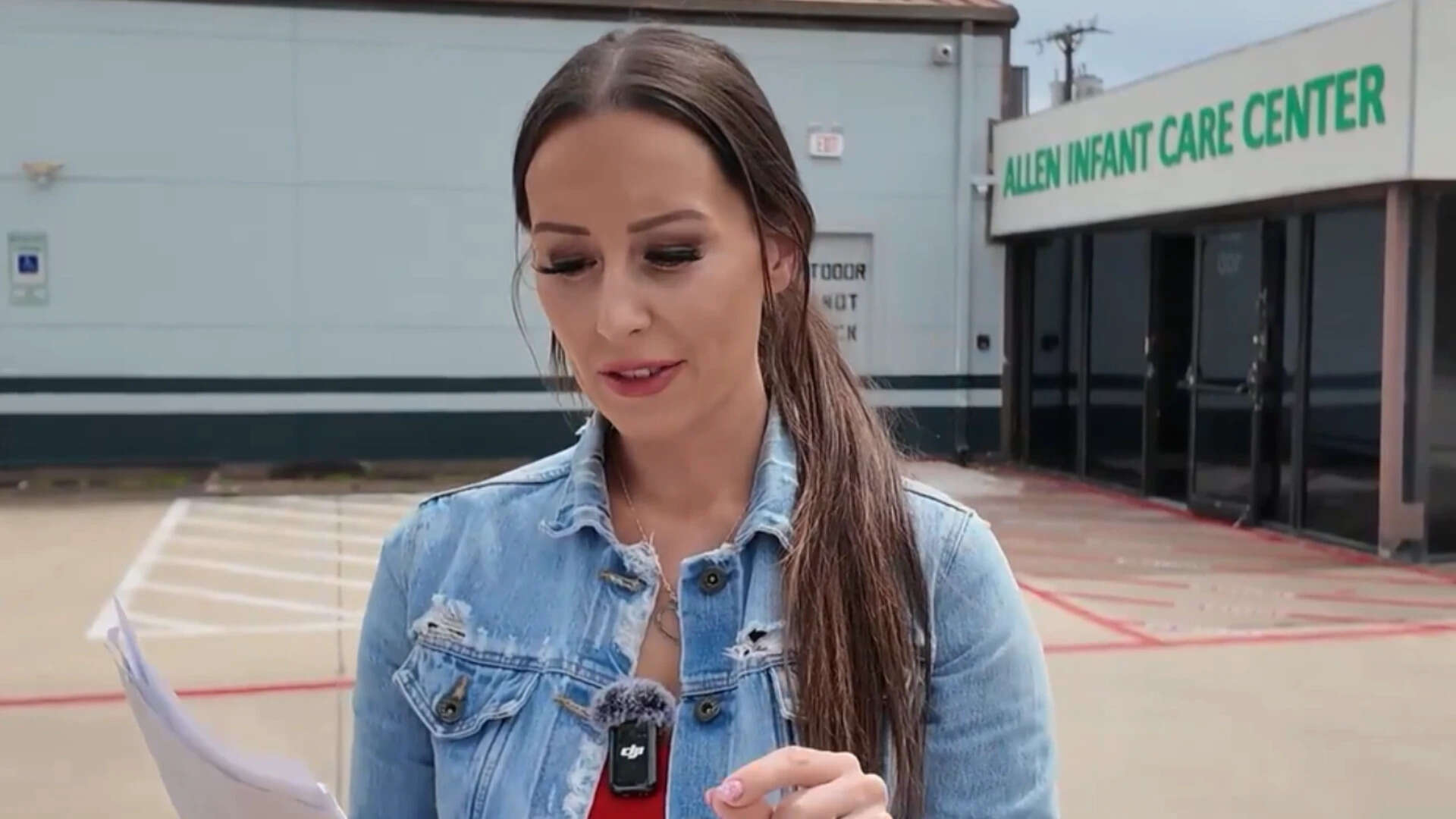
The smell of a daycare center is universal. It is a thick, sweet haze of apple juice, industrial-grade disinfectant, and the faint, dusty scent of construction paper. In a small town in North Texas, this scent was meant to be the backdrop of safety. Parents dropped off their toddlers, trusting that the adults inside were focused on nap times and developmental milestones.
But behind the colorful murals and the plastic bins of building blocks, a different kind of construction was taking place. This wasn't about building a child’s future. It was about building a fraudulent paper trail that stretched halfway across the world.
Federal investigators recently pulled back the curtain on what they describe as a calculated H-1B visa scam operated out of a Texas childcare facility. On the surface, the business claimed it needed highly specialized, world-class talent to function. On paper, they were hiring professionals with advanced degrees to fill roles that sounded like they belonged in a Silicon Valley boardroom or a high-end research lab.
In reality, the government alleges these "specialists" were being funneled into roles that had nothing to do with their qualifications. The stakes were invisible to the parents walking through the front door, but for the American immigration system, the cost was a total erosion of trust.
The Architecture of a Ghost Hire
The H-1B visa is designed for "specialty occupations." Think of a structural engineer, a cardiovascular surgeon, or a software architect. To secure one, an employer must prove that the job requires highly specialized knowledge and that a qualified U.S. worker isn't available to fill the seat. It is a competitive, high-stakes lottery that thousands of legitimate businesses rely on to stay ahead in the global market.
The Texas daycare operators allegedly saw this system not as a tool for growth, but as a loophole to be exploited.
Consider a hypothetical candidate—let’s call her Anika. Anika has a Master’s degree in Business Analytics. She is desperate to stay in the United States and build a career. The daycare offers her a lifeline. They file a petition with U.S. Citizenship and Immigration Services (USCIS) claiming they need a "Market Research Analyst" to study the demographics of toddler enrollment and optimize their business model.
It sounds sophisticated. It meets the technical criteria for the visa. But once the ink is dry and the visa is stamped, Anika isn't analyzing data sets. She is wiping down tables. She is supervising playground time. She is performing tasks that, while noble and necessary, do not require a Master’s degree or a specialized work visa.
The fraud creates a ripple effect. By claiming a need for a specialist, the employer often avoids paying the true market wage for a specialized role while simultaneously bypassing the local labor pool for general staff. It is a double-sided coin of exploitation.
Why the Disconnect Matters
It is easy to look at this and see a victimless crime. A business gets a worker; a worker gets a visa. But the "invisible stakes" are found in the people who are pushed out of the frame.
Every time a visa is secured through a fraudulent petition, a legitimate company loses its chance. Imagine a renewable energy startup in Austin trying to hire a chemist who could help stabilize a new type of battery. They enter the H-1B lottery and lose. Their project stalls. Their growth slows. They played by the rules, but the rules were rigged by a daycare center that wanted cheap labor under the guise of "market research."
Then there is the human cost to the visa holders themselves. When your legal status is tied to an employer who is breaking the law, you are not an employee. You are a hostage.
The power dynamic is suffocating. If the worker complains about the bait-and-switch, the employer can threaten to withdraw the visa sponsorship. This leads to a shadow economy where professionals are underpaid, overworked, and forced to live in a state of constant, low-level terror. They are one anonymous tip away from deportation, tied to a lie they didn't necessarily want to tell but felt they had to accept to survive.
The Paper Trail and the Breaking Point
The Department of Labor and Homeland Security don't usually knock on the door of a daycare because of a messy cubby or a late lunch. They arrive when the math stops making sense.
Investigators look for the "prevailed wage" violations. If a company claims they are hiring a high-level manager but pays them the salary of an entry-level clerk, the red flags go up. In the Texas case, the disconnect between the job titles and the actual day-to-day operations of the facility was too wide to ignore.
The deception requires a massive amount of paperwork. You have to create fake job descriptions. You have to file Labor Condition Applications that swear, under penalty of perjury, that the worker will be doing specific, high-level tasks. You have to maintain a facade for the inspectors.
But facades are brittle.
The crack usually starts with an audit or an interview. A government agent asks a "Marketing Specialist" to explain their latest campaign, and the worker can’t answer because they spent the last six months teaching the alphabet to four-year-olds. The silence in that room is where the scam ends.
A System Under Pressure
The H-1B program is often criticized from both sides of the political aisle, but the Texas daycare scandal highlights a specific kind of rot. It isn't about the policy itself, but about the ease with which the "human element" can be manipulated for profit.
When we talk about immigration fraud, we often speak in statistics—thousands of visas, millions of dollars, hundreds of violations. We lose the reality of the situation. We lose the image of the qualified American worker who wondered why they never got a callback for that local job. We lose the image of the immigrant professional who is now facing a lifetime ban from the country because they were part of a scheme they couldn't control.
The daycare in Texas was a place of primary colors and laughter, but the business model was gray and silent. It relied on the hope that no one would look too closely at the person standing at the back of the room. It relied on the assumption that as long as the kids were happy, the paperwork didn't matter.
But the paperwork is the foundation of the system. When you use a specialized visa to fill a general role, you aren't just "hacking" the system. You are stealing a seat at the table from someone else and turning a human being into a pawn.
The investigation into the facility serves as a grim reminder that the most sophisticated scams don't always happen in high-rise buildings. Sometimes, they happen right down the street, hidden in plain sight behind a fence and a pile of toys.
The children inside will grow up and learn that rules exist for a reason. They will learn that you cannot build something sturdy on a foundation of lies. It’s a lesson the adults running the building seem to have forgotten.
The light in the playroom eventually goes out, the parents take their children home, and the investigators pack up their files. What remains is a sobering truth: a visa is more than just a piece of paper. It is a promise made to the public and to the person holding it. When that promise is broken, the whole house of cards begins to tremble.


