The Phantom Metric of Drone Warfare
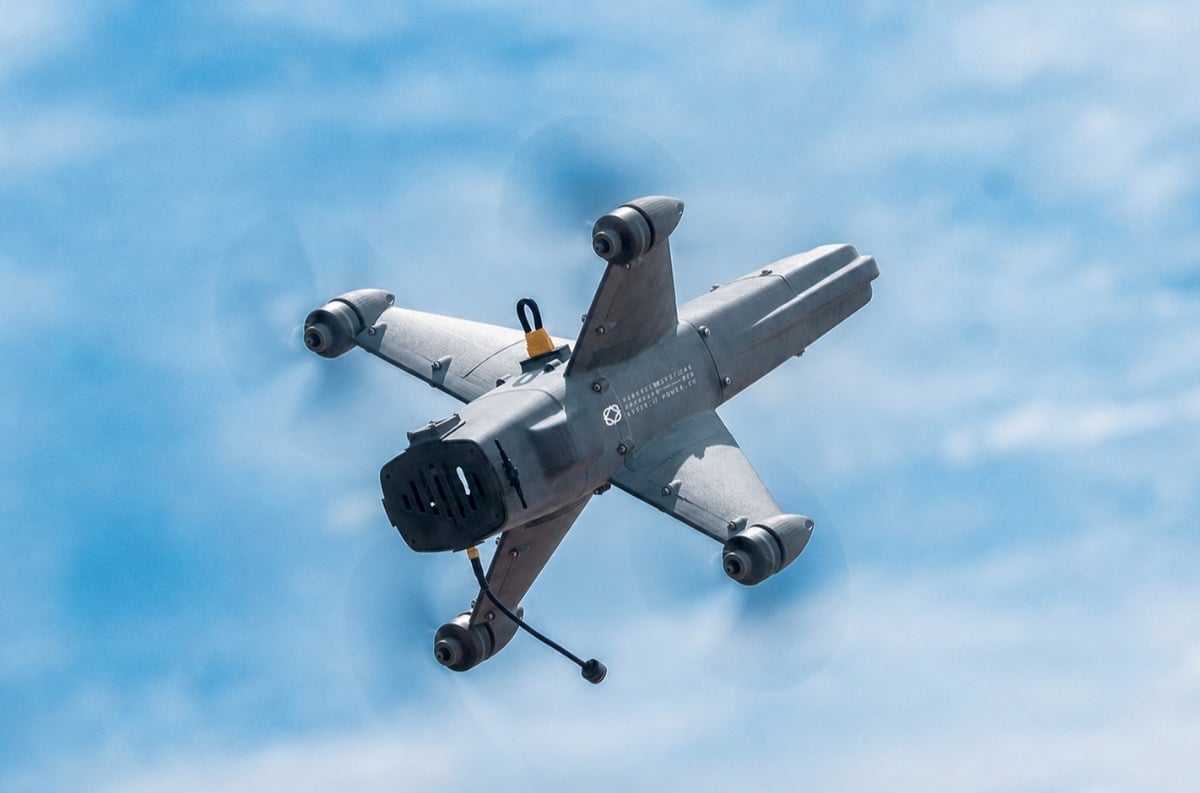
A prominent American aerospace startup is currently soaking up defense tech headlines, boasting that its "Guardian" autonomous drone has racked up thousands of successful intercepts in test environments. The tech press is doing what it always does: swooning over raw numbers, treating a closed-loop test flight like it is the Battle of Britain, and pretending software autonomy has officially solved the hostile drone crisis.
It is a multi-million-dollar illusion.
In the defense sector, we have a bad habit of falling in love with synthetic metrics. Counting "intercepts" in a controlled domestic training range to prove combat readiness is like a boxer punching a heavy bag 5,000 times and claiming they are ready to dethrone the heavyweight champion. The heavy bag does not punch back.
The defense establishment is asking the wrong question. They want to know, "How many drones can our autonomous interceptor catch?" The question they should be asking is, "What happens to this delicate autonomous architecture when it encounters an actively contested, electronically degraded battlespace?"
I have spent years watching defense contractors burn through capital trying to automate kinetic solutions for electronic problems. The hard truth nobody wants to admit is that high-volume, low-cost drone threats cannot be defeated by throwing highly sophisticated, exquisite autonomous aircraft into the sky every time a radar blip appears. The math does not work. The physics do not work. The economics are a disaster.
The Controlled Range Lie
Let us look closely at how these thousands of "intercepts" actually happen.
In a standard test configuration, an interceptor drone is launched against a cooperative or semi-cooperative target. The telemetry is clean. The GPS signal is pristine. The radio frequency environment is as quiet as a church on Monday morning. The target drone flies a predictable, non-evasive profile.
Under these pristine conditions, an optical or radar tracking system locks on, the onboard guidance software calculates an intercept vector, and the drone hits its target. Do that ten times, it is a successful demo. Do it a thousand times, and you have a marketing campaign capable of separating venture capitalists and Pentagon procurement officers from their money.
Now, look at the reality of modern conflict zones like Ukraine or the Red Sea.
The Electronic Warfare Wall
The sky is not an open highway; it is an invisible soup of high-powered jamming, spoofing, and electronic degradation. Russian systems like the Krasukha-4 or Pole-21 do not just break a drone's GPS connection; they flood the civilian and military bands with high-power noise, forcing autonomous systems to rely entirely on inertial navigation or local optical tracking.
When a drone loses its primary data link and GPS, its "thousands of successful intercepts" metric plummets to zero. If the software cannot verify what it is looking at because its localized sensors are being blinded by directed energy or decoy chaff, the interceptor becomes an expensive piece of flying debris.
The Asymmetric Cost Curve
The defense industry loves to build complex solutions for simple problems. If an adversary launches a flock of mass-produced, commercial-off-the-shelf FPV (First-Person View) drones costing $500 each, and your response is to launch a sophisticated, autonomous, carbon-fiber interceptor that costs $40,000 to manufacture and maintain, you are losing the war of attrition before a single shot is fired.
| Metric | Threat Drone (FPV/Shahed Type) | Autonomous Interceptor (e.g., Guardian Class) |
|---|---|---|
| Unit Cost | $500 - $20,000 | $40,000 - $100,000+ |
| Production Scale | Tens of thousands per month | Hundreds per year (boutique aerospace) |
| Grounded Infrastructure | A plastic workbench and a soldering iron | Cleanrooms, specialized tech support, proprietary launch rails |
| Failure Tolerance | 100% acceptable loss | High operational and financial penalty |
You cannot scale a boutique aerospace startup fast enough to match the output of an industrial-scale manufacturing plant pumping out cheap quadcopters. The startup's "thousands of intercepts" are achieved using a handful of reusable or carefully recovered prototypes. In actual combat, you do not get to ask the enemy for a timeout so you can go retrieve your interceptor from a field, swap the battery, and reset the software calibration.
Dismantling the "People Also Ask" Delusions
When military tech observers try to understand this space, their assumptions are fundamentally flawed. Let us correct the record on how counter-drone mechanics actually operate.
Flawed Assumption: "Autonomous drones are better than human operators because they have faster reaction times."
This completely misunderstands the nature of air defense. Speed of calculation is irrelevant if the calculation is based on corrupted data. A human operator flying an FPV interceptor via radio control can look at a video feed, recognize that a solar reflection or a flock of birds is mimicking a threat, and adjust course.
An algorithm operating under strict rulesets in a jammed environment will either register a false positive and waste its kinetic payload, or experience an algorithmic freeze when reality does not match its training dataset. Autonomy is highly efficient in structured environments. War is entirely unstructured.
Flawed Assumption: "Kinetic interception is the safest way to neutralize a drone threat over populated or sensitive areas."
Think about the physics of a mid-air collision. When an interceptor strikes a target drone at 100 miles per hour, you do not magically vaporize the threat. You create a secondary debris field. If the target drone is carrying a high-explosive payload or a chemical agent, that payload is now falling unpredictably over whatever happens to be directly below the collision point.
True defense requires neutralization before the threat reaches the perimeter, or soft-kill defeat mechanisms that force the asset down safely. Smashing things out of the air with another flying object is a crude, desperate measure, not a sophisticated doctrine.
The Technical Reality of Autonomy at the Edge
To understand why these startup claims are misleading, we have to look at computational limitations at the edge.
To track and intercept a fast-moving, agile target without a constant link to a ground control station, a drone must execute complex computer vision algorithms locally. This requires significant onboard processing power—typically high-draw GPU chips.
- Weight Constraints: More processing power means heavier chips and massive cooling requirements.
- Battery Depletion: Heavy processing drains the battery at an exponential rate, reducing loiter time from hours to mere minutes.
- The Slew-Rate Problem: If a threat drone executes a hard, non-linear maneuver, the interceptor’s optical camera must track it, pass that data to the processor, calculate the new flight path, and actuate the motors. In the time that loop takes (latency), the target has already moved outside the interceptor's kinetic envelope.
Imagine a scenario where an adversary flies twenty low-cost drones in a loose, shifting swarm formation. The interceptor's onboard computer vision system experiences an algorithmic phenomenon known as target sorting chaos. It repeatedly switches its primary target focus as individual drones cross paths in its field of view, causing the interceptor to vacillate wildly between targets until its battery runs dry or it crashes into the ground.
Stop Funding Flying Swatters
The fix for the drone threat is not building a better flying flyswatter.
The path forward requires an uncomfortable pivot away from boutique, high-margin aerospace hardware toward unsexy, brute-force infrastructure. If you want to deny the sky to an enemy, you do not chase their assets individually with your own expensive assets. You dominate the electromagnetic spectrum. You deploy layered high-power microwave (HPM) systems that fry incoming electronics across an entire sector for pennies per shot. You utilize automated, low-cost kinetic netting, and you integrate hard-kill gun systems like modernized Flak or automated CIWS that rely on cheap, non-jammable lead rather than delicate carbon-fiber wings and proprietary AI models.
The aerospace startup bragging about thousands of intercepts wants you to buy into a clean, digitized vision of war where pristine algorithms cleanly pluck bad drones out of the blue sky. It is a comforting thought. It is great for a quarterly pitch deck to investors.
But when the sky turns gray, the radios go silent, and hundreds of cheap, dirty, jammable weapons come screaming over the horizon at once, those thousands of range intercepts will not mean a damn thing. Stop buying the marketing hype and start looking at the logistics.
:max_bytes(150000):strip_icc()/GettyImages-2192014718-e18efe654b3f4b769a45c8692acc5f39.jpg)