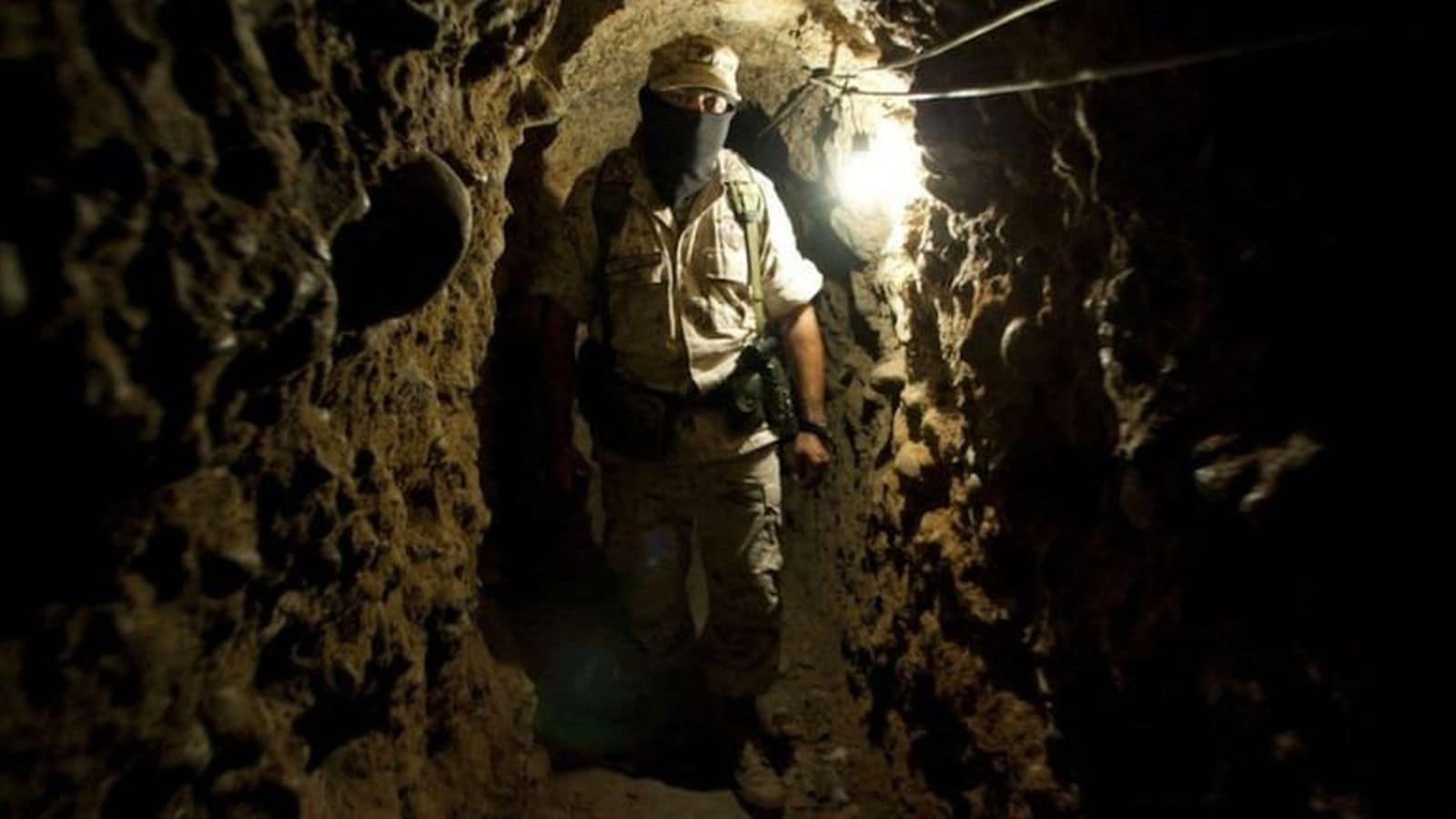
Local police forces are scrambling to cameras again. The standard press release went out last week, dripping with the usual bureaucratic panic: men are emerging from city manholes, the public is in "extreme danger," and the subterranean world is a toxic wasteland ready to swallow you whole.
It makes for great local news theater. It keeps the public compliant, frightened, and looking the other way.
But the mainstream narrative surrounding urban exploration (UrbEx) in our civil infrastructure is fundamentally lazy. The local authorities treat subterranean entry as a bizarre, suicidal hobby practiced exclusively by vandals. They focus entirely on the sensationalism of the break-in while completely ignoring the real, systemic vulnerability these incidents expose.
When untrained citizens can casually navigate a city’s primary utility arteries, the problem isn’t just trespassing. The problem is that our critical infrastructure security is an absolute joke, and the panic over "danger" is a convenient smokescreen to hide decades of municipal neglect.
The Illusion of Subterranean Security
Municipalities love to project an image of Fort Knox-level security over our water, power, and transit grids. They tell you everything is monitored, sensor-mapped, and locked down.
It is a lie.
Anyone who has worked in civil engineering or industrial security knows the truth: the barrier between the average street corner and a city's vital organs is often nothing more than a 150-pound piece of un-keyed cast iron. If you can lift it, you are in.
The standard media reaction is to scream about how dangerous the sewers are. They cite hydrogen sulfide gas ($H_2S$), sudden flash floods, and structural collapses. Yes, those risks are real. The physics of confined spaces do not care about your adrenaline rush. If $H_2S$ reaches 500 parts per million, you lose consciousness in seconds.
But by focusing entirely on the danger to the intruder, the media completely misses the danger to the system.
If a group of amateur hobbyists can wander through miles of municipal conduits unhindered, take photos, and pop back up onto a public sidewalk, who else can do it? Our cities are functioning on security theatre designed in the 19th century. We are applying Analog-era physical security to a world facing sophisticated, asymmetrical threats.
The Hypocrisy of the "Extreme Danger" Warning
Let us dismantle the premise of the standard police warning.
"The public must stay out of these areas for their own safety. The air quality is lethal, and you will get trapped."
If these spaces are so universally lethal, why are groups of untrained civilians consistently walking through them and walking back out with high-definition video footage?
The answer requires some nuance. The underground environment is highly variable. Professional utility workers utilize calibrated multi-gas detectors to check for lower explosive limits (LEL), oxygen deficiency, and carbon monoxide. The "lazy consensus" says the underground is a uniform death trap. The reality is that it is a complex, poorly mapped network where some zones are perfectly clear due to natural ventilation, while others are fatal.
By crying wolf with a blanket statement that every hole in the ground is an instant death sentence, authorities lose credibility with the exact demographic they are trying to deter. Smart, technically minded individuals look at the hyperbole, realize the police are exaggerating for effect, and choose to ignore the warnings entirely.
Instead of treating the public like children, municipalities need to admit their own failure: they have lost situational awareness of their own assets.
The Real Threat is Asset Blindness
I have consulted on industrial risk assessments where multi-billion-dollar utility networks literally did not possess accurate blueprints of their own subterranean layouts. Over a century of ad-hoc repairs, forgotten expansions, and retired transit lines have created a chaotic labyrinth.
This is what urban explorers actually exploit: municipal ignorance.
Consider a thought experiment. Imagine a scenario where a major metropolitan city decides to audit its physical access points. They dispatch teams to log every manhole, utility vault, and drainage outfall. What do they find? Thousands of unmapped access portals, rusted locks that have been broken for a decade, and security sensors that have been offline since the early 2000s because the telemetry budget was cut.
The real crisis isn't that a few guys with headlamps are walking through mud. The crisis is Asset Blindness.
Municipalities cannot protect what they do not know exists. The fact that outsiders are mapping these systems faster and more accurately than the city's own engineering departments should terrify every civil servant.
The Flawed Questions People Ask About Infrastructure Security
When these stories break, the public inquiries follow a predictable, flawed pattern. Look at the typical "People Also Ask" themes online, and you can see how wrong the public perspective is:
- "Why don't the police just lock all the manholes?"
This question shows a total ignorance of engineering scale. A major city has hundreds of thousands of manhole covers. Bolting or locking every single one is logistically impossible. Utility workers need rapid access during electrical fires or water main breaks. If you weld a cover shut to keep out an explorer, you prevent a fire crew from stopping a catastrophic grid failure. - "Are sewers really monitored by cameras?"
Brutally honest answer: almost never. Mainstream media loves to show high-tech control rooms, but those are reserved for a few critical hubs. The vast majority of your city's underground is pitch black, silent, and entirely unmonitored. There is no automated alarm that triggers when a cover is lifted in 95% of urban areas. - "Can someone poison a city's water supply through a manhole?"
This is the ultimate fear-mongering question. Fortunately, our water treatment distribution systems are pressurized; you cannot easily dump something into a high-pressure clean water main from a standard sewer line. But the fact that the public is asking this shows that they intuitively understand the vulnerability, even if they get the technical details wrong. The threat isn't water poisoning; it is the physical disruption of fiber-optic communication trunks and electrical distribution lines that run completely exposed through these shared utility corridors.
The Actionable Pivot: Radical Transparency and Hardened Hubs
Stop trying to fix this with more warning signs and angry press conferences. It does not work. It has never worked.
Instead, cities must abandon the fantasy of total containment and shift to a strategy of Zonal Hardening and Crowdsourced Intelligence.
1. Stop Hiding the Blueprints from the Engineers
Right now, utility data is kept under such strict lock and key due to "security" concerns that even internal contractors cannot get the files they need to do their jobs efficiently. This security-by-obscurity model failed the moment satellite imagery and ground-penetrating radar became commercialized. Cities need to create dynamic, digitized twins of their infrastructure and stop relying on paper maps from 1954.
2. Implement Smart Cover Telemetry
You do not need to lock a manhole to secure it. You need to know when it moves. The technology exists today to install low-power, long-range (LoRaWAN) tilt sensors on the underside of critical access points. If a cover is tilted more than 10 degrees without a scheduled work order in that sector, an alert goes out instantly. It treats the infrastructure like a network, not a pile of rocks.
3. Focus on the Hubs, Abandon the Spokes
Accept that people will occasionally get into stormwater drains. It is a mile of concrete pipe that leads to a river outfall. It is low-consequence. Divert security budgets away from chasing kids out of concrete ditches and pour those resources into hardening the critical intersections—the points where drainage runs parallel to high-voltage power lines or internet backbone cables. Install heavy, biometric security gates inside the tunnels at these critical thresholds.
The Brutal Truth
The panic over urban exploration is an admission of incompetence.
Every time a police department issues a breathless warning about the "extreme danger" of our city underbellies, they are really telling you that they have completely lost control of the physical perimeter. They want you to look at the trespassers as deviant anomalies rather than what they actually are: human penetration testers revealing a structural failure.
If our cities cannot secure a 200-pound piece of metal on a busy public street, we have no business pretending we are prepared for any real, coordinated threat to our grid. The danger isn't that people are going down. The danger is that our institutions have absolutely no idea what is happening right beneath our feet.