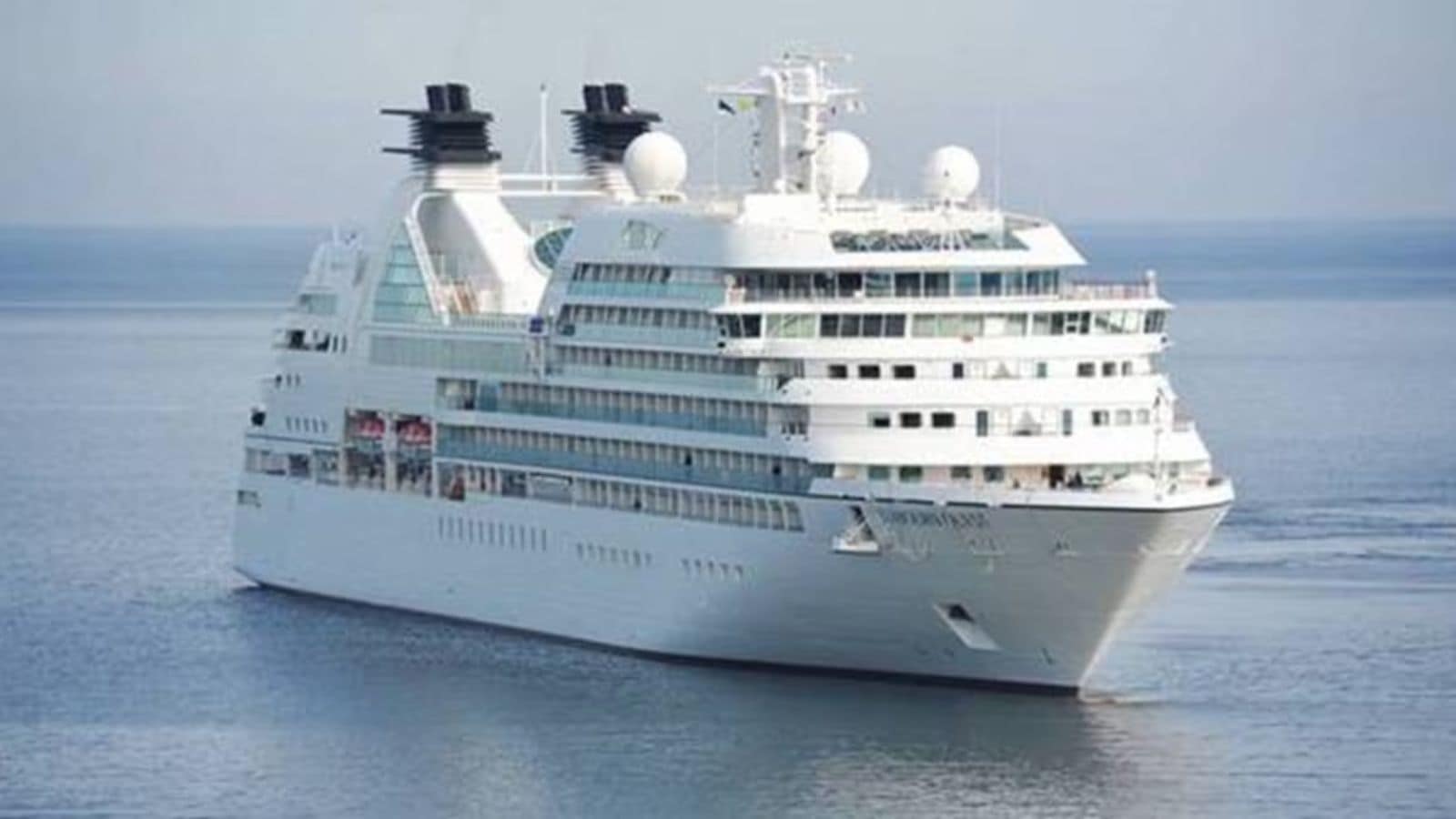
The headlines are screaming about a "rare killer" stalking the high seas. Three people are dead on a luxury liner, and the internet is ready to weld the cabin doors shut. The narrative is predictable: a mysterious pathogen, a captive audience, and the terrifying specter of a cruise ship becoming a floating morgue.
It is a great story. It is also fundamentally wrong. For an alternative view, consider: this related article.
If you are losing sleep over hantavirus jumping from person to person in a buffet line, you don't understand virology. Worse, you are falling for the sensationalist trap that ignores the real, systemic failures of the travel industry in favor of a "Contagion" movie script. Hantavirus is not the next global pandemic. It is a biological dead end that tells us more about ship maintenance than it does about public health threats.
The Myth of the Floating Plague
Mainstream reporting treats every virus like it’s the flu’s more aggressive cousin. They see three deaths and assume an exponential curve is coming. Here is the reality check: Hantavirus is a zoonotic disease. In the Americas, we are usually talking about New World hantaviruses like the Sin Nombre virus. Similar reporting on this trend has been published by Medical News Today.
These do not spread from human to human. Period.
Save for one specific strain in South America (Andes virus), the transmission chain stops the moment it hits a human host. You cannot catch it by breathing the same air as a sick passenger. You cannot catch it by sharing a drink. To get sick, you need to inhale aerosolized droppings, urine, or saliva from infected rodents.
If three people died on that ship, they didn't catch it from each other. They were all exposed to the same localized source of filth. The story isn't "Mysterious Outbreak"; the story is "How did a multi-billion dollar cruise line allow a massive rodent infestation in the ventilation or food storage of a 'prestige' vessel?"
Stop Asking if it’s Transmissible and Start Asking About the HVAC
The "People Also Ask" sections of search engines are currently flooded with variations of: How long does hantavirus live on surfaces? or Can I get hantavirus from a sneeze?
These are the wrong questions. They assume the danger is the person in the cabin next to you. It isn't. The danger is the structural integrity of the ship.
Hantavirus Pulmonary Syndrome (HPS) has a staggering mortality rate—often north of 35%. It is brutal. It fills the lungs with fluid until the patient effectively drowns. But because it requires the inhalation of dried rodent waste, an "outbreak" on a ship suggests a very specific, localized failure.
Think about the physics of a cruise ship's airflow. These are closed-loop systems designed for efficiency, not necessarily for biological isolation. If a nest of deer mice or rats established itself in a primary air intake or a dry-goods storage area, the ventilation system becomes a delivery mechanism for viral particles.
I have consulted on industrial hygiene cases where "mystery illnesses" were traced back to neglected ductwork. It is never a "superbug." It is always a maintenance manager who decided to skip a quarterly inspection to save on overhead. When you see three deaths on a ship, don't look at the passengers. Look at the blueprints of the HVAC system.
The Geography of Fear vs. Biological Reality
The Atlantic Ocean is not the natural habitat for hantavirus. This is where the "insider" knowledge matters: hantavirus is tied to specific rodent reservoirs. If this happened in the middle of the Atlantic, those rodents didn't swim there.
They were brought on board at a port of call, likely in contaminated grain or cargo. The ship didn't "catch" a virus; the ship imported a pest problem and then failed to contain it.
Comparison of Transmission Dynamics
| Feature | Hantavirus (HPS) | Influenza/COVID-19 |
|---|---|---|
| Primary Vector | Rodent excreta (Aerosolized) | Human respiratory droplets |
| Human-to-Human | Non-existent (except Andes strain) | Highly efficient |
| Incubation Period | 1 to 8 weeks | 2 to 14 days |
| Environmental Stability | Low (UV light and detergents kill it) | Variable |
| Control Method | Pest management & HEPA filtration | Masking & Vaccines |
The Industry’s Dirty Secret
Cruise lines spend millions on "sanitization theater." You see the crew wiping down handrails every twenty minutes with lemon-scented bleach. It’s a performance. It’s meant to make you feel safe from Norovirus—the actual king of cruise ship misery.
But handrails don't cause hantavirus.
The real risks are in the places passengers never see: the bilge, the crawl spaces behind the luxury suites, and the massive food preparation areas where thousands of pounds of flour and grain are stored. An industry insider knows that "deep cleaning" rarely touches the internal voids of a ship's structure.
We are seeing a collision of two trends: aging fleets and increasingly desperate cost-cutting. When a ship stays in service longer than its projected lifespan, the seals in the ductwork degrade. Gaps appear. Rodents find a way in. In a terrestrial building, you just call an exterminator. On a ship, you have created a pressurized tube of circulating pathogens.
Why the "Rare Outbreak" Label is a Distraction
Calling hantavirus "rare" is a linguistic trick used by the industry to frame this as an "act of God." If it’s rare, they couldn't have seen it coming, right?
Wrong.
Hantavirus is rare in the general population because most people don't spend their time vacuuming out dusty barns or sleeping in rodent-infested sheds. On a cruise ship, it should be impossible. The presence of hantavirus is a smoking gun for a catastrophic breakdown in sanitary protocols.
If I’m a lawyer for the families of the deceased, I’m not looking for "Patient Zero." I’m looking for the ship’s pest control logs from the last six months. I’m looking for the maintenance records of the HEPA filters in the galley.
The Nuance of the Andes Exception
Critics will point to the 1996 and 2018 outbreaks in Argentina and Chile as proof that hantavirus can spread between humans. This is where the "lazy consensus" of the media fails. They take a South American outlier (Andes virus) and apply its characteristics to every hantavirus case globally.
There is zero evidence that the strains common to North American or European ports have mutated to allow for human-to-human transmission. Even with the Andes strain, the R0 (reproduction number) is pathetic. It requires prolonged, intimate contact. It does not "sweep through" a ship like a phantom.
To suggest that this Atlantic incident is the start of a human-to-human plague is more than just a reach; it is a fundamental misunderstanding of the virus's genomic structure. Hantaviruses are negative-sense RNA viruses. They are stable in their rodent hosts but notoriously poor at adapting to human physiology for transmission. They kill us by accident, not by design.
How to Actually Protect Yourself
If you are boarding a ship and you’re worried about your health, stop obsessing over the hand sanitizer.
- Check the Vents: When you enter your cabin, look at the air vents. Is there accumulated dust? If a ship can’t keep its visible vents clean, the internal ducts are a disaster.
- The Smell Test: Rodent infestations have a distinct, musky odor. If your high-end suite smells like a pet store, demand a move or leave the ship.
- Report the "Isolated" Sightings: Cruise passengers often ignore a single mouse or rat, thinking it’s a fluke. In a closed environment, there is no such thing as "one" rodent.
The Brutal Truth
Three people are dead because of a failure of engineering and hygiene, not because a "rare virus" decided to go on vacation.
The panic surrounding this outbreak is a smoke screen. It allows the cruise industry to hide behind the "unforeseeable tragedy" defense. By focusing on the virus, we ignore the vermin. By focusing on the "mystery," we ignore the negligence.
This isn't a medical crisis. It's a maintenance crisis.
Stop looking for a vaccine. Start looking for a trap.