Seismic Energy Release and Fault Mechanics
A 7.7-magnitude earthquake represents a massive rupture along a tectonic boundary, releasing seismic moment equivalent to hundreds of megatons of TNT. When a primary fault ruptures with this magnitude, the surrounding crust experiences a sudden, catastrophic redistribution of stress. The immediate rupture zone cannot absorb the entire tectonic load instantaneously. Instead, the surrounding rock mass undergoes localized stress concentrations, triggering a cascading series of secondary fractures known as aftershocks.
In the case of Panama's significant seismic event, the generation of over 200 aftershocks within a compressed temporal window is not an anomalous phenomenon; it is a mechanical necessity. The earth's crust acts as a complex, non-linear elastic medium. When an earthquake alters the baseline Coulomb stress field across a fault plane, adjacent fault segments and subsidiary fractures are pushed past their static friction thresholds. Each aftershock represents a discrete readjustment, relieving localized stress pockets while potentially transferring stress to adjacent asperities along the fault zone.
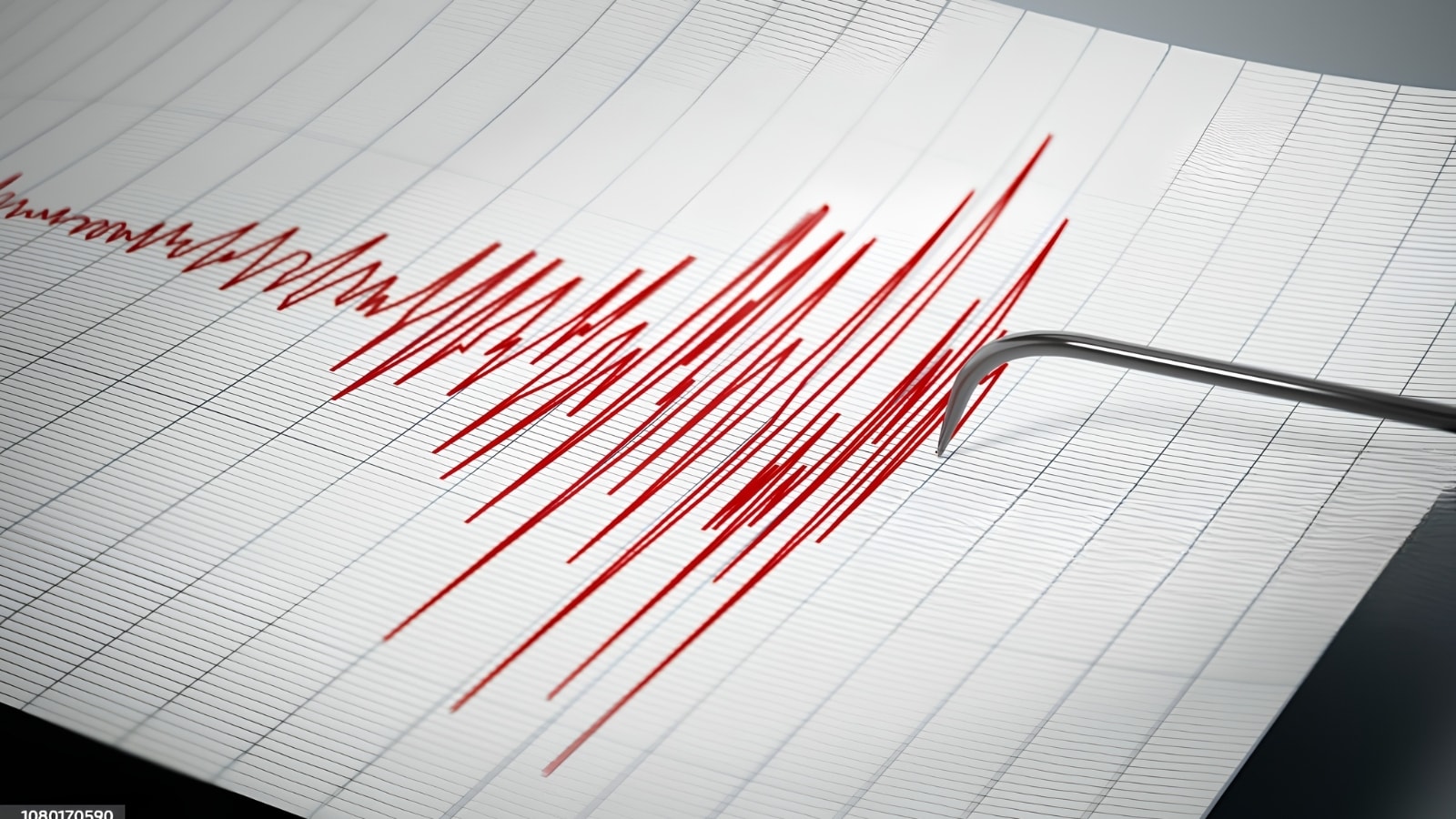
The spatial and temporal distribution of these secondary tremors provides seismologists with a direct diagnostic tool to map the geometry of the seismogenic zone. Rather than viewing aftershocks as independent hazards, they must be understood as the systematic relaxation of a destabilized crustal volume. The frequency-magnitude relationship, governed by the Gutenberg-Richter law, dictates that a 7.7-magnitude mainshock will inevitably be followed by a predictable decay rate of smaller events, known as Omori's law.
Structural Vulnerability and Energy Propagation
The destructive capacity of a seismic event is a function of source magnitude, hypocentral depth, local site effects, and the built environment's dynamic response. When seismic waves propagate from a deep or shallow focal point toward the surface, high-frequency waves attenuate rapidly, while long-period waves can travel vast distances with minimal energy loss. In regions characterized by sedimentary basins or unconsolidated coastal fill, seismic wave amplification occurs. This phenomenon traps and resonates energy, converting a moderate ground motion into a sustained, high-amplitude shaking cycle.
Infrastructure resilience depends on structural redundancy and the capacity to dissipate seismic energy through ductile deformation rather than brittle failure. Unreinforced masonry and non-engineered concrete structures lack the requisite hysteretic damping capacity. Consequently, when ground acceleration exceeds design thresholds, these buildings suffer progressive collapse.
The aftershock sequence compounds this vulnerability. Structures that have sustained micro-fracturing or localized yield during the mainshock retain a diminished residual capacity. A subsequent aftershock of magnitude 5.0 or greater, while significantly smaller than the mainshock, can induce total collapse in structures already pushed past their elastic limit. This cumulative damage mechanism creates a protracted operational hazard for emergency response and structural inspection teams.
Operational Risk Management and Seismic Safety Protocols
Mitigating the societal cost of major seismic sequences requires a transition from reactive emergency response to proactive structural risk governance. Building codes must incorporate real-time microzonation data, mapping how specific geological strata amplify seismic shear waves.
Emergency management frameworks during an active aftershock sequence must prioritize three distinct operational phases:
- Structural Triage: Rapid visual and non-destructive evaluation of critical infrastructure, including hospitals, bridges, and lifeline networks, to prevent catastrophic failure from secondary events.
- Lifeline Redundancy: Securing water, power, and telecommunications through decentralized micro-grids and seismic shut-off valves that automatically isolate hazardous utility lines upon detecting primary wave arrivals.
- Public Communication Protocols: Disseminating probabilistic aftershock forecasts rather than deterministic predictions, ensuring the population understands that seismic hazard diminishes via a statistical decay curve rather than an abrupt cessation.
The operational reality of a major earthquake zone is that the tectonic system requires months, and sometimes years, to achieve a new mechanical equilibrium. Risk mitigation strategies must account for this prolonged operational window, enforcing strict re-entry criteria for damaged structures and maintaining high states of readiness across civil protection agencies.


