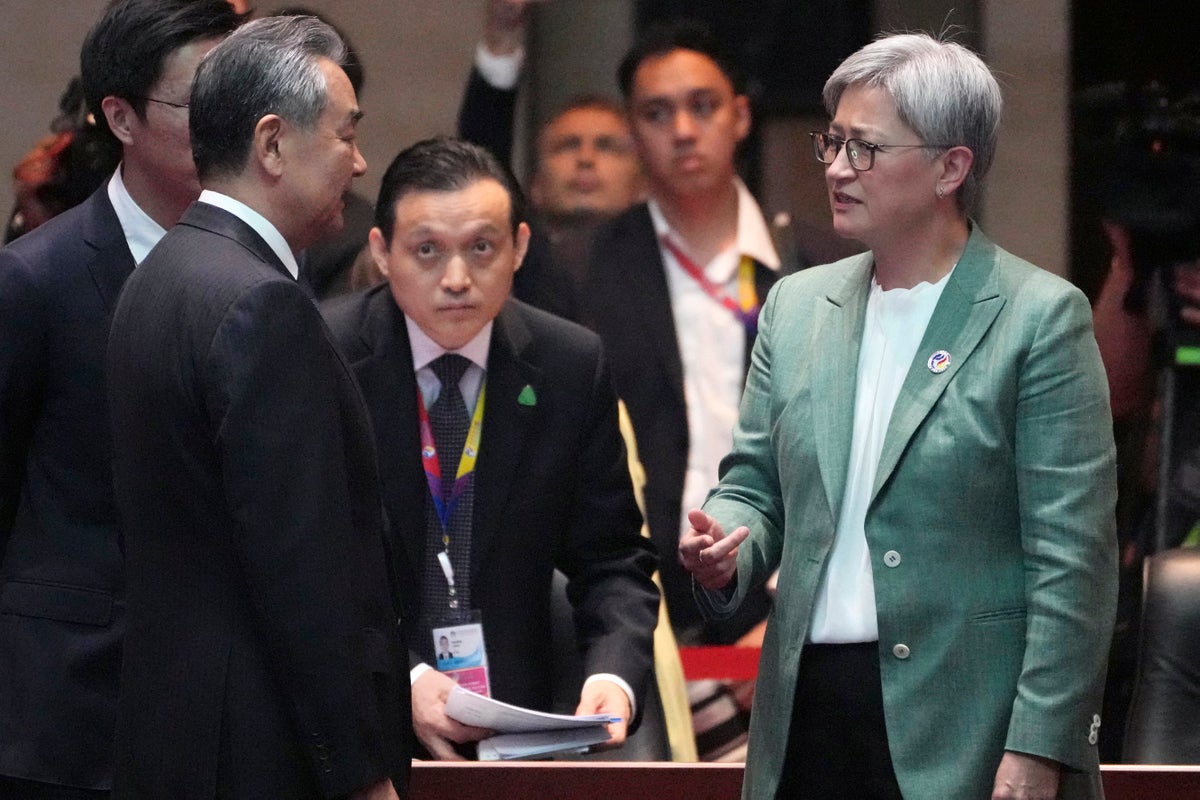
The recent diplomatic theater at the ASEAN summit followed a painfully predictable script. Australian officials took the microphone to blast Beijing’s latest long-range ballistic missile test into the Pacific, painting it as a dangerous escalation that threatens regional stability. The consensus across Western media was immediate and uncritical: China is bullying its neighbors, and Canberra is bravely holding the line for rules-based order.
It is a comfortable narrative. It is also entirely blind to the actual mechanics of Indo-Pacific deterrence. Recently making headlines recently: Why President Murmu's Visit to Mother Teresa's Birthplace Means More Than Typical Diplomacy.
What the foreign policy establishment labels a provocative disruption is, in reality, a masterclass in transparency and strategic communication. By treating a routine, highly telegraphed military milestone as an existential crisis, regional powers are exposing their own strategic fragility rather than addressing the actual shifting balance of power. We need to stop reacting to the theater of missile tests and look at the actual chess board.
The Myth of the Unprovoked Escalation
The mainstream outrage hinges on the idea that testing an Intercontinental Ballistic Missile (ICBM) into the open ocean is an unprecedented violation of Pacific tranquility. This position ignores decades of strategic precedent. Additional details into this topic are explored by Reuters.
Every nuclear-armed state conducts long-range testing. The United States routinely fires Minuteman III ICBMs from Vandenberg Space Force Base in California across the Pacific toward the Kwajalein Atoll. These launches are not viewed as destabilizing; they are understood as necessary engineering validations of a nuclear deterrent.
Beijing’s recent test was its first full-range ICBM launch into the international waters of the Pacific Ocean in over four decades. More importantly, it occurred with advanced notification to regional capitals, including Washington.
Strategic stability depends on predictability, not pacifism. A declared, tracked, and successful test is infinitely safer than an unannounced launch or a destabilizing technological ambiguity.
By notifying key stakeholders in advance, the launch functioned exactly as global deterrence protocols intend. It demonstrated a capable second-strike capability while minimizing the risk of miscalculation. Calling this destabilizing misdiagnoses the mechanics of international relations. The stability of the Indo-Pacific does not rest on China pretending it does not possess long-range precision weaponry; it rests on both sides knowing exactly what the other can do, thereby rendering open conflict unthinkable.
Why Australia Misreads the Room at ASEAN
Canberra’s decision to use Southeast Asian forums to launch rhetorical broadsides against Beijing reveals a fundamental misunderstanding of ASEAN diplomacy.
Southeast Asian nations are not looking for Western deputies to lecture them on regional security architecture. Maritime states like Indonesia, Malaysia, and Singapore live in the geographic reality of China’s economic dominance. They have spent decades perfecting a delicate balancing act—hedging against Beijing’s security ambitions while deeply integrating with its supply chains.
When Australian diplomats use these summits to stage public confrontations, they do not rally a coalition. They alienate the very partners they claim to defend.
- The ASEAN Priority: Economic sovereignty, infrastructure funding, and maintaining central relevance in regional diplomacy.
- The Australian Miscalculation: Expecting Southeast Asian capitals to sacrifice economic stability to participate in a symbolic containment strategy.
I have spent years analyzing regional supply chains and defense acquisitions. When you talk to trade officials in Jakarta or Kuala Lumpur behind closed doors, their biggest fear isn't a highly choreographed missile splashdown in the remote ocean. Their fear is a clumsy, rhetorical escalation that forces them to choose between their primary security partner and their primary economic engine. Canberra’s public posturing edges them closer to that impossible choice.
The Financial Reality of the New Pacific Deterrent
Let us dismantle the illusion that defense policy can be separated from industrial reality. The outcry over China's missile capabilities ignores the glaring structural deficits within Western defense procurement.
While Western political leaders give speeches about defending the Pacific, their domestic defense industrial bases are struggling to meet basic production quotas. Australia’s own landmark defense initiatives face massive timelines and ballooning budgets. Buying high-end, exquisitely engineered platforms decades from now does nothing to alter the immediate tactical calculus on the water today.
+---------------------+-----------------------+-------------------------+
| Capability Metric   | Western Procurement   | PLA Industrial Output   |
+---------------------+-----------------------+-------------------------+
| Production Velocity | Multi-year backlogs   | Rapid iterative cycles  |
| Cost Efficiency     | High per-unit premium | Optimized at scale      |
| Deployment Horizon  | Long-term projections | Immediate operational   |
+---------------------+-----------------------+-------------------------+
The real disruption is not the hardware being tested; it is the sheer velocity of the industrial capacity behind it. Beijing can design, build, test, and iterate missile tech at a fraction of the time and cost it takes Western defense consortiums to clear regulatory hurdles.
If Canberra wants to counter this capability, public condemnation at diplomatic summits is a zero-yield investment. The focus must shift from performative diplomacy to hard industrial renewal.
The Flawed Premise of the Rules-Based Order
The most common question generated by these geopolitical standoffs is simple: How can the international community force rising powers to adhere to maritime norms?
The question itself is flawed. It assumes that global norms are static rules enforced by a neutral referee. They are not. International norms are the byproduct of raw power dynamics. The post-war maritime order existed because Western naval supremacy was absolute and uncontested. That era has ended.
Challenging a missile test based on an appeal to abstract norms is a losing strategy. It signals weakness rather than resolve. When a competitor tests a system, they are checking if the existing architecture can handle the reality of their growth.
Admitting the downside of this reality is uncomfortable: it means the old security guarantees are no longer sufficient on their own. Security cannot be outsourced to historical prestige or rhetorical solidarity. It requires a cold, calculated appraisal of current capabilities.
Shift the Strategy from Condemnation to Hard Power Costing
Stop trying to shame a superpower into disarming. It has never worked, and it will not work now. Instead of treating every missile test as a diplomatic crisis, regional players must treat them as data points to refine their own strategic positioning.
- Accept the Deterrence Reality: Acknowledge that long-range missile testing is a permanent feature of a multipolar Pacific. Stop wasting diplomatic capital on statements of grave concern that carry no operational weight.
- Prioritize Asymmetric Defense: Rather than trying to match peer adversaries hull-for-hull or missile-for-missile in a race that favors mass production, invest heavily in distributed, low-cost, deniable anti-access systems.
- Decouple Trade from Security Rhetoric: Maintain hard, unblinking defense postures without turning every routine military exercise into a public ideological crusade that alienates regional neighbors.
The theater at the ASEAN meet was a distraction from the real work of statecraft. Beijing demonstrated its hardware works exactly as intended. The only remaining question is whether Western capitals will continue shouting at the horizon, or finally begin building the industrial capacity required to anchor real stability in the Pacific.
Stop looking at the splashdown zone. Look at the factories.


