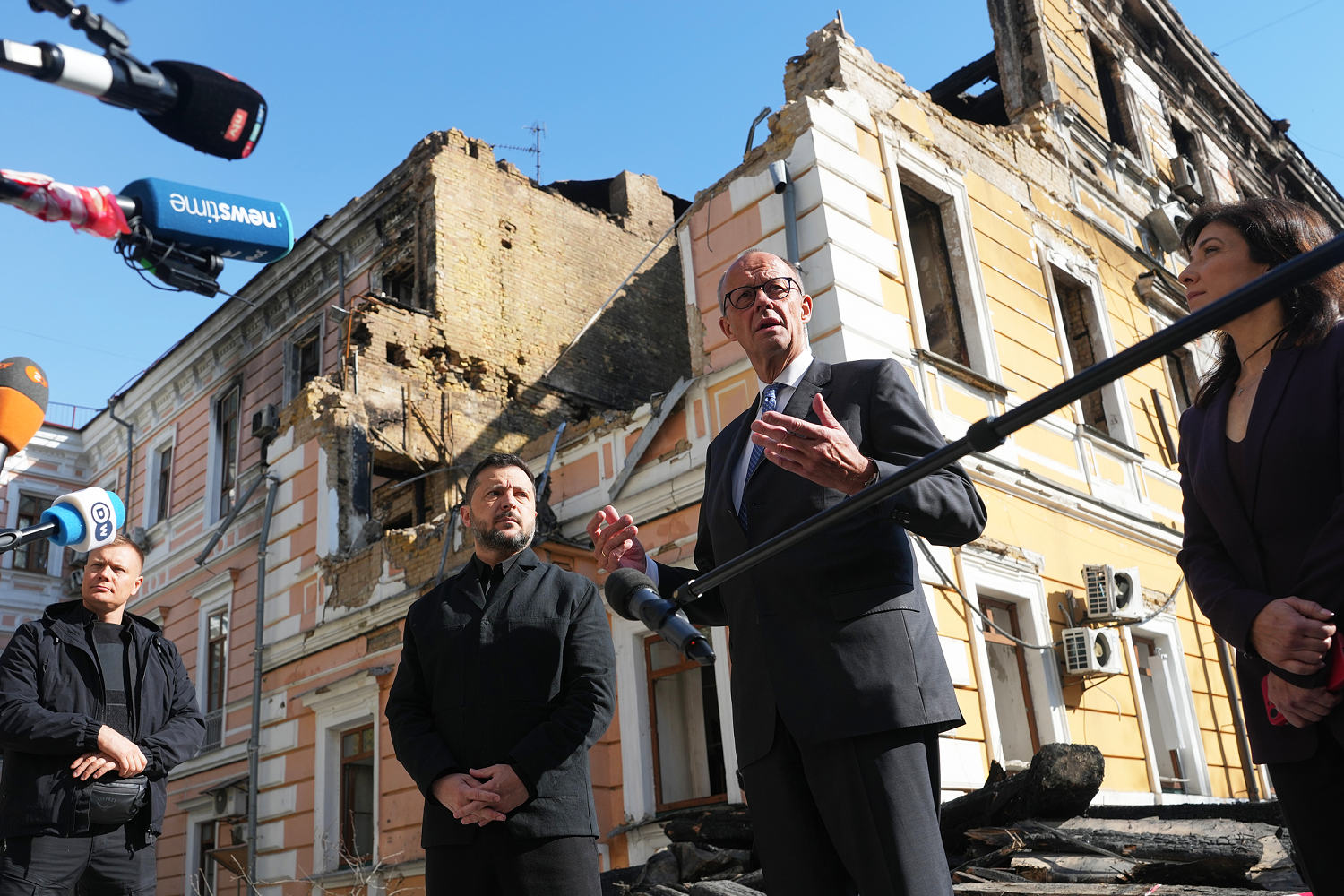
Every time a Western leader touches down in Kyiv while air raid sirens wail, the headline writes itself. The media machinery spins into overdrive, treating the coincidence of diplomatic handshakes and Russian missile barrages as a shocking escalation, a deliberate psychological snub, or an unprecedented breach of wartime protocol. Commentators gasp on cable news. Pundits demand tougher retaliations. Everyone acts as if Vladimir Putin looked at a flight tracker, saw a German chancellor's jet touch down, and slammed the launch button out of pure pique.
It is a childish way to understand statecraft. If you enjoyed this post, you should look at: this related article.
The lazy consensus is that these strikes are direct, retaliatory tantrums designed to intimidate visiting dignitaries or sabotage diplomatic alignment. That reading ignores how modern military logistics and intelligence actually operate. Moscow does not adjust its entire strike calendar based on a VIP tarmac photo-op. These missile barrages are tied to industrial production cycles, supply chain arrivals, telemetry data processing, and systemic grid assessment. The timing with high-profile visits is rarely a bespoke assassination attempt or a personal insult; it is a predictable byproduct of a relentless, automated campaign of attrition that runs on its own brutal clock.
Treating these overlaps as sudden, shocking escalations misses the point entirely. It transforms a grinding war of industrial production into a high school drama. For another angle on this event, see the recent coverage from Reuters.
The Illusion of Synchronicity
Let us look at how military intelligence really functions on the ground. When a foreign dignitary visits Kyiv, the security bubble is immense. Air defense networks go to maximum alert. Patriot systems, NASAMS, and IRIS-T batteries track the airspace with terrifying precision. Moscow knows this. Russian military planners are well aware that hitting the capital while a head of government is present means running into the densest concentration of air defense assets in the theater.
Why would an attacking force deliberately target the most heavily fortified sector at the exact moment its defenses are hyper-vigilant? Because the premise of the mainstream narrative is flawed. The strikes are not launched because the German chancellor is eating breakfast in a downtown hotel. The strikes happen because the monthly missile manufacturing quotas have been met, components smuggled through third-party sanction-evading trade routes have cleared customs, and a saturation package is ready to deploy.
If you map every major aerial assault on Kyiv over the past three years against diplomatic visits, you find correlation masquerading as causation. It makes for incredible television. It generates millions of clicks. But it fundamentally misunderstands the scale and cold indifference of the machine prosecuting this war.
The Performance of Deterrence
Western capitals love the theater of the wartime visit. It projects resolve. It offers a pristine photo opportunity against sandbagged government buildings, complete with solemn handshakes and a shared cup of coffee in a basement shelter. It reassures domestic electorates that their leaders are bold, unafraid, and standing shoulder-to-shoulder with the besieged.
Yet, this performance creates a dangerous feedback loop. When a strike inevitably lands during the visit, the political class is forced to overreact to save face. They pivot from quiet, pragmatic strategic discussions to performative outrage, promising yet another package of symbolic aid or tightening rhetorical screws.
I have watched diplomats negotiate complex military supply chains behind closed doors, and I can tell you that the real friction points have nothing to do with whether a chancellor has to spend twenty minutes in a bomb shelter. The bottlenecks are metallurgical, logistical, and political back home. They are about artillery shell production lines that take eighteen months to build, maintenance hubs located hundreds of miles away in Poland, and the quiet, agonizing realization that Western defense industrial bases were hollowed out decades ago in pursuit of peace dividends.
Focusing public attention on the drama of a nearby explosion during a VIP visit is a brilliant distraction from the structural failures of long-term strategic planning. It lets politicians trade substance for spectacle.
Dismantling the Escalation Trap
The word escalation has lost all meaning. Every time Russia tweaks its tactics or alters its missile mix, analysts scream escalation. Every time the West authorizes a new class of weaponry, the other side screams escalation. We are trapped in a semantic treadmill where every routine tactical adjustment is elevated to the brink of catastrophe.
This mindset paralyzes strategic thought. It assumes that inaction preserves stability, when in reality, prolonged ambiguity only invites further aggression. A state waging a total war of attrition does not need a visiting chancellor to motivate its bombing campaigns; it needs the destruction of infrastructure to break the will to fight. Conflating the rhythm of an industrial war with personal slurs against visiting statesmen blinds us to the hard, unglamorous realities of how this conflict will actually be decided.
It will not be decided by who looks brave in a bunker during an air raid alert. It will be decided by factories, supply chains, treasury reserves, and demographic endurance.
Stop looking at the sky when the sirens blow during a summit. Look at the balance sheets, the manufacturing output reports, and the supply lines feeding the front. That is where the war is actually being won and lost.