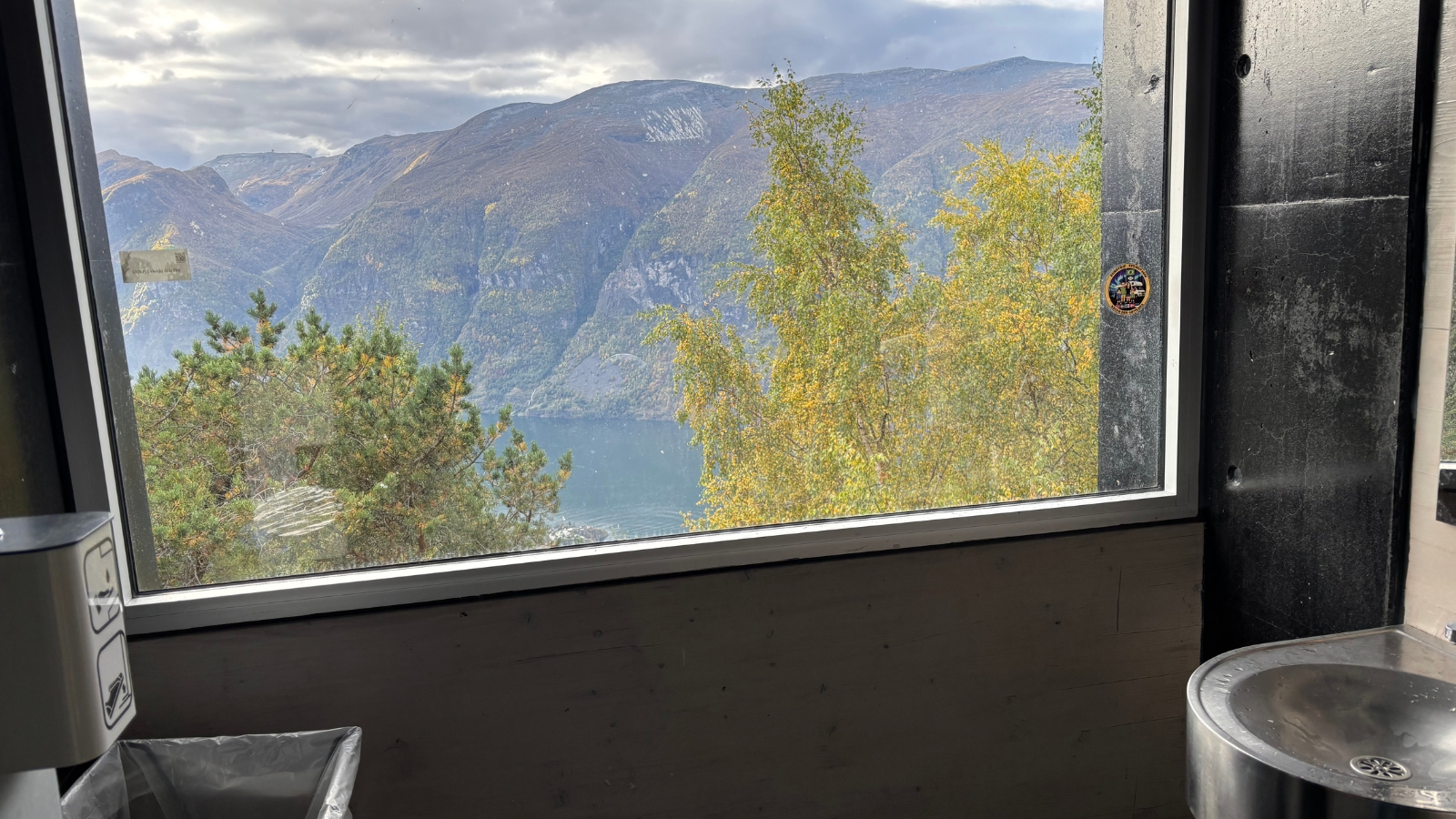
Everyone in the destination marketing world is currently giving themselves whiplash applauding Oslo.
You saw the headline. Donald Trump allegedly called Norway a "shithouse," and Oslo’s official tourism board, VisitOSLO, responded by launching a campaign celebrating their architectural, designer public restrooms. The media ate it up. Trade publications called it brilliant newsjacking. PR agencies immediately added it to their pitch decks as proof that brands need to be "agile" and "snappy."
They are all wrong.
What the industry is celebrating as a masterclass in viral marketing is actually a textbook example of reactive vanity. It is cheap applause that actively undermines the core value proposition of one of the most expensive, exclusive destinations on the planet. When a heavyweight champion gets heckled by a guy in the cheap seats, the champion doesn't drop his belt to argue about his footwear. Yet that is precisely what Oslo just did.
The Lazy Consensus of Newsjacking
The standard playbook for modern PR agencies relies heavily on a concept called newsjacking—injecting a brand into a breaking news story to siphon off organic attention. On paper, the math looks great. You spend zero dollars on media buying, hijack a trending political keyword, and watch the impressions roll in.
I have sat in dozens of boardrooms where CMOs and tourism directors high-fived over vanity metrics like "earned media value" and "impressions" following a cheeky tweet or a reactive stunt. Six months later, those same executives are staring at flat occupancy rates and wondering why their conversion costs are through the roof.
Here is the fundamental flaw in the lazy consensus surrounding Oslo’s toilet campaign. Attention is not a homogenous currency. A million eyeballs from people laughing at a political dunk on social media are worth infinitely less than ten thousand eyeballs from affluent travelers actively planning a summer itinerary.
By tying its national identity—even jokingly—to a vulgar insult, Oslo didn't rise above the mud. It rolled around in it. They took a brand built on pristine fjords, Michelin-starred Nordic gastronomy, architectural restraint, and high-trust luxury, and willingly anchored it to the word "shithouse."
In cognitive psychology, this is known as the sleeper effect and associative priming. Over time, audiences forget the clever context of the rebuttal, the witty copywriting, and the political jab. What remains in the neural network is the primary association: Oslo and toilets.
Why Snarky PR Fails High-Ticket Destinations
Let’s look at the economics of Norwegian tourism. Norway is not a budget destination. A glass of mediocre wine in Oslo will set you back twenty dollars. A casual dinner for two easily crosses two hundred. To justify those prices, Norway must maintain an aura of untouchable, aspirational prestige.
Luxury brands understand this instinctively. You will never see Patek Philippe run a cheeky ad campaign mocking a critic who called their watches overpriced. You will never see Aman Resorts launch a viral stunt about their plumbing because a politician insulted them. Prestige requires asymmetrical restraint. When you respond to an insult, you validate the premise that the insult mattered enough to warrant a defense.
VisitOSLO’s previous viral hit, the "Is it even a city?" campaign, actually worked because it leaned into reverse psychology. It featured a deadpan local complaining that Oslo wasn't crowded, chaotic, or exhausting like Paris or New York. That campaign attacked a real pain point of modern mass tourism—overcrowding—and positioned Oslo’s quietness as the ultimate luxury. It was strategic, self-assured, and deeply aligned with the product.
The toilet campaign is the exact opposite. It is defensive. It takes a fleeting, absurd political remark and immortalizes it in Google’s search index forever.
Think about the mechanics of search intent. Before this stunt, if a wealthy American traveler searched for Oslo, they found the Munch Museum, the Opera House, Vigeland Park, and fjord cruises. Today, the top results are saturated with articles about public bathrooms and political mudslinging. VisitOSLO willingly poisoned its own SEO well for a forty-eight-hour dopamine hit on LinkedIn.
The Illusion of the Viral Multiplier
Defenders of the campaign will argue that any press is good press, especially when it introduces a smaller European capital to a massive American audience. They will point to the sheer volume of articles written about Norway’s National Tourist Routes—which genuinely do feature some of the most stunning minimalist rest stops in the world, designed by firms like Reiulf Ramstad Arkitekter and Snøhetta.
This brings us to the core misunderstanding of how destination marketing actually drives bookings.
People do not book a three-thousand-dollar flight across the Atlantic because they saw a funny headline about a rest stop. Travel decisions of that financial magnitude require a multi-stage funnel:
- Aspirational Trigger: A deep emotional desire to experience a specific lifestyle, landscape, or culture.
- Justification: Rationalizing the high cost through perceived exclusivity, safety, and once-in-a-lifetime value.
- Friction Removal: Logistics, flight routes, and itinerary planning.
Viral stunts sit entirely outside this funnel. They generate entertainment, not intent. When you entertain an audience with a political clapback, you attract spectators, not buyers. Worse, you risk alienating the exact demographic that pays the bills.
Like it or not, a massive percentage of affluent, older American travelers—the core demographic that funds luxury European touring, high-end cruises, and boutique hotel stays—hold conservative political views. By turning the nation’s official tourism apparatus into a partisan punchline machine, VisitOSLO effectively told a huge segment of its highest-spending target market that the destination is laughing at them. Even if the joke was aimed at a single politician, tribal psychology dictates that the audience takes it personally.
You never alienate half your addressable market just to score points with journalists who travel on press passes and never pay rack rate.
The Anatomy of a Better Counter-Move
If the goal was genuinely to capitalize on the media spotlight without cheapening the brand, there were infinitely sharper ways to play the hand.
Imagine a scenario where VisitOSLO ignored the insult entirely in the press, and instead bought targeted digital media placements exclusively in the zip codes surrounding Palm Beach, Washington D.C., and Manhattan. No snark. No mention of toilets. Just a stark, breathtaking photograph of the Norwegian coastline at twilight, paired with three words of copy: Nothing to prove.
That is how power moves. It acknowledges the noise without stooping to match its frequency. It signals unshakeable confidence.
Alternatively, if they felt compelled to address the misconception that Norway is somehow lacking, they should have attacked the premise with cold, hard, aspirational reality. Showcase the Sovereign Wealth Fund. Highlight the architectural marvels of the Oslo waterfront. Position Norway not as a place with nice bathrooms, but as a civilization operating fifty years ahead of the rest of the Western world.
Why Marketing Teams Fall Into the Clapback Trap
To understand why smart marketers keep making this mistake, you have to look at the internal incentives of modern creative agencies and tourism boards.
Tourism boards are notoriously bureaucratic, funded by taxpayer money and local hospitality coalitions. Because measuring the direct ROI of a brand campaign on actual hotel bed-nights takes twelve to eighteen months, marketing directors are under immense pressure to show immediate proof of life.
A viral PR stunt solves a political problem inside the organization. The marketing director can walk into a board meeting on Monday morning with a stack of clippings from major international newspapers and say, "Look, we made global news on a shoestring budget." The board members feel relevant. The agency wins a creative award at Cannes. Everyone gets a bonus.
Meanwhile, the actual customer—the traveler sitting at their kitchen table deciding between Switzerland, Iceland, and Norway for their summer vacation—is quietly moving Norway down the list because the brand feels slightly less magical, slightly more juvenile, and a whole lot more political than it did a week ago.
David Ogilvy famously warned that consumers do not buy from clowns. He was talking about direct-response advertising, yet the principle holds ten times truer for high-end nation branding. Humor in luxury marketing must be dry, understated, and self-assured. The moment it becomes reactive or scatological, the spell is broken.
The Uncomfortable Truth About My Own Critique
Now, let’s be brutally honest about the flip side of this argument. Is there a scenario where this campaign actually works?
Yes, if Oslo’s primary goal was simply to remind younger, budget-conscious European travelers that the city exists and has a sense of humor. For a twenty-four-year-old in London or Berlin looking for a weekend city break, a cheeky, irreverent vibe lowers the psychological barrier to entry. Oslo has long suffered from a reputation of being cold, sterile, and overly serious compared to Copenhagen or Stockholm. Breaking that ice has real value for the mid-tier hospitality sector.
Furthermore, the architectural rest stops along Norway’s scenic routes are genuinely world-class. Drawing global eyeballs to the fact that Norway invests millions of kroner into public infrastructure—turning a basic human necessity into an architectural landmark—subtly reinforces the narrative of a wealthy, hyper-functional society. If a reader actually clicks past the headline and looks at the photos of the Ureddplassen rest stop overlooking the Norwegian Sea, the visual impact is undeniable.
The problem is that ninety percent of people never click past the headline. They read the punchline, smirk, scroll to the next outrage, and file Oslo away in the back of their minds next to a crude joke.
Stop Confusing Applause With Revenue
The destination marketing industry needs to break its addiction to the viral clapback. Every time a politician, celebrity, or influencer takes a cheap shot at a city or country, a dozen mid-level PR managers rush to draft a witty retort, praying for their moment in the sun.
Real brand equity is built in silence, over decades, through relentless consistency and uncompromising standards. It is built by knowing exactly who your customer is, what they value, and having the discipline to ignore everyone else.
Oslo has spent twenty years transforming itself from a sleepy shipping town into one of Europe’s premier cultural capitals. It built an opera house you can walk on. It erected a waterfront museum dedicated to Edvard Munch. It curated a culinary scene that rivals the best in the world.
Next time someone calls it a bad name, Oslo shouldn't reach for a toilet joke. It should just check the exchange rate, raise its prices, and let the silence do the talking.