When a contentious parade gets blocked by law enforcement, the fallout rarely stays contained to that single street. Tensions routinely spill over, traffic halts, local businesses lock their doors, and long-standing community divisions flare up within minutes. Parading disputes in Northern Ireland remain some of the most volatile flashpoints on the calendar, exposing raw nerves that decades of peace agreements haven't fully healed.
Understanding why these confrontations happen requires looking beyond the immediate spectacle of bowler hats, banners, and marching bands. It is about territory, identity, and the fragile mechanics of public order policing.
The Roots of Parading Friction
Parades aren't just walks through a neighborhood. They are physical assertions of cultural and political dominance. For the Orange Order, marching commemorates historical events like the 1690 Battle of the Boyne, serving as a core expression of Protestant and Unionist heritage.
Yet, when these routes pass through nationalist or republican areas, the symbolism shifts entirely for the residents living there. To them, marching down contested thoroughfares feels like an intentional provocation rather than a cultural celebration.
The Police Service of Northern Ireland faces an impossible balancing act every marching season. Officers must uphold public safety while managing the explosive reactions that occur when a route gets restricted or rerouted by the Parades Commission. When the police step in to block a contentious march, they immediately draw ire from organizers who view the restriction as an infringement on their rights. At the same time, nationalist communities watch closely to see whether the state will protect them from what they perceive as sectarian intimidation.
How Bans Trigger Rapid Escalations
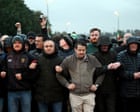
When a parade is halted or diverted, the reaction is rarely passive. Members and supporters often vow to push through checkpoints, leading to tense standoffs with riot police.
These confrontations usually follow a predictable yet dangerous pattern:
- Intelligence flags a high risk of public disorder along a specific route.
- Regulatory bodies or police commanders impose restrictions or outright bans.
- Marchers and supporters gather at the blockade, chanting slogans and demanding passage.
- Public order units deploy equipment, erect physical barriers, and brace for clashes.
The friction isn't just about physical movement. It is about perceived injustice. Organizers argue that restricting traditional routes penalizes law-abiding participants because of the threat of violence from others. Meanwhile, community workers and local politicians spend hours behind the scenes trying to de-escalate tempers before a peaceful protest turns into a riot.
The Cost of Deadlocks on Local Communities
Every time a standoff makes the news, the economic and social toll on local neighborhoods piles up. Small businesses near flashpoint areas suffer immediate losses. Customers stay away, windows get boarded up as a precaution, and the lingering climate of hostility discourages investment.
Residents bear the psychological weight of living in areas prone to civil unrest. Parents keep their children indoors, and elderly residents lock their doors long before the police lines form. The constant cycle of tension disrupts daily life and deepens the walls of segregation that still scar towns and cities across the region.
Dialogues and mediation initiatives have tried to bridge the gap for years. Local residents' groups and Orange lodges occasionally reach direct accommodations, bypassing the need for heavy-duty state intervention. But these local agreements remain fragile. All it takes is one inflamed political statement or a minor provocation on the ground to shatter months of careful community diplomacy.
Finding a path forward requires moving away from zero-sum politics where one side winning a marching route means the other side loses their dignity. Until communities can share civic space without viewing every parade as a territorial conquest, police blockades and tense standoffs will remain a recurring reality of life in Northern Ireland.